BJP's Dhillon slams Punjab's AAP govt over crop residue management failures
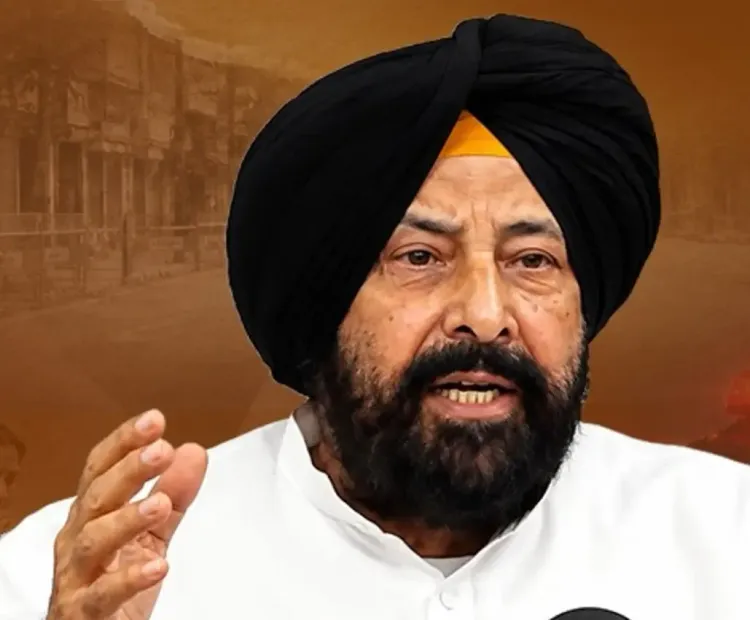
Synopsis
BJP Punjab president Kewal Singh Dhillon has put the AAP government on the spot over stubble burning, citing ₹2,056.50 crore in Central CRM funds whose farm-level impact remains unverified, a Pusa bio-decomposer programme with no measurable results, and FIRs lodged against small farmers — turning what AAP framed as a Delhi problem squarely back onto Chandigarh.
Key Takeaways
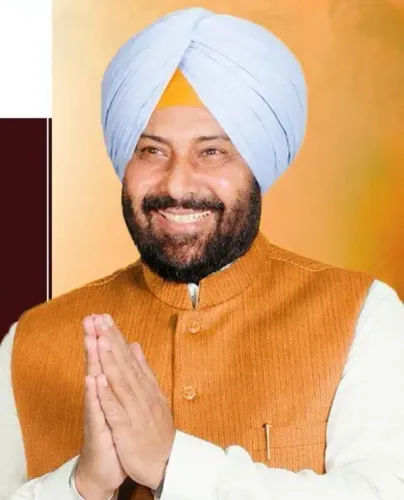
BJP Punjab President Kewal Singh Dhillon attacked the Bhagwant Mann government on 10 November 2026 over crop residue management failures.
On 4 November 2022 , Arvind Kejriwal and Bhagwant Mann reportedly accepted joint responsibility for farm fires and sought one year to resolve the crisis.
The Centre released ₹2,056.50 crore to Punjab under the CRM Scheme up to 2025-26 ; Dhillon demanded a full audit of how the funds were spent.
The Agriculture Department claims 94,456 CRM machines were deployed; Dhillon questioned how many are operational and accessible to marginal farmers.
Punjab promised ₹2,500 per acre cash incentive but failed to fund it independently; Haryana pays ₹1,000–₹1,200 per acre to its farmers.
Dhillon demanded rollback of FIRs and punitive red entries made against small farmers who burned stubble.
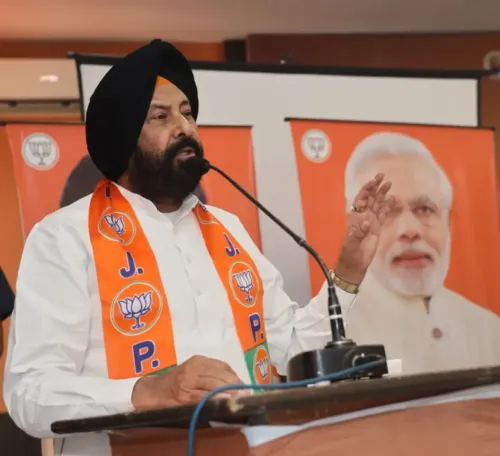
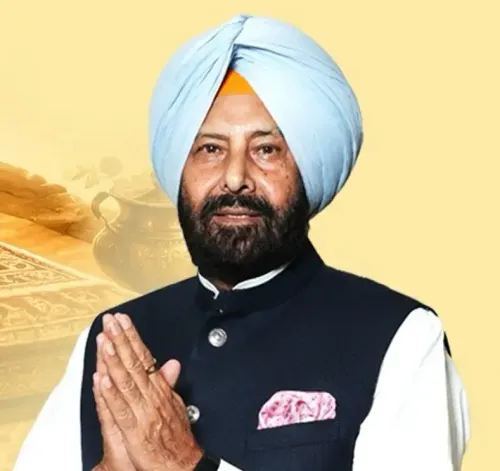
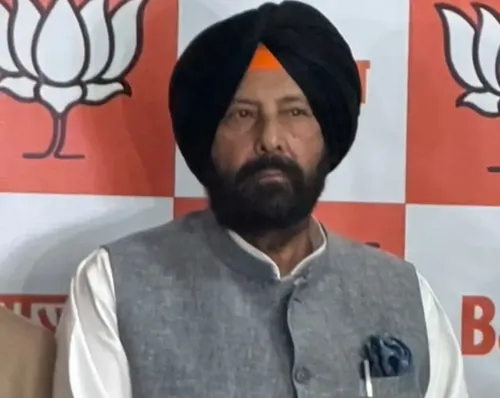
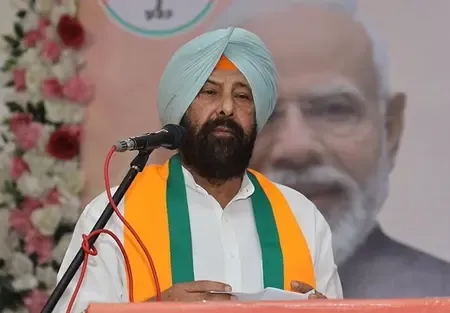
Bharatiya Janata Party (BJP) Punjab President Kewal Singh Dhillon on Tuesday, 10 November 2026, launched a sharp attack on the Bhagwant Mann-led Aam Aadmi Party (AAP) government in Punjab over its alleged failure to manage crop residue, asserting that the ruling party cannot deflect from its four-and-a-half-year track record by holding press conferences that blame Delhi.
The Kejriwal Commitment Revisited
Dhillon pointed to a specific, dateable promise: on 4 November 2022, AAP's national convener Arvind Kejriwal publicly accepted joint responsibility for farm fires alongside Chief Minister Bhagwant Mann, reportedly seeking one year to resolve the stubble-burning crisis. More than four years into the AAP government's tenure, Dhillon argued, the Mann administration has failed to deliver accessible alternatives to stubble burning, leaving farmers without viable options during the critical sowing window.
Five Hard Questions for the AAP Government
The BJP state president posed five pointed questions to the ruling dispensation, targeting specific schemes and financial accountability.
First, Dhillon asked about the fate of the Pusa bio-decomposer — a product heavily promoted by AAP as a low-cost solution to stubble — seeking details on how many acres were sprayed, the total state expenditure, and what measurable results were achieved.
Second, he demanded a full accounting of the ₹2,056.50 crore released by the Central government to Punjab under the Crop Residue Management (CRM) Scheme up to 2025-26, questioning how much of that amount actually reached farmers at the ground level.
Third, Dhillon raised doubts over the government's claim of deploying 94,456 CRM machines, asking how many are currently operational, how many Custom Hiring Centres are functional, and whether marginal farmers can realistically access this equipment during the narrow harvesting and sowing window.
Fourth, he questioned why the Punjab government failed to independently fund its own promised ₹2,500 per acre cash incentive for farmers who avoid stubble burning — drawing a pointed comparison with Haryana, which reportedly provides ₹1,000 to ₹1,200 per acre to its farmers for the same purpose.
Fifth, the BJP leader challenged the state government's decision to register first information reports (FIRs) against small farmers and to make punitive red entries in revenue records, calling it a move to mask administrative failure rather than address its root causes.
Demands Placed Before the State Government
Dhillon formally demanded an immediate, independent audit of CRM machinery funds, an immediate rollback of all punitive red entries made against farmers in revenue records, and the introduction of practical per-acre financial support to incentivise farmers to adopt stubble management alternatives.
Why This Matters
Stubble burning in Punjab and neighbouring Haryana is a perennial contributor to the severe winter air pollution that blankets northern India each year, causing health crises in Delhi and beyond. The political blame game between the AAP-led state governments and the Centre has intensified in recent years, with the Supreme Court of India having previously flagged inaction by state administrations. This latest salvo from the BJP comes as the peak paddy-harvesting season draws to a close and farm fire counts for 2026 are under close public scrutiny. The AAP government had not issued a formal response to Dhillon's specific questions at the time of this report.
Point of View
056.50 crore CRM allocation and the 94,456-machine claim are specific, verifiable figures that the AAP government will find difficult to dismiss without a detailed public accounting. What mainstream coverage often misses is the structural bind farmers are in: criminalising stubble burning without viable, affordable alternatives simply transfers the state's implementation failure onto the most vulnerable actors in the chain. The comparison with Haryana's per-acre cash incentive is the sharpest line of attack — it anchors the criticism in a neighbouring state's functioning policy rather than abstract promises, making it harder for AAP to frame this as a Centre-vs-state resource dispute.
NationPress
10 Nov 2026
Frequently Asked Questions
What is the Crop Residue Management (CRM) Scheme in Punjab?
The CRM Scheme is a Central government programme that provides funds and machinery to states to help farmers manage paddy stubble without burning it. The Centre released ₹2,056.50 crore to Punjab under the scheme up to 2025-26, but BJP Punjab president Kewal Singh Dhillon has demanded an independent audit of how those funds were utilised and how much reached farmers directly.
What did Arvind Kejriwal promise about Punjab farm fires in 2022?
On 4 November 2022, AAP's national convener Arvind Kejriwal reportedly accepted joint responsibility for farm fires alongside Chief Minister Bhagwant Mann, seeking one year to resolve the stubble-burning crisis. The BJP argues that more than four years later, no meaningful alternative to burning has been made accessible to farmers.
Why are FIRs being filed against farmers for stubble burning in Punjab?
The Punjab government has reportedly registered FIRs and made punitive red entries in revenue records against small farmers found burning crop residue. BJP's Dhillon has criticised this approach, calling it an attempt to conceal administrative failure rather than address the lack of affordable stubble management alternatives.
How does Punjab's farmer incentive compare with Haryana's?
The Punjab government promised ₹2,500 per acre in cash assistance to farmers who avoid stubble burning but reportedly failed to independently fund the scheme. By contrast, Haryana reportedly provides ₹1,000 to ₹1,200 per acre to its farmers — a functioning, if smaller, incentive that the BJP has held up as a benchmark.
What has the BJP demanded from the Punjab government?
BJP Punjab president Kewal Singh Dhillon has demanded an immediate, independent audit of CRM machinery and scheme funds, an immediate rollback of punitive FIRs and red entries made against small farmers, and the introduction of practical per-acre financial support to incentivise alternatives to stubble burning.