BJP's 'Loktantra Bachao' march in Lucknow targets INDIA bloc over democracy row
Synopsis
BJP turned Lucknow's streets into a political statement on 3 November, marching thousands under the 'Loktantra Bachao' banner and levelling some of its sharpest accusations yet — foreign interference, Bangladesh comparisons, and regime-change plots — at the Congress-led INDIA bloc. The campaign runs until 5 November and signals the party is going on offensive over electoral roll revisions and parliamentary disruptions.
Key Takeaways
BJP launched the 'Loktantra Bachao, Arajakta Hatao' march in Lucknow on 3 November 2026 , marching from Lok Bhawan to Parivartan Chowk .
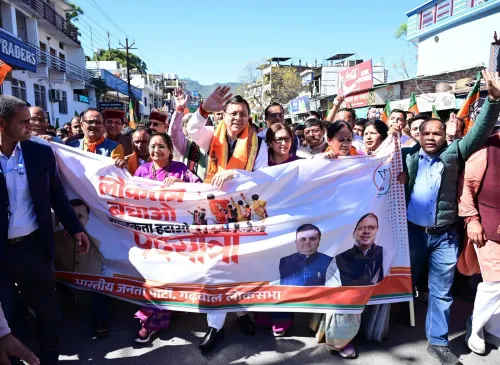
Union Agriculture Minister Shivraj Singh Chouhan , Deputy CM Brajesh Pathak , and BJP State President Pankaj Chaudhary led the procession.
BJP accused the Congress -led INDIA bloc of undermining democracy, disrupting Parliament, and misleading the public on the Special Intensive Revision (SIR) of electoral rolls.
Multiple leaders alleged foreign interference and drew comparisons with political instability in Bangladesh , Nepal , and Sri Lanka .
The nationwide campaign is scheduled to continue until 5 November , with senior leaders canvassing across states.
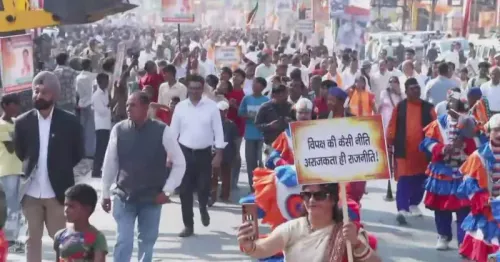
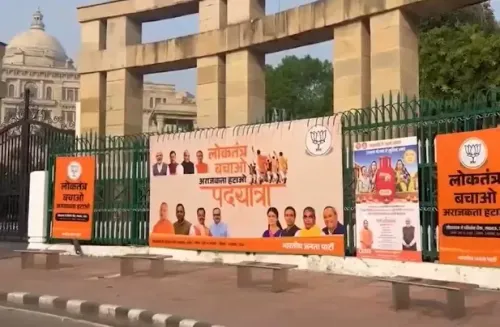
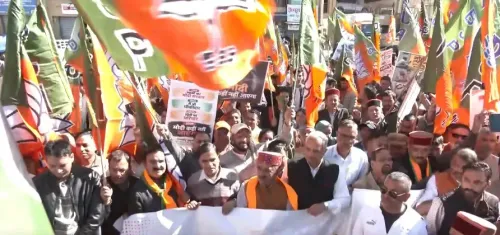
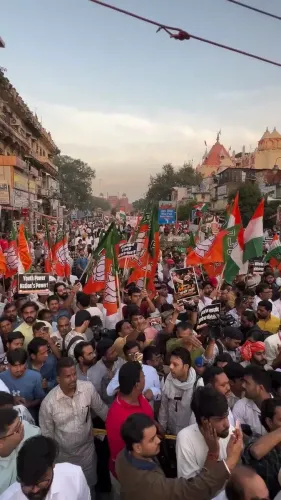
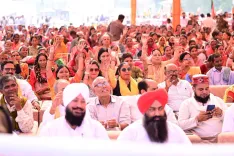
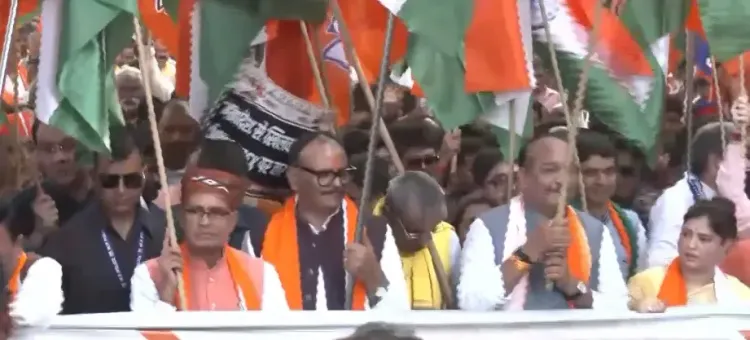
The Bharatiya Janata Party (BJP) on Tuesday, 3 November 2026, launched its 'Loktantra Bachao, Arajakta Hatao' (Save Democracy, Remove Anarchy) march in Lucknow, Uttar Pradesh, accusing the Congress-led INDIA bloc of undermining democratic institutions, disrupting parliamentary proceedings, and spreading misinformation among the public. The march, which drew thousands of workers and supporters, is part of a broader nationwide campaign the party says will run until 5 November.
The March and Its Route
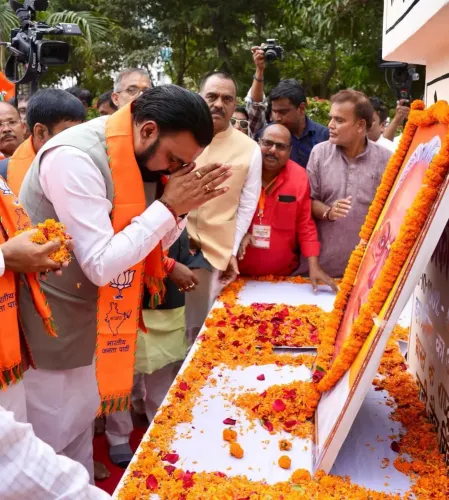
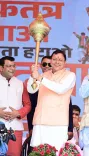
The procession began at Lok Bhawan and proceeded towards Parivartan Chowk, with participants carrying the Tricolour alongside BJP flags. Senior leaders including Union Agriculture Minister Shivraj Singh Chouhan, BJP State President Pankaj Chaudhary, and Deputy Chief Minister Brajesh Pathak led the rally. The event was positioned as both a public outreach exercise and a counter-mobilisation effort against what the party describes as Opposition-led political destabilisation.
What BJP Leaders Said
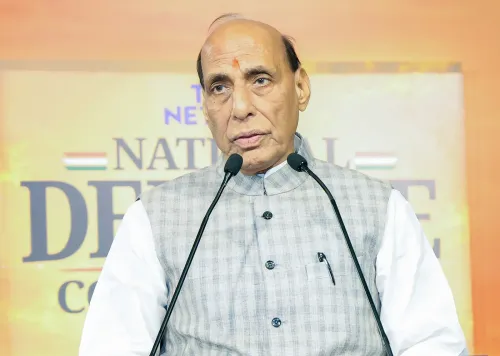
Addressing reporters at the march, Chouhan framed the event in stark terms. Shivraj Singh Chouhan said, 'This is a Satyagraha to save democracy and remove anarchy. People have tried to destabilise the country several times in history, and today, the Congress-led INDIA bloc, including the SP, is dreaming of regime change by spreading anarchy. However, this crowd is evidence that the public will not allow such forces to weaken democracy.'
Chouhan also defended the Special Intensive Revision (SIR) of electoral rolls, saying names of deceased individuals, those who had relocated, and alleged infiltrators had been removed through the process. He accused the INDIA bloc of 'misleading the public regarding SIR.'
Deputy Chief Minister Brajesh Pathak alleged that the Opposition, 'in their hunger for power,' was attempting to 'create a situation like Bangladesh in India,' and appealed to citizens to understand the message of the march. BJP State President Pankaj Chaudhary claimed the INDIA bloc wanted to 'take India down the path of Nepal and Sri Lanka,' adding that India's democratic foundations were too strong for such attempts to succeed.
Other Voices at the Rally
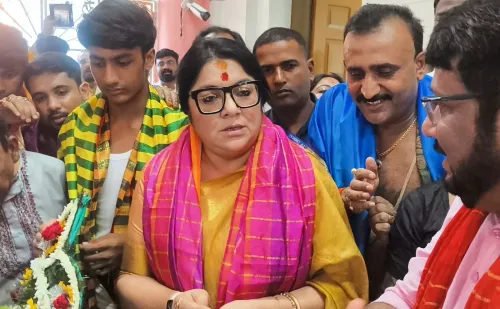
BJP Rajya Sabha member Priyanka Rawat said the party had worked to connect citizens 'at the last mile with the mainstream' to protect democratic institutions. Minister Sanjay Nishad invoked foreign interference, warning that 'foreign forces are trying to weaken the country,' while congratulating Prime Minister Modi on India's economic trajectory. BJP MLA Neeraj Bora drew a historical comparison, referencing the Emergency era and Congress-era scams as precedents for what he described as the Opposition's track record of undermining institutions.
Minister Bhupendra Singh Chaudhary said the campaign would continue until 5 November, with senior BJP leaders travelling across the state. He alleged that 'Congress has become a pawn for a foreign agenda, aimed at weakening the country's Constitution and fostering chaos.'
Minister Dinesh Pratap Singh took aim at Congress leader Rahul Gandhi specifically, saying that fighting against officials rather than for citizens' rights within elected institutions was 'not acting sensibly.' Mohsin Raza, Chairman of the Minorities Commission, urged all Indians to participate in the campaign, accusing the Congress of having 'previously sought to win elections with the support of terrorists.'
Context and Political Backdrop
The march comes amid escalating tensions between the ruling BJP and the INDIA bloc over electoral roll revisions, parliamentary conduct, and governance. Critics argue that BJP's campaign is designed to pre-empt Opposition criticism ahead of upcoming state political cycles, while the party maintains it is a grassroots democracy-awareness drive. Notably, the INDIA bloc has not yet issued a formal response to Tuesday's march. This is at least the third major BJP public mobilisation campaign in Uttar Pradesh in 2026, reflecting the state's continued centrality to national political arithmetic. How both sides frame the democracy narrative in the coming weeks could shape voter perceptions ahead of the next electoral cycle.
Point of View
And mobilising on a 'democracy under threat' narrative here carries disproportionate national weight. What is striking is the escalation in language: invoking Bangladesh, Nepal, and Sri Lanka, and alleging foreign support for the Opposition, pushes the rhetoric significantly beyond standard campaign rhetoric. The INDIA bloc's silence so far is also notable — a delayed or fragmented response could allow the BJP's framing to harden. The unresolved question is whether grievances around electoral roll revisions have genuine public traction, or whether this march is primarily a worker-mobilisation exercise ahead of a political dry season.
NationPress
3 Nov 2026
Frequently Asked Questions
What is BJP's 'Loktantra Bachao, Arajakta Hatao' march?
'Loktantra Bachao, Arajakta Hatao' translates to 'Save Democracy, Remove Anarchy.' It is a BJP-organised public march launched in Lucknow on 3 November 2026 to counter the Opposition's political narrative, mobilise grassroots workers, and highlight BJP's stance on electoral roll revisions and parliamentary conduct.
Who led the Lucknow march?
Union Agriculture Minister Shivraj Singh Chouhan, BJP State President Pankaj Chaudhary, and Deputy Chief Minister Brajesh Pathak led the march. Several other senior party leaders and thousands of workers also participated.
What is the BJP's criticism of the INDIA bloc in this march?
BJP leaders accused the Congress-led INDIA bloc of undermining democratic institutions, disrupting parliamentary proceedings, spreading misinformation about the Special Intensive Revision (SIR) of electoral rolls, and allegedly working with foreign forces to destabilise the country.
What is the Special Intensive Revision (SIR) that BJP leaders mentioned?
SIR refers to a revision process for electoral rolls under which names of deceased individuals, those who relocated, and alleged infiltrators have reportedly been removed. The BJP defended it as a legitimate administrative exercise, while accusing the INDIA bloc of misleading the public about its intent and implementation.
How long will BJP's 'Loktantra Bachao' campaign last?
According to Minister Bhupendra Singh Chaudhary, the campaign is scheduled to run from 3 November to 5 November, with senior party leaders conducting outreach across states during this period.