CM Dhami: No Compromise on Voter List Integrity, Security
Synopsis
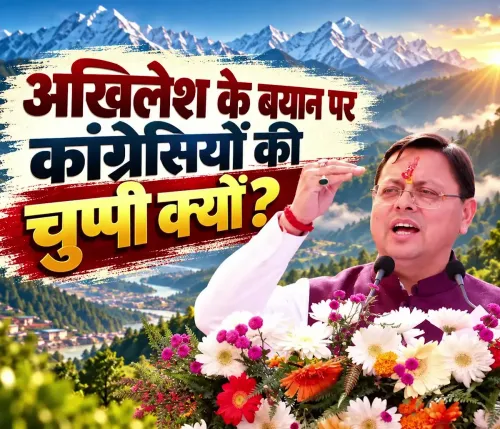
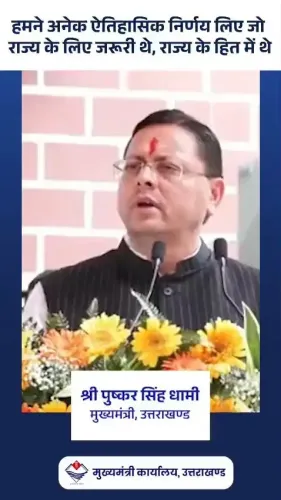
Uttarakhand CM Pushkar Singh Dhami on November 3, 2026 declared zero compromise on voter list sanctity and national security, accusing Congress and the INDIA alliance of anxiety over state action against alleged illegal infiltrators and their electoral influence.
Key Takeaways
CM Pushkar Singh Dhami posted on November 3, 2026 pledging no compromise on voter list integrity or national security in Uttarakhand .
He accused Congress and the INDIA alliance of being 'anxious' over government action against the alleged illegal vote bank of infiltrators.
Dhami framed expulsion of infiltrators as essential to protecting Devbhoomi 's core identity and democratic cleanliness.
The BJP 's 2019 manifesto had committed to a nationwide NRC modelled on the Assam exercise, which identified several lakh illegal immigrants.
No specific new administrative action or official has been confirmed as of the post date; the statement is a political declaration of intent.
Opposition parties have consistently countered such drives as targeting minorities and motivated by electoral strategy rather than genuine security concerns.
The integrity of India's electoral rolls and the character of its border-state democracy collided in a pointed political assertion on Tuesday, November 3, 2026, when Uttarakhand Chief Minister Pushkar Singh Dhami declared that action against illegal infiltrators and their alleged influence on voter lists would continue without pause — and that opposition discomfort with the drive only exposes what is really at stake.
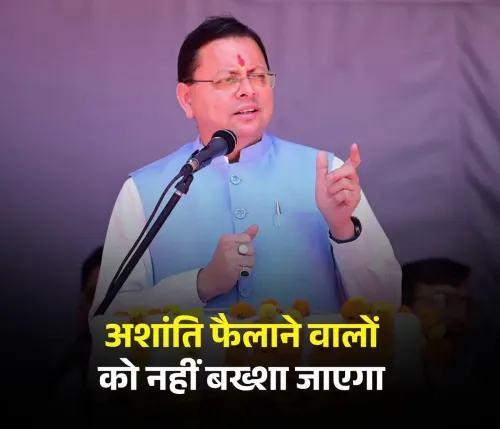
Posting in Hindi, CM Dhami wrote: 'देश की मतदाता सूची की शुचिता और राष्ट्रीय सुरक्षा से कोई समझौता नहीं होगा' — 'There will be no compromise on the sanctity of the nation's voter list and national security.' He went further, arguing that the anxiety of Congress and the INDIA alliance was being 'exposed' by government action against the alleged illegal vote bank of infiltrators, and framing the expulsion of such individuals as essential to protecting Devbhoomi — the sacred identity of Uttarakhand — and cleansing the democratic system.
Devbhoomi's Demographic Fault Line
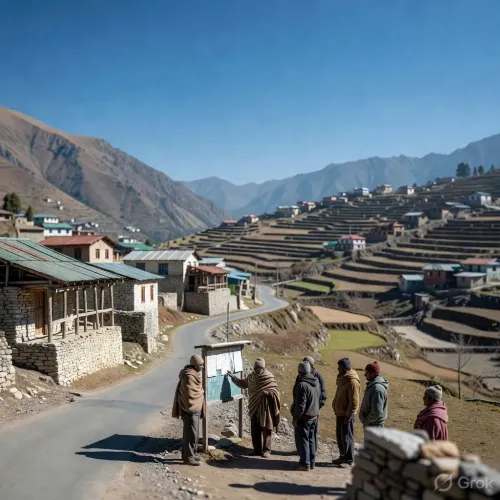
Uttarakhand, tucked against the Himalayan borders with China and Nepal, has seen the BJP-led state government repeatedly raise concerns about demographic change driven by migration into its towns and villages. The state administration has linked this to what it describes as irregularities in voter rolls — a charge the opposition firmly contests as a pretext for targeting minorities.
The BJP's electoral posture on this issue has deep roots: its 2019 national manifesto committed explicitly to a nationwide implementation of a citizenship verification exercise modelled on the Assam National Register of Citizens (NRC), which identified and stripped several lakh individuals from citizenship and voter rolls after a years-long documentation process. That national exercise never fully replicated beyond Assam, but state-level rhetoric has kept the theme alive across Assam, West Bengal, and now visibly in Uttarakhand.
Congress and the INDIA Bloc in the Crosshairs
CM Dhami's post is calibrated as much as a political jab as a governance statement. By framing opposition pushback as 'anxiety' — bechain — he positions Congress and the INDIA alliance as having a vested interest in protecting an illegal vote bank. This is a well-worn but potent electoral narrative for the BJP, one that simultaneously paints the opposition as soft on national security and implies demographic cowardice.
Opposition parties have consistently rejected this framing, arguing that voter list revision drives and infiltrator crackdowns disproportionately target Muslim migrants and labourers from other states, serving political rather than security ends. That counter-narrative, however, finds limited traction in Uttarakhand, where the BJP has held power since 2017 and where the 'Devbhoomi' cultural identity carries strong electoral resonance.
What the Timing Signals
The post arrives with no announced formal action — no new state-level NRC drive, no named official, no fresh deportation figures have been confirmed. But the public declaration by CM Dhami sets a political marker: that electoral roll cleansing and infiltrator expulsion will remain live policy priorities for Uttarakhand under his government. The watch now is whether an administrative follow-through — coordination with central agencies, a formal voter list revision exercise, or a state-level documentation drive — is announced in coming weeks.
In Indian politics, the line between security policy and electoral strategy is rarely clean. In the hills of Uttarakhand, Dhami is betting it does not need to be.
Point of View
West Bengal, and Delhi — suggests this is less a spontaneous reaction than a coordinated narrative that the party has found electorally durable in border and hill states. The absence of announced concrete action, however, means the post functions primarily as a political positioning statement rather than a policy milestone.
NationPress
3 Nov 2026
Frequently Asked Questions
What did Uttarakhand CM Dhami say about voter list integrity?
CM Pushkar Singh Dhami stated on November 3, 2026 that there will be 'no compromise' on the sanctity of the country's voter list and national security, and that action against the alleged illegal vote bank of infiltrators will continue.
Why is CM Dhami targeting Congress and the INDIA alliance?
Dhami accused Congress and the INDIA alliance of being 'anxious' about the state government's crackdown on infiltrators, implying they have a political stake in protecting an illegal vote bank.
What is Devbhoomi and why does it matter in this debate?
Devbhoomi, meaning 'Land of Gods,' is the cultural and spiritual identity of Uttarakhand. CM Dhami invoked it to argue that expelling illegal infiltrators is necessary to preserve the state's original demographic and religious character.
What is the NRC and how is it linked to Uttarakhand's voter list issue?
The National Register of Citizens (NRC) was completed in Assam in 2019 and excluded several lakh individuals deemed illegal immigrants. The BJP's national manifesto committed to extending a similar exercise nationwide; Dhami's statements reflect that agenda at the state level.
What has the opposition said about voter list revision drives targeting infiltrators?
Opposition parties, including Congress and INDIA alliance members, have consistently argued that such drives disproportionately target Muslim migrants and minority communities, and are politically motivated rather than genuine national security measures.