CM Dhami Touts Uttarakhand Anti-Conversion Law
Synopsis
Uttarakhand Chief Minister Pushkar Singh Dhami on 27 May 2026 publicly reaffirmed his government's enforcement of a strict anti-conversion law, saying it curbs illegal conversions through deceit, inducement, and coercion — continuing a broader BJP-state pattern of cultural-protection legislation.
Key Takeaways
CM Pushkar Singh Dhami posted on 27 May 2026 reaffirming enforcement of Uttarakhand's anti-conversion law.
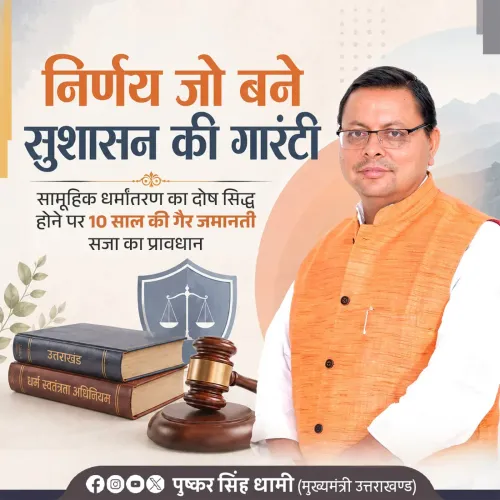
The law targets conversions carried out through deceit, inducement, or coercion , not voluntary religious change.
Uttarakhand has been under BJP rule since 2017 ; Dhami has led the state since 2021 .
Similar anti-conversion statutes were enacted in Uttar Pradesh (2020) , Madhya Pradesh , and Haryana (2021) .
Critics argue such laws may restrict individual religious freedom and affect religious minority communities .
Constitutional challenges and FIR/conviction data will be key indicators of the law's real-world impact.
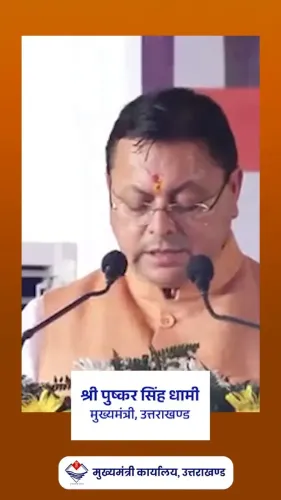
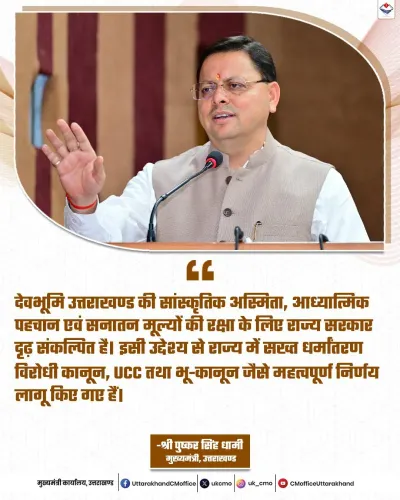
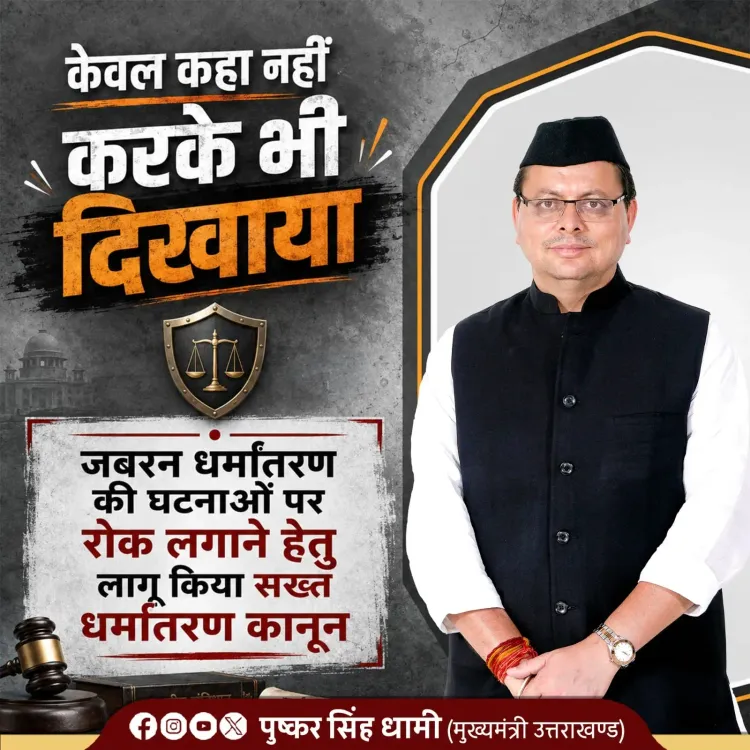
Uttarakhand Chief Minister Pushkar Singh Dhami on Wednesday, 27 May 2026, reaffirmed his government's commitment to enforcing the state's strict anti-conversion law, stating that it has put a firm check on illegal religious conversions carried out through deception, inducement, and coercion.
In a post on X, CM Dhami wrote: 'देवभूमि उत्तराखंड में हमारी सरकार ने सख्त धर्मांतरण कानून लागू कर छल, प्रलोभन और दबाव के जरिए होने वाले अवैध धर्मांतरण पर कड़ा शिकंजा कसने का कार्य किया है।' ('In Devbhoomi Uttarakhand, our government has implemented a strict anti-conversion law and has worked to clamp down firmly on illegal conversions taking place through deceit, inducement, and pressure.') He added that his government is working with full commitment to protect culture, faith, and society.
Context
Uttarakhand, officially described as Devbhoomi (Land of the Gods), has been under continuous BJP rule since 2017. CM Dhami, who took charge in 2021 and secured a fresh mandate in the 2022 assembly election, has consistently positioned cultural and religious protection as a governance priority. The post is framed around the enforcement of an existing anti-conversion statute rather than the announcement of new legislation.
Policy Backdrop
Several BJP-governed states have enacted or strengthened anti-conversion laws since 2020. Uttar Pradesh passed the Prohibition of Unlawful Conversion of Religion Act in November 2020, with Madhya Pradesh and Haryana introducing comparable measures in 2021. Uttarakhand's legislation follows the same legislative template, targeting conversions alleged to involve fraud, allurement, or force rather than voluntary religious choice.
Proponents argue such laws protect vulnerable communities from exploitation. Critics, including civil liberties groups and religious minority organisations, contend that broadly worded provisions can restrict individual religious freedom and be misused against minority communities.
Stakeholders and Impact
Hindu community organisations have broadly welcomed the enforcement drive, viewing it as a safeguard for the state's religious and cultural character. Religious minority groups — including Christian and Muslim communities with a presence in the state — have raised concerns that the law's implementation could criminalise legitimate religious activity such as voluntary conversion or pastoral outreach.
Legal observers are watching whether affected parties mount constitutional challenges, particularly on grounds of the right to freedom of conscience and religion guaranteed under Article 25 of the Indian Constitution.
What's Next
The immediate focus will be on the volume and nature of cases registered under the law — including FIR data and prosecution outcomes — which will indicate how broadly enforcement is being applied. Any judicial scrutiny of the statute's provisions, at the Uttarakhand High Court or the Supreme Court of India, could reshape its scope and implementation. CM Dhami's public reaffirmation signals that the law will remain a visible plank of his government's political messaging ahead of future electoral cycles.
Frequently Asked Questions
What is Uttarakhand's anti-conversion law?
Uttarakhand's anti-conversion law prohibits religious conversions carried out through deceit, inducement, or coercion. It is part of a broader set of similar statutes enacted by BJP-governed states since 2020, aimed at preventing what proponents call 'forced' or 'fraudulent' religious conversions.
What did CM Dhami say about anti-conversion law?
On 27 May 2026, CM Pushkar Singh Dhami posted on X stating that his government has implemented a strict anti-conversion law in Uttarakhand and is firmly clamping down on illegal conversions through deceit, inducement, and pressure, with full commitment to protecting culture, faith, and society.
Which states in India have anti-conversion laws?
Several BJP-governed states have enacted anti-conversion legislation, including Uttar Pradesh (November 2020), Madhya Pradesh, Haryana (2021), and Uttarakhand. These laws broadly target conversions alleged to involve fraud, force, or allurement.
Is Uttarakhand's anti-conversion law constitutional?
The constitutional validity of such laws is contested. Critics argue they may infringe upon Article 25 of the Indian Constitution, which guarantees freedom of conscience and the right to freely profess, practise, and propagate religion. Court challenges remain a key thing to watch.
Why is Uttarakhand called Devbhoomi?
Uttarakhand is officially called Devbhoomi, meaning 'Land of the Gods,' because it is home to some of Hinduism's most sacred pilgrimage sites, including Char Dham — Badrinath, Kedarnath, Gangotri, and Yamunotri — and the river Ganga's origin at Gangotri.