CM Dhami Warns of 10-Year Jail for Forced Mass Conversions in Uttarakhand
Synopsis
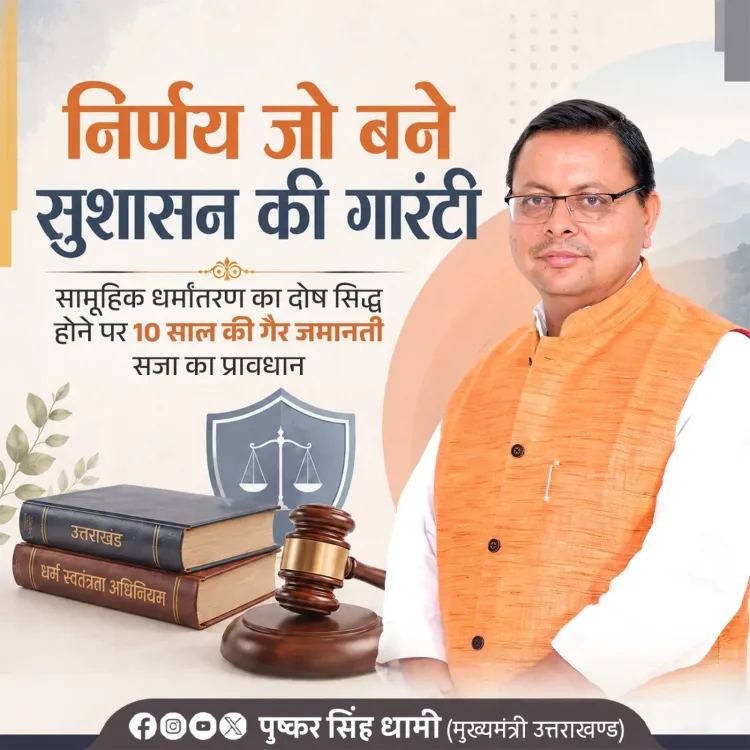
Uttarakhand CM Pushkar Singh Dhami has publicly warned that forced mass conversions in the state will not be tolerated, citing a law that prescribes up to ten years of non-bailable imprisonment for convicted offenders. The statement reaffirms the BJP government's strict anti-conversion stance in the pilgrimage-heavy state.
Key Takeaways
CM Pushkar Singh Dhami stated on June 1, 2026 that forced mass conversions in Uttarakhand will face the strictest legal action.
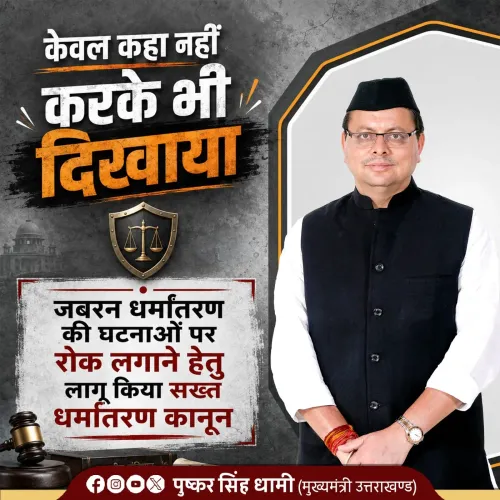
Convicted offenders face up to 10 years of non-bailable imprisonment under the state's anti-conversion law.
The legal foundation is the Uttarakhand Freedom of Religion Act , originally passed in 2018 with a seven-year penalty ceiling.
Dhami described zero tolerance for forced conversions as the 'clear policy' of his government.
Uttarakhand is among several BJP-governed states that have enacted or strengthened anti-conversion statutes since 2018.
Legal challenges to the enhanced penalty clause before the Uttarakhand High Court remain a key development to watch.
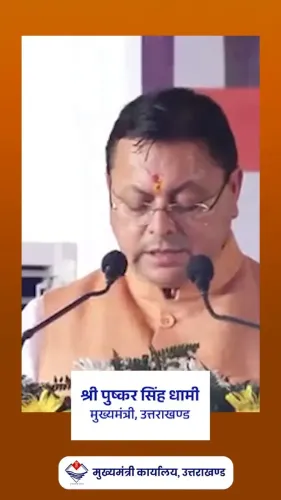
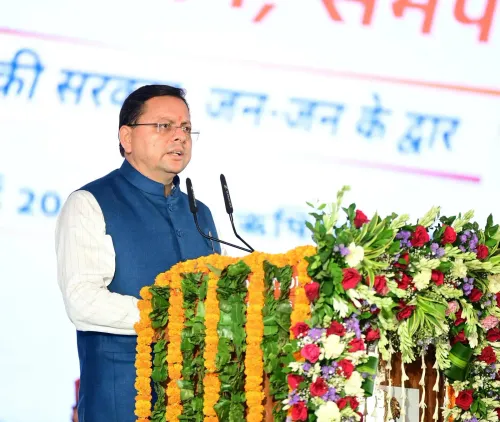
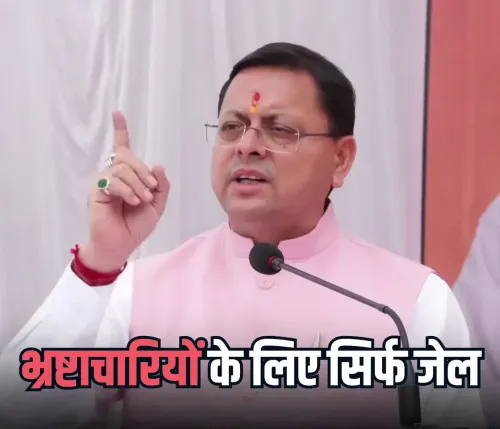
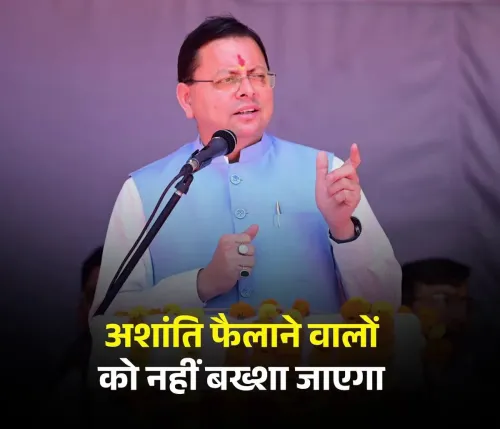
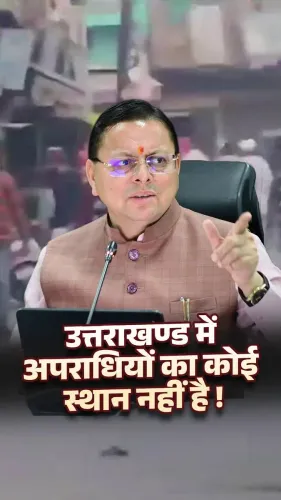
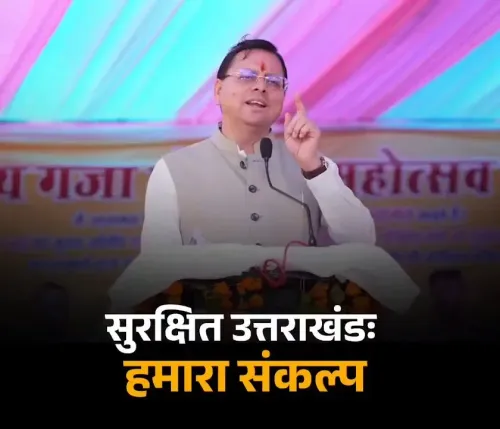
Uttarakhand Chief Minister Pushkar Singh Dhami on Monday, June 1, 2026, issued a firm public warning that forced mass religious conversions in the state will attract the strictest possible legal action, citing a non-bailable imprisonment provision of up to ten years for those found guilty.
Context
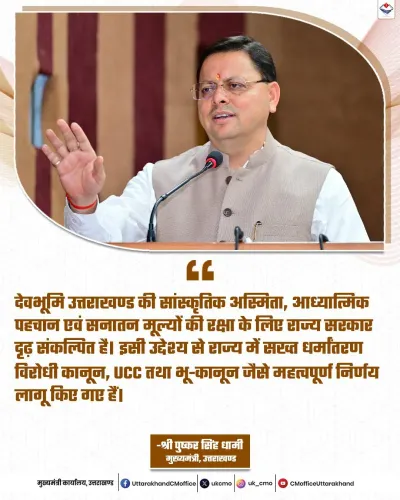
In his post on X, CM Dhami stated in Hindi: 'देवभूमि उत्तराखंड की सांस्कृतिक पहचान और सामाजिक सौहार्द के साथ किसी भी प्रकार का खिलवाड़ स्वीकार नहीं किया जाएगा' — ('No tampering of any kind with the cultural identity and social harmony of Devbhoomi Uttarakhand will be tolerated.'). He added that stringent action against forced mass conversions is the 'clear policy' of his government.
Uttarakhand, officially referred to as Devbhoomi (Land of the Gods), holds a prominent place in Hindu religious geography, housing major pilgrimage sites along the Char Dham circuit. The state's cultural identity has long been a central plank in the ruling party's political messaging.
Policy Backdrop
The legal framework underpinning Dhami's statement is the Uttarakhand Freedom of Religion Act, first enacted by the state legislature in 2018. The original statute prescribed imprisonment of up to seven years for conversions carried out through force, allurement, or fraud.
The Chief Minister's reference to a ten-year non-bailable sentence signals a hardened penalty framework for cases involving mass conversions. The provision, as stated by Dhami, applies specifically when guilt is established in such cases. The exact legislative amendment introducing this enhanced term is part of the state's evolving anti-conversion statute.
Several BJP-governed states — including Uttar Pradesh, Madhya Pradesh, and Gujarat — have enacted or strengthened similar freedom-of-religion laws since 2018, framing them as protections for social harmony against alleged coercive practices. Uttarakhand's approach fits within this broader pattern of legislative action at the state level.
Stakeholders and Impact
The statement is directed at potential offenders and carries a deterrence message for organised conversion activities. Hindu community organisations in the state have historically demanded strict enforcement of anti-conversion provisions and are likely to view the Chief Minister's public reaffirmation as a positive signal.
Religious minority communities and civil liberties groups, on the other hand, have previously raised concerns about the potential misuse of anti-conversion laws against voluntary conversions and peaceful religious practice. The ten-year non-bailable clause is expected to attract fresh scrutiny from legal advocacy groups and potentially from the Uttarakhand High Court.
What's Next
Enforcement actions and FIR registrations under the enhanced penalty framework will be closely watched as an indicator of how actively the state machinery pursues cases. Any judicial challenges — particularly those testing the constitutionality of the ten-year non-bailable term and the procedural safeguards built into the law — could shape the statute's practical reach.
With Uttarakhand positioned as a spiritually significant state and CM Dhami consistently projecting a strong cultural-protection mandate, the political messaging around this law is likely to remain prominent ahead of future electoral cycles.
Point of View
Devbhoomi, is a religious identifier. The statement fits a coordinated pattern across BJP-ruled states of using freedom-of-religion legislation to consolidate Hindu voter sentiment while simultaneously creating a legal deterrent against organised conversion drives. The severity of the non-bailable clause, however, sets up an almost inevitable High Court contest over proportionality and safeguards for voluntary conversions. How the judiciary responds will determine whether the law becomes an enforceable instrument or a largely symbolic posture.
NationPress
15 Oct 2026
Frequently Asked Questions
What is the punishment for forced conversion in Uttarakhand?
Under the Uttarakhand Freedom of Religion Act, those convicted of forced mass conversions can face up to ten years of non-bailable imprisonment, as reaffirmed by CM Pushkar Singh Dhami on June 1, 2026.
What is the Uttarakhand Freedom of Religion Act?
It is a state law first enacted in 2018 that prohibits religious conversions carried out through force, allurement, or fraud. The original statute prescribed up to seven years in prison; the penalty has since been enhanced.
Why is Uttarakhand called Devbhoomi?
Uttarakhand is called Devbhoomi, meaning 'Land of the Gods', because it is home to major Hindu pilgrimage sites including the Char Dham — Badrinath, Kedarnath, Gangotri, and Yamunotri.
Which other states have anti-conversion laws in India?
Several BJP-governed states including Uttar Pradesh, Madhya Pradesh, and Gujarat have enacted or strengthened anti-conversion statutes since 2018, framing them as protections against coercive religious practices.
Can the 10-year non-bailable conversion sentence be challenged in court?
Legal experts expect the enhanced penalty clause to face scrutiny in the Uttarakhand High Court, with challenges likely to focus on constitutional proportionality and procedural safeguards for voluntary conversions.