CM Dhami Vows to Pursue Tough Decisions for Uttarakhand
Synopsis
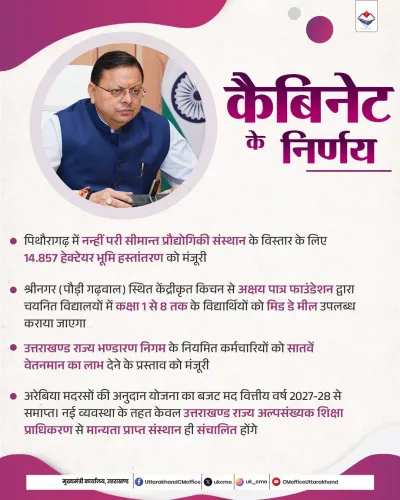
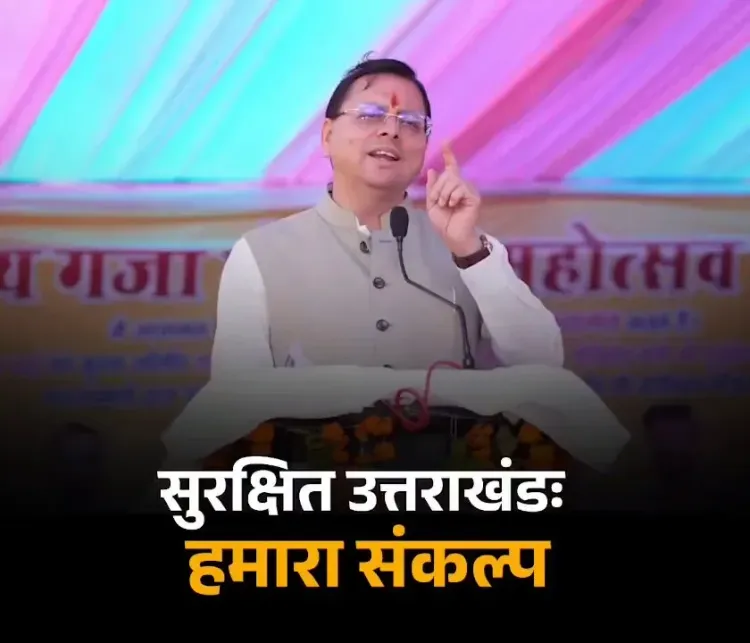
Uttarakhand Chief Minister Pushkar Singh Dhami on 27 May 2026 reaffirmed his government's resolve to pursue tough administrative decisions for Devbhoomi, saying appeasement-driven opposition will not deter his government from acting in the public and state interest.
Key Takeaways
CM Pushkar Singh Dhami posted on 27 May 2026 defending his government's strict decisions for Uttarakhand .
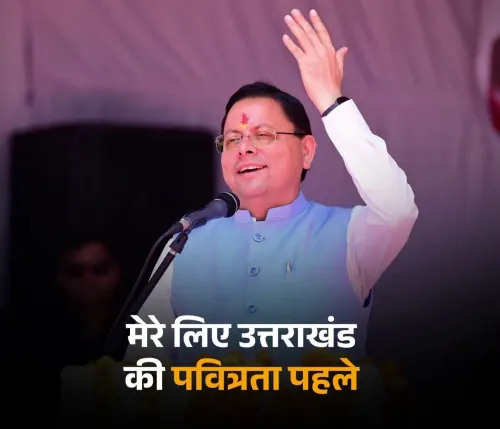
He invoked the term Devbhoomi — Uttarakhand's religious epithet — to frame governance as both a security and sacred duty.
The statement directly targets political opponents he accused of practising 'appeasement politics.' The Dhami government has pursued assertive policies since 2022 , including becoming the first state to draft a Uniform Civil Code .
Uttarakhand borders China and Nepal , making security and demographic concerns central to the state's political discourse.
The post signals continued policy firmness ahead of the next state assembly elections.
Uttarakhand Chief Minister Pushkar Singh Dhami on Wednesday, 27 May 2026, reaffirmed his government's commitment to taking firm administrative decisions for the state, saying those who practise appeasement politics may not welcome such steps but his government will continue moving forward in the interest of the people and the state.
Context
In a post on X, CM Dhami wrote in Hindi: 'देवभूमि को सशक्त एवं सुरक्षित बनाने हेतु हमारी सरकार द्वारा लिए गए सख्त निर्णय तुष्टिकरण की राजनीति करने वालों को भले ही रास न आएं, लेकिन जनहित और प्रदेशहित में हम अपने संकल्पों पर निरंतर आगे बढ़ते रहेंगे।' Translated: 'The strict decisions taken by our government to make Devbhoomi strong and secure may not be palatable to those who practise appeasement politics, but in the interest of the public and the state, we will continue to move forward on our resolutions.'
The statement is a direct rebuttal to political opposition that has criticised the BJP government's recent administrative actions in the hill state. By invoking the term 'Devbhoomi' — the spiritual epithet for Uttarakhand meaning 'Land of the Gods' — Dhami frames his governance agenda in the language of both security and sanctity.
Policy Backdrop
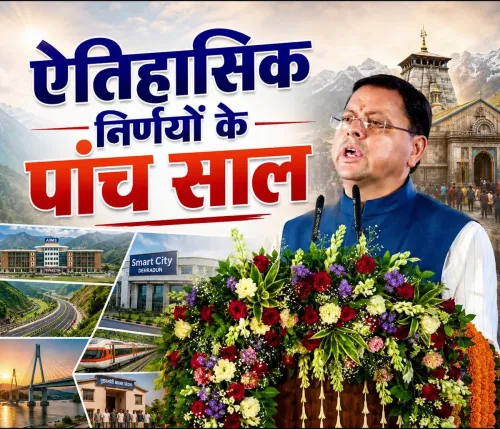
The post fits into a broader pattern of the Dhami government publicly defending assertive policy moves on issues such as land use, religious conversions, and public order. Since returning to power in 2022, the government has consistently positioned these measures as serving long-term state interest rather than short-term electoral gain.
Most notably, Uttarakhand became the first Indian state to formally pursue a Uniform Civil Code (UCC) after the Dhami government committed to drafting and implementing the legislation following its 2022 election victory. That move drew sharp criticism from opposition parties, who labelled it divisive, and was defended by the BJP as a step toward uniform governance free from appeasement.
Stakeholders and Impact
The statement is addressed, at least implicitly, to residents of Uttarakhand — a state with deep religious significance and a sensitive border geography, sharing frontiers with China and Nepal. The BJP's framing of security and public welfare as non-negotiable resonates particularly in border districts and among pilgrimage-dependent communities.
For the political opposition, the post renews a familiar flashpoint. Opposition parties in the state have repeatedly accused the government of using the language of security and appeasement to target minorities and consolidate vote banks. Dhami's statement signals the government has no intention of moderating its stance in response to such criticism.
What's Next
The post is likely a precursor to or a defence of specific administrative announcements, though the precise decisions being referenced were not detailed in the statement. Observers will watch for follow-up actions on law-and-order, land regulation, or religious conversion policy in the coming weeks.
With the next Uttarakhand state assembly elections on the horizon, the Dhami government's insistence on policy continuity — framed as resolve against appeasement — is expected to remain a central plank of the BJP's political communication in the state.
Point of View
Not merely a governance statement — it simultaneously defends past actions and lays the groundwork for future ones, all while pre-emptively delegitimising opposition criticism as 'appeasement.' The invocation of 'Devbhoomi' is deliberate: it elevates administrative decisions to a moral plane, making dissent harder to sustain in a state defined by its religious identity. This mirrors the BJP's national playbook in border and hill states, where security and cultural preservation are fused into a single governance narrative. The timing, well ahead of the next assembly cycle, suggests the party is already in campaign-positioning mode.
NationPress
11 Oct 2026
Frequently Asked Questions
What did Uttarakhand CM Pushkar Singh Dhami say on 27 May 2026?
CM Dhami posted on X that his government's strict decisions to make Uttarakhand strong and secure may not be liked by those who practise appeasement politics, but his government will continue moving forward in the public and state interest.
What is 'Devbhoomi' and why does Dhami use the term?
'Devbhoomi' means 'Land of the Gods' and is the official spiritual epithet for Uttarakhand, reflecting its dense network of Hindu pilgrimage sites. CM Dhami uses the term to frame governance decisions as protecting the state's religious and cultural identity.
What strict decisions is CM Dhami referring to in his post?
The post does not specify the exact decisions. Based on the government's track record since 2022, they likely relate to policies on land use, religious conversions, public order, or the Uniform Civil Code — areas where the BJP government has taken assertive positions.
What is the Uniform Civil Code in Uttarakhand?
Uttarakhand became the first Indian state to formally pursue a Uniform Civil Code after the Dhami government committed to drafting the legislation following its 2022 election victory. The UCC aims to replace personal laws based on religion with a common legal framework for all citizens.
Who is Pushkar Singh Dhami?
Pushkar Singh Dhami is a BJP leader serving as Chief Minister of Uttarakhand since 2021. He is known for emphasising development, security measures, and cultural governance in the Himalayan state, and led the BJP to a return to power in the 2022 state assembly elections.