Bombay HC convicts Tarun Tejpal of rape, overturns 2021 acquittal in Goa assault case
Synopsis
A decade after the original allegations, the Bombay High Court has convicted former Tehelka editor Tarun Tejpal of rape — overturning a sessions court acquittal that had itself been widely criticised for focusing on the survivor's conduct rather than the evidence. The sentencing hearing, and an expected Supreme Court challenge, now take centre stage.
Key Takeaways
The Bombay High Court on 6 August convicted Tarun Tejpal of rape under IPC Sections 376(2)(f) and 376(2)(k) , overturning his May 2021 acquittal.
He was also convicted under Section 354A (sexual harassment) and Section 354B (criminal force with intent to disrobe).
The Division Bench of Justice Neela Gokhale and Justice Amit Jamsandekar allowed the Goa government's appeal against the Mapusa sessions court verdict.
The trial court's acquittal had been criticised for alleged lapses, including ignoring an apology email reportedly sent by Tejpal.
Solicitor General Tushar Mehta opposed leniency at sentencing; Tejpal's counsel sought an eight-week suspension of conviction to approach the Supreme Court.
The detailed judgment is awaited; sentencing was adjourned to 2.30 pm on the same day.
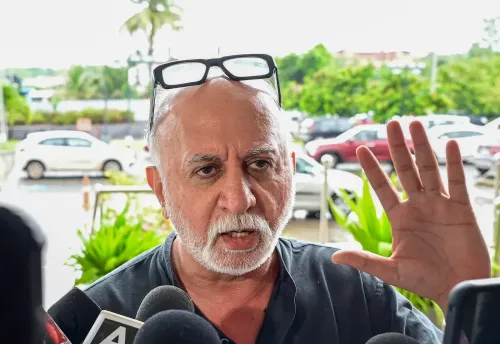
The Bombay High Court on Thursday, 6 August convicted former Tehelka editor Tarun Tejpal of rape and related offences, setting aside a sessions court acquittal in the 2013 sexual assault case involving a junior colleague at a luxury hotel in Goa. The ruling marks a significant reversal in a decade-long legal battle that drew national attention to workplace sexual violence in Indian media.
What the High Court Ruled
A Division Bench of Justice Neela Gokhale and Justice Amit Jamsandekar allowed the appeal filed by the Goa government against the May 2021 judgment of an Additional Sessions Court in Mapusa, which had acquitted Tejpal of all charges. The Bench convicted him under Sections 376(2)(f) and 376(2)(k) of the Indian Penal Code (IPC) — both pertaining to rape — as well as Section 354A (sexual harassment) and Section 354B (use of criminal force with intent to disrobe).
The question of sentencing was taken up later in the day, with the High Court adjourning the matter to 2.30 pm for that hearing. The detailed written judgment remains awaited.
Background: The 2013 Case and Trial
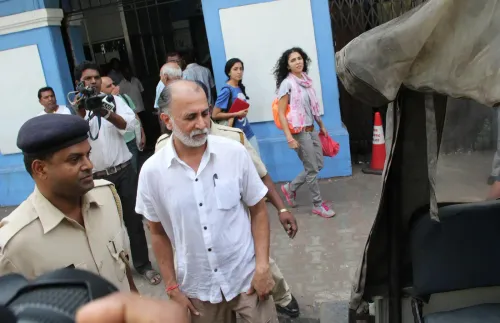
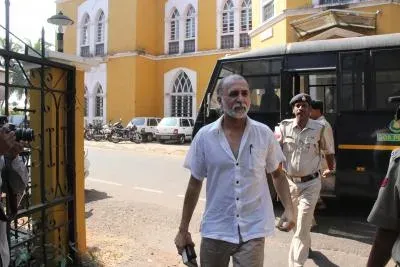
The case originated from allegations by a junior colleague that Tejpal sexually assaulted her inside an elevator of a luxury hotel in Goa during a Tehelka ThinkFest event in November 2013. The Goa Police registered an FIR for rape and allied offences, and Tejpal was arrested the same month after a local court rejected his anticipatory bail plea. He was subsequently granted regular bail by the Supreme Court in July 2014.
In May 2021, Additional Sessions Judge Kshama Joshi acquitted Tejpal, ruling that the prosecution had failed to prove its case beyond reasonable doubt. The trial court cited alleged lapses in the investigation — including the failure to produce CCTV footage — and drew criticism for focusing on the survivor's post-incident conduct rather than the evidence against the accused.
Why the High Court Overturned the Acquittal
The prosecution, backed by the Goa government, argued before the High Court that the sessions court had misread the evidence on record. Notably, the Goa Police submitted that the trial court had ignored material evidence — including an apology email that Tejpal allegedly sent to the complainant after she raised the allegations with the then managing editor of Tehelka.
The High Court accepted these contentions, finding that the lower court had erred in its appreciation of evidence. This comes amid a broader judicial reckoning with how trial courts handle survivor testimony and post-incident behaviour in sexual assault cases.
Sentencing Hearing: Leniency Sought, Opposed
After the conviction was pronounced, Tejpal's counsel sought suspension of the conviction for eight weeks to allow him to approach the Supreme Court, arguing that the verdict reversed an acquittal and that there was no other criminal case against him. Tejpal himself addressed the Bench, stating that he believed himself to be a victim and appealed for a compassionate approach on sentencing.
Solicitor General Tushar Mehta, appearing for the prosecution, firmly opposed any leniency. He argued that the case demanded a strong message against sexual violence, stating: 'when a girl says no, it means no.' The High Court is yet to pronounce the sentence.
What Comes Next
Tejpal's legal team is expected to challenge the conviction before the Supreme Court. The Bombay High Court's detailed judgment, once released, will be closely scrutinised for its reasoning on survivor testimony and evidentiary standards — findings that could carry precedential weight in similar cases across India.
Point of View
Where the trial court did not, points to a deeper problem: evidentiary standards in rape cases remain inconsistently applied across India's judicial hierarchy. The sentencing outcome and the expected Supreme Court challenge will test whether this conviction holds — and whether the judiciary's stated shift toward survivor-centric adjudication survives appellate scrutiny.
NationPress
20 Sept 2026
Frequently Asked Questions
What did the Bombay High Court rule in the Tarun Tejpal case?
The Bombay High Court convicted Tarun Tejpal of rape under IPC Sections 376(2)(f) and 376(2)(k), along with sexual harassment and related offences, on 6 August. The Division Bench set aside the May 2021 acquittal granted by an Additional Sessions Court in Mapusa, Goa.
What was the original 2013 allegation against Tarun Tejpal?
A junior colleague alleged that Tejpal sexually assaulted her inside an elevator at a luxury hotel in Goa during a Tehelka event in November 2013. Goa Police registered an FIR for rape and allied offences, leading to his arrest the same month.
Why was Tejpal acquitted in 2021, and why did the High Court reverse it?
Additional Sessions Judge Kshama Joshi acquitted Tejpal in May 2021, citing prosecution lapses including failure to produce CCTV footage and finding the case unproven beyond reasonable doubt. The High Court reversed this, holding that the trial court had ignored material evidence — including an alleged apology email from Tejpal — and had erred in appreciating the evidence on record.
What happens next in the Tarun Tejpal case?
The Bombay High Court was scheduled to pronounce the sentence after a hearing adjourned to 2.30 pm on 6 August. Tejpal's counsel has sought an eight-week suspension of the conviction to allow an appeal before the Supreme Court, which the Solicitor General opposed.
Who appeared for the prosecution in the Bombay High Court hearing?
Solicitor General Tushar Mehta appeared for the prosecution and opposed any leniency at sentencing, arguing the case required a strong message against sexual violence.