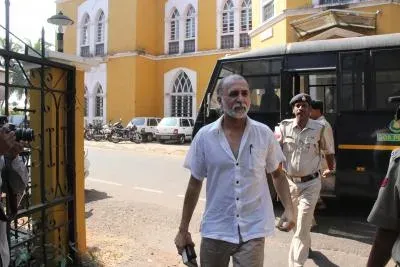
Goa govt moves SC to enhance Tarun Tejpal's 10-year rape sentence
Synopsis
The Goa government is not satisfied with the 10-year sentence handed to former Tehelka editor Tarun Tejpal — it has taken the fight to the Supreme Court, seeking exemplary punishment. The move comes weeks after the Bombay High Court overturned a sessions court acquittal and convicted Tejpal of rape, making this case a live test of how India's apex court treats sentencing in high-profile sexual assault reversals.
Key Takeaways
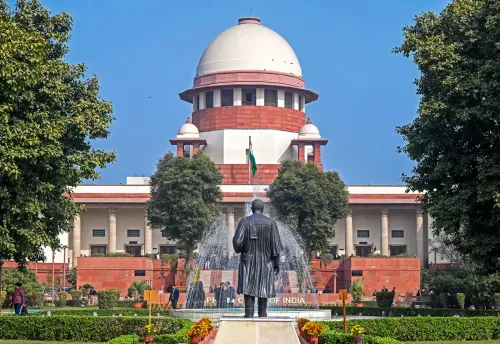
The Goa government has moved the Supreme Court seeking enhancement of Tarun Tejpal 's 10-year rigorous imprisonment in the 2013 sexual assault case .
The Bombay High Court convicted Tejpal on 6 August under IPC Sections 376(2)(f) , 376(2)(k) , 354A , and 354B , reversing a May 2021 acquittal by a Mapusa sessions court.
Tejpal was granted two weeks to surrender to jail authorities after sentencing.
Solicitor General Tushar Mehta argued for a strong message against sexual violence during the sentencing hearing.
Tejpal was first arrested in November 2013 ; the Supreme Court granted him regular bail in July 2014 .
The Goa government has approached the Supreme Court seeking enhancement of the 10-year rigorous imprisonment awarded to former Tehelka editor Tarun Tejpal in the 2013 sexual assault case involving a junior colleague. The state is reportedly pushing for harsher, exemplary punishment, according to a lawyer involved in the matter.
How the Conviction Came About
On 6 August, a division bench of the Bombay High Court, comprising Justices Neela Gokhale and Amit Jamsandekar, sentenced Tejpal to 10 years' rigorous imprisonment — hours after overturning his earlier acquittal and convicting him of rape and related offences under the Indian Penal Code (IPC). The bench granted Tejpal two weeks to surrender to jail authorities.
The High Court convicted Tejpal under Sections 376(2)(f) and 376(2)(k) (rape), 354A (sexual harassment), and 354B (assault or use of criminal force with intent to disrobe) of the IPC. The conviction reversed a May 2021 sessions court verdict from Mapusa, which had acquitted him of all charges.
What Tejpal and the State Argued at Sentencing
During the sentencing hearing, Tejpal's counsel sought an eight-week suspension of the conviction to allow an approach to the Supreme Court, noting that the verdict had reversed an acquittal and that Tejpal had no other pending criminal cases. Tejpal himself pleaded for leniency, stating he considered himself a victim and appealing for a compassionate view from the bench.
Opposing leniency, Solicitor General Tushar Mehta argued the case demanded a strong message against sexual violence, contending that 'when a girl says no, it means no.'
Background of the Case
The case originates from allegations by a junior colleague that Tejpal sexually assaulted her inside an elevator of a luxury hotel in Goa during an event in November 2013. The Goa Police registered an FIR for offences including rape, and Tejpal was arrested in November 2013 after a local court rejected his anticipatory bail plea. The Supreme Court granted him regular bail in July 2014.
What Happens Next
With the Goa government now before the Supreme Court seeking a stiffer sentence, the case enters a new legal phase. The state's move signals that it views the 10-year term as insufficient given the gravity of the offences — a position it will now have to argue before the country's highest court. The case is being closely watched as a benchmark for judicial responses to sexual violence by persons in positions of institutional power.
Point of View
While significant, does not match the state's reading of the offence's gravity — particularly given the accused's position of institutional authority over the survivor. The case has already taken over a decade to reach conviction, with a sessions court acquittal that the High Court found untenable. How the Supreme Court responds to a state seeking enhancement — rather than the convict seeking relief — will set a precedent for sentencing in sexual assault cases where power asymmetry is a central fact. That dimension has been largely absent from mainstream coverage of this verdict.
NationPress
3 Oct 2026
Frequently Asked Questions
Why has the Goa government moved the Supreme Court in the Tarun Tejpal case?
The Goa government has approached the Supreme Court seeking enhancement of Tejpal's 10-year rigorous imprisonment, arguing that the case warrants harsher, exemplary punishment. The state believes the sentence awarded by the Bombay High Court on 6 August does not adequately reflect the gravity of the offences.
What did the Bombay High Court rule in the Tarun Tejpal case?
On 6 August, the Bombay High Court convicted Tarun Tejpal of rape and related offences under the IPC, overturning a May 2021 sessions court acquittal. The court sentenced him to 10 years' rigorous imprisonment and gave him two weeks to surrender.
What is the 2013 sexual assault case against Tarun Tejpal?
The case involves allegations by a junior colleague that Tejpal sexually assaulted her inside an elevator of a luxury hotel in Goa during an event in November 2013. Goa Police registered an FIR for rape and related offences, and Tejpal was arrested the same month.
When was Tarun Tejpal acquitted, and how was that reversed?
A sessions court in Mapusa acquitted Tejpal of all charges in May 2021. The Goa government challenged that verdict in the Bombay High Court, which reversed the acquittal and convicted Tejpal on 6 August, finding the trial court's reasoning untenable.
What happens next in the Tarun Tejpal case?
The Supreme Court will now hear the Goa government's petition seeking a stiffer sentence. Tejpal had also sought suspension of his conviction to approach the apex court, making it likely that multiple petitions in the case will be heard together.