Why Did BRS Condemn the Arrests of Journalists Over Minister-IAS Officer Allegations?
Synopsis
In a troubling incident, BRS leader T. Harish Rao has denounced the nighttime arrests of journalists by state police on a festival day, citing concerns over the treatment of media personnel. This case raises significant questions about freedom of the press and the role of law enforcement in political matters.
Key Takeaways
Media freedom is essential for democracy.
Proper legal procedures must be followed in arrests.
Criticism from political leaders can shine a light on injustices.
Arrests of journalists can lead to public outcry and concern.
Investigative teams are crucial in addressing media-related incidents.
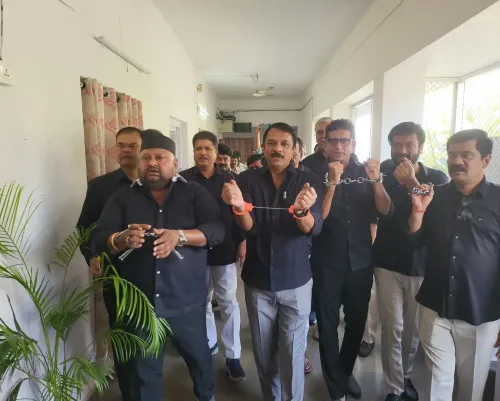
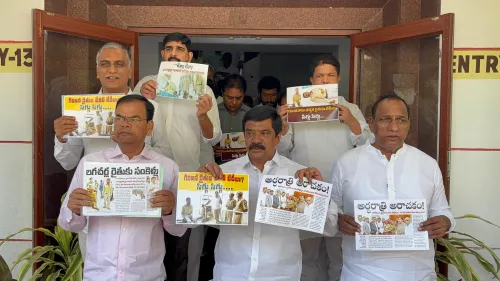
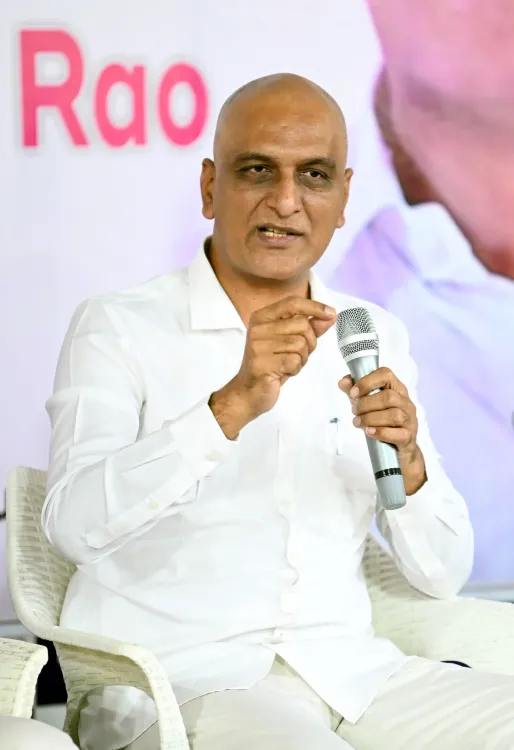
Hyderabad, January 14 (NationPress) The Bharat Rashtra Samithi (BRS) leader and ex-minister of Telangana, T. Harish Rao, strongly criticized the detention of several journalists by state law enforcement on a festival day, related to allegations of broadcasting false information concerning a minister and a female IAS officer.
Expressing his discontent over the arrests made without prior notice, Harish Rao contacted the Director General of Police, B. Shivadhar Reddy, demanding the immediate release of the journalists.
The BRS leader urged the police to adhere to proper legal protocols, questioning the rationale behind conducting arrests at such an inappropriate time, particularly during a festive occasion.
Harish Rao emphasized that journalists should not be perceived as criminals or terrorists, suggesting that the appropriate course of action would be to issue notices summoning them after the Sankranti festival.
He raised concerns in a social media post: "Is it really necessary to visit journalists' residences in the middle of the night during a festival to execute arrests? How can such actions be justified when due process is not followed? Why subject them to such harsh treatment?"
He remarked that these police actions could inflict emotional distress on the families of the detained journalists.
Labeling the journalists' arrests as an affront to democracy, he described it as a blatant attack by the Congress government on the dignity of Telangana's media professionals. "Whom are you safeguarding with these arrests and restrictions on media and digital platforms? Who are you targeting?" he questioned.
In response to the situation, the DGP announced the formation of a Special Investigation Team (SIT) to investigate two cases against various media and social media outlets accused of disseminating false narratives about a minister and a woman IAS officer, as well as sharing an inappropriate image of the Chief Minister in a WhatsApp group.
This eight-member team is led by Hyderabad Police Commissioner V. C. Sajjanar.
Charges were filed against NTV, T News, and several other news networks, alongside YouTube channels and social media accounts, based on a complaint lodged by Special Chief Secretary Jayesh Ranjan on behalf of the IAS Officers' Association.
Jayesh Ranjan, serving as Secretary of the Telangana IAS Officers’ Association, claimed in his complaint that a news segment aired by NTV on January 8 regarding a female IAS officer was "entirely false, fabricated, and baseless."
The complaint stated that unfounded accusations were directed at a serving woman IAS officer, insinuating an alleged personal relationship with a political figure and attempting to link her official duties to these unfounded allegations.
Point of View
This incident underscores the paramount importance of safeguarding journalistic integrity. The swift arrests raise serious concerns about the treatment of media professionals in our democracy. We stand firmly with the principles of press freedom and the right to information, advocating for due process and respect for journalists.
NationPress
2 Oct 2026
Frequently Asked Questions
What prompted the arrests of journalists in Hyderabad?
The journalists were arrested on allegations of broadcasting false news about a minister and a female IAS officer.
Who condemned the arrests?
BRS leader T. Harish Rao condemned the arrests.
What was the reaction of T. Harish Rao?
He criticized the arrests as an attack on democracy and called for the journalists' release.
What did the DGP do in response to the situation?
The DGP formed a Special Investigation Team (SIT) to investigate the media's alleged dissemination of fake news.
What are the implications of these arrests?
The arrests raise significant concerns regarding press freedom and the treatment of journalists in the region.