BSF attack in Tripura: 19 arrested including 4 women after Sepahijala mob assault
Synopsis
A mob of around 50 people — allegedly linked to a cannabis smuggling network — attacked BSF jawans near the India-Bangladesh border in Tripura on 2 November, injuring three including a Company Commander and snatching a firearm. With 19 now arrested and the search still on, the incident lays bare the organised violence that security forces routinely face in Sepahijala, one of India's most smuggling-vulnerable border districts.
Key Takeaways
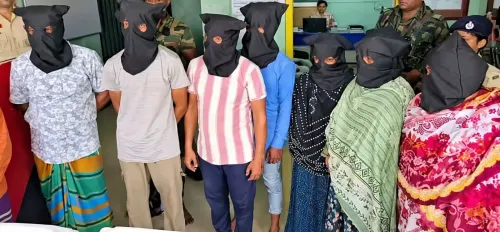
19 people have been arrested, including four women , in connection with the 2 November mob attack on BSF personnel in Sepahijala district, Tripura .
The latest arrest is Hasina Khatun , a middle-aged woman held from Kalapania in Sepahijala district.
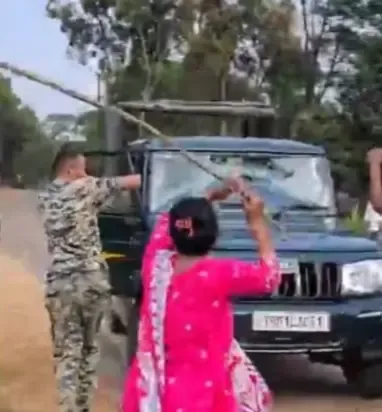
A mob of around 50 people attacked BSF personnel who had intercepted alleged ganja smugglers near the India-Bangladesh border ; three BSF personnel , including a Company Commander , were grievously injured.
Attackers allegedly snatched a pump-action gun (PAG) and damaged a BSF vehicle during the assault.
All accused are charged under the NDPS Act, 1985 , the Bharatiya Nyaya Sanhita (BNS), 2023 , and the Prevention of Damage to Public Property Act, 1984 .
Chief Minister Manik Saha has held security review meetings and directed stringent action; the search operation remains ongoing.
A 19th suspect — a middle-aged woman identified as Hasina Khatun — has been arrested from Kalapania in Sepahijala district, bringing the total number of people detained in connection with the 2 November mob attack on Border Security Force (BSF) personnel in Tripura to 19, including four women, police officials said on Saturday, 7 November. The arrest comes as an intensive search operation continues to net the remaining accused in what authorities have described as a brazen assault along the India-Bangladesh international border.
What Happened at Ashabari Village
According to police, the incident unfolded on 2 November when BSF personnel intercepted a group of alleged smugglers attempting to move ganja (cannabis) across the international border near Ashabari village, under Kalamchaura police station in Sepahijala district. The interception reportedly triggered a violent response — a mob of around 50 men and women surrounded and attacked the BSF personnel, leaving three personnel grievously injured, including a Company Commander. The attackers allegedly snatched a pump-action gun (PAG) from one of the jawans and damaged a BSF vehicle during the assault. One alleged attacker was also injured in the incident.
How Police Are Identifying the Accused
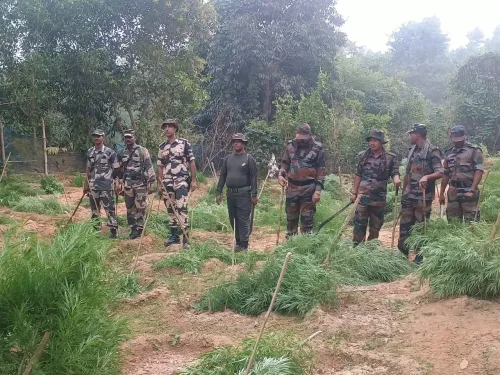
Authorities said arrests are being made on the basis of electronic evidence, CCTV footage, and intelligence inputs. 'Police and the BSF are jointly conducting searches at suspected locations, including residences and shops, to apprehend the accused and seize contraband and illegally stored goods,' a police official said. All 19 accused have been booked under various sections of the Narcotic Drugs and Psychotropic Substances (NDPS) Act, 1985, the Bharatiya Nyaya Sanhita (BNS), 2023, and the Prevention of Damage to Public Property Act, 1984. Officials made clear that 'no accused would be spared.'
Chief Minister's Response and Security Review
Tripura Chief Minister Manik Saha, who had strongly condemned the attack and directed authorities to take stringent action, held a series of meetings with senior security officials to review the incident and assess the overall law and order situation in the state. His intervention signals the political weight being placed on the case, particularly given its proximity to a sensitive border zone.
A Pattern of Border Violence in Sepahijala
This is not an isolated incident. There have been several documented instances of attacks on BSF and police personnel by suspected cross-border smugglers in Tripura, with Sepahijala district identified as particularly smuggling-prone. Tripura shares an 856-km-long international border with Bangladesh and is surrounded by the neighbouring country on three sides — a geographical reality that makes it especially vulnerable to cross-border smuggling, illegal movement of people, and other transnational criminal activity. Notably, while most stretches of the border have been fenced, a few sections remain unprotected, offering corridors for organised smuggling networks. The recurring nature of such attacks underscores the serious risks faced by security forces operating in the region.
With the search operation still underway, further arrests are expected in the coming days as investigators process surveillance and intelligence leads.
Point of View
A district where smuggling networks have grown sophisticated enough to mobilise mobs of 50 at short notice and disarm jawans. The snatching of a pump-action gun is particularly alarming: it suggests a level of tactical boldness that routine border patrolling cannot easily counter. What the arrests have not yet addressed is the upstream question — how these networks operate with apparent impunity across an 856-km border that is only partially fenced. Chief Minister Saha's security reviews are necessary, but the real accountability test lies in whether prosecutions under the NDPS Act and BNS translate into convictions, or whether, as has happened in past border-violence cases across India, the legal process stalls and the deterrent effect dissipates.
NationPress
8 Nov 2026
Frequently Asked Questions
What happened in the BSF attack in Tripura's Sepahijala district?
On 2 November, BSF personnel intercepted a group of alleged cannabis smugglers near Ashabari village along the India-Bangladesh border in Sepahijala district, Tripura. A mob of around 50 men and women then surrounded and attacked the BSF jawans, grievously injuring three personnel including a Company Commander, snatching a pump-action gun, and damaging a BSF vehicle.
How many people have been arrested so far in the Tripura BSF attack case?
As of 7 November, 19 people have been arrested in connection with the attack, including four women. The latest arrest is Hasina Khatun, held from Kalapania in Sepahijala district.
What charges have been filed against the accused?
All 19 accused have been booked under various sections of the Narcotic Drugs and Psychotropic Substances (NDPS) Act, 1985, the Bharatiya Nyaya Sanhita (BNS), 2023, and the Prevention of Damage to Public Property Act, 1984.
Why is Tripura's Sepahijala district particularly vulnerable to cross-border smuggling?
Tripura shares an 856-km-long international border with Bangladesh and is surrounded by the neighbouring country on three sides, making it geographically susceptible to smuggling and illegal border crossings. Sepahijala district has been repeatedly identified as a smuggling-prone zone, with several past incidents of violence against security forces by suspected smuggling networks.
What action has the Tripura government taken following the attack?
Chief Minister Manik Saha strongly condemned the attack, directed authorities to take stringent action, and held a series of meetings with senior security officials to review the incident and assess the law and order situation. Police and BSF are jointly conducting searches at suspected locations using CCTV footage, electronic evidence, and intelligence inputs to arrest the remaining accused.