Delhi Kicks Off Census Phase One with House Listing Initiative
Synopsis
New Delhi launches the first phase of its Census today, a vital data collection effort that will influence governance and policy for the next decade. With a focus on household details, this initiative sets the stage for comprehensive population mapping.
Key Takeaways
Launch of Census Phase One: Begins today in Delhi.
Focus on Households: Collects data on households and living conditions.
Digital Data Collection: Utilizes mobile applications for efficiency.
Confidentiality Assured: Collected data will remain confidential.
Self-Enumeration Available: Residents can also self-report online.
New Delhi, April 16 (NationPress) Today marks the commencement of the first phase of the Census in Delhi, launching a significant data collection initiative that will be pivotal in influencing governance and policy-making for the next ten years.
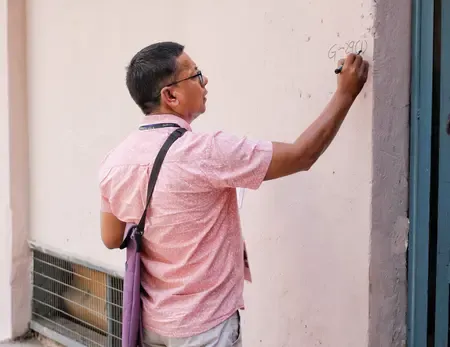
Officials are gearing up for extensive door-to-door outreach throughout the national capital, which is essential for establishing India's comprehensive population database.
This initial phase, termed the House Listing and Housing Census, aims to collect in-depth information regarding households, structures, and living conditions. Unlike the subsequent population counting phase, this stage is focused on cataloging every building and household in the city instead of counting individuals.
Residents will be requested to answer a series of 33 questions addressing various aspects such as the availability of essential amenities, the ownership status of their homes, and specific details about the head of the household, including their name and gender.
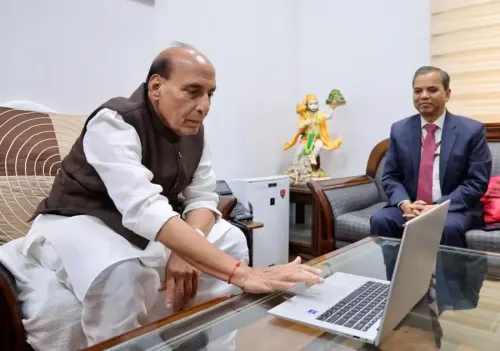
Officials have indicated that the entire process will be executed digitally, with enumerators utilizing a specialized mobile application on their devices to document responses, thereby ensuring enhanced efficiency and accuracy in data gathering.
The first phase will unfold over two distinct 30-day periods. The operation will take place from April 16 to May 15 in areas governed by the New Delhi Municipal Council and Delhi Cantonment, followed by execution in the Municipal Corporation of Delhi from May 16 to June 15, as per the official timeline.
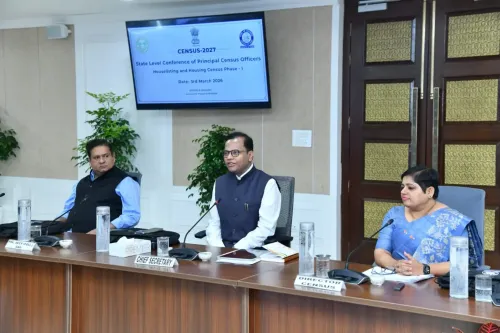
Enumerators have received training and have been allocated specific blocks to guarantee comprehensive coverage throughout the city. The second phase of the Census, which will involve counting individuals, is scheduled for later according to the national Census timeline.
The survey will encompass all districts of Delhi, including urban, semi-urban, and rural areas. Authorities have assured that the operation will cover densely populated colonies, unauthorized settlements, and slum clusters, ensuring that no locality is overlooked.
To facilitate the process, the city has been divided into multiple enumeration blocks, with particular focus on high-density zones and areas with frequent migration to avoid gaps in data collection.
Enumerators will approach households with structured questionnaires, and in many cases, digital devices will be utilized to capture responses, expediting the process and reducing errors.
Officials have emphasized that all collected data will remain confidential and will solely be used for statistical purposes. Residents will also have the option to self-enumerate through the official online platform, increasing flexibility for participation.
Point of View
I recognize the importance of the Census as a foundational tool for governance. The meticulous data collection underway in Delhi reflects a commitment to inclusivity and thoroughness, ensuring no resident is left unaccounted for. This effort not only aids in policy-making but also strengthens the democratic fabric of our society.
NationPress
19 Sept 2026
Frequently Asked Questions
What is the purpose of the Census in Delhi?
The Census aims to gather comprehensive data about households, structures, and living conditions to aid in governance and policy-making.
How long will the first phase of the Census last?
The first phase will take place from April 16 to May 15 in certain areas and from May 16 to June 15 in others.
Will the Census data be kept confidential?
Yes, all information collected will remain confidential and will only be used for statistical purposes.
Can residents participate in self-enumeration?
Yes, residents have the option to complete self-enumeration through an official online platform.
What types of areas will be covered in the Census?
The Census will cover urban, semi-urban, and rural areas, ensuring inclusion of all localities.