Centre sells onion at ₹35/kg from Thursday to cool 56% price surge
Synopsis
With onion prices up 56% year-on-year and hovering at ₹55-60/kg in Delhi, the Centre is deploying 1.21 lakh tonnes of buffer stock at ₹35/kg through Nafed, NCCF, and Kendriya Bhandar — even running a dedicated 'Kanda Express' freight train from Nashik. The announcement has already nudged wholesale prices lower, but the real test is whether distribution reaches consumers before festive-season demand peaks.
Key Takeaways
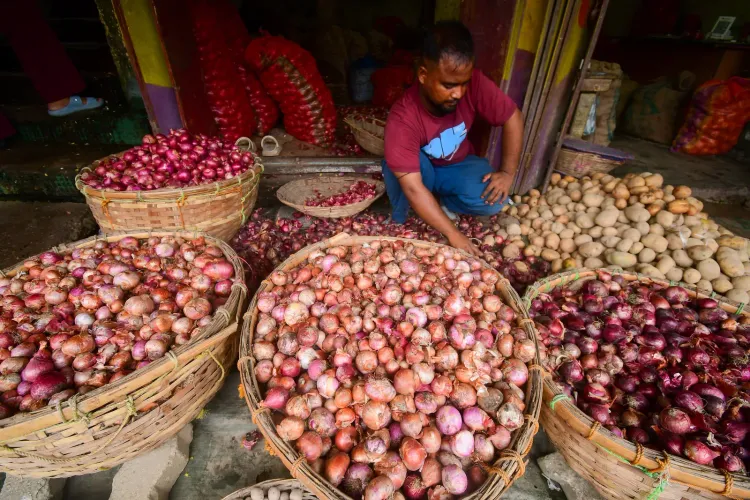
The Centre will sell onions at ₹35 per kg in New Delhi from Thursday, 28 August 2026 , against market prices of ₹55–60 per kg .
Sales will run through Nafed , NCCF , 100 Kendriya Bhandar stores, and Mother Dairy outlets in Delhi-NCR.
The government is drawing on a buffer stock of 1.21 lakh tonnes funded by the Price Stabilisation Fund .
All-India average retail onion price rose 28% in one month to ₹44.72/kg on 25 August , and is 56% higher year-on-year.
Consumer Affairs Minister Pralhad Joshi said the scheme will expand to Kolkata, Hyderabad, Bengaluru, Ahmedabad , and other cities shortly.
Wholesale prices in Nashik and Lasalgaon have already begun easing following the government's announcement.
The Central government will begin selling onions directly to consumers at a subsidised price of ₹35 per kg in New Delhi from Thursday, 28 August 2026, as retail prices in the capital hover between ₹55 and ₹60 per kg. The intervention taps a buffer stock of 1.21 lakh tonnes maintained across producing states and is being funded through the Price Stabilisation Fund.
How the Retail Intervention Works
The subsidised sale will be carried out through three channels: Nafed, the National Cooperative Consumers' Federation of India (NCCF), and Kendriya Bhandar outlets. NCCF will operate across 100 Kendriya Bhandar stores and plans to extend sales through Mother Dairy outlets across Delhi-NCR.
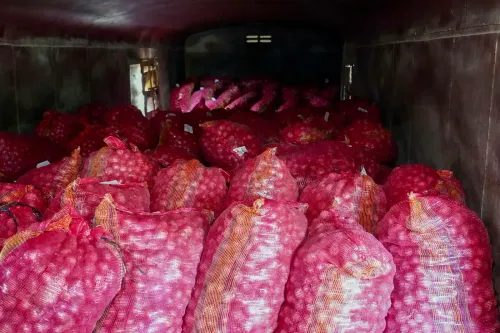
NCCF holds a buffer of 62,000 tonnes and is transporting 400 tonnes from Nashik, Maharashtra aboard a dedicated freight train — dubbed the 'Kanda Express' — scheduled to reach Delhi on Thursday. Separately, Nafed, which holds a buffer of under 55,000 tonnes, has already dispatched a rake carrying 800 tonnes from Nashik, currently en route to the capital.
Cities Covered Under the Scheme
Beyond Delhi, onion supplies via special freight trains are being directed to Chennai, Ernakulam, Madurai, and Guwahati. Consumer Affairs Minister Pralhad Joshi said the government intends to expand the scheme to Kolkata, Bhubaneswar, Hyderabad, Bengaluru, Ahmedabad, Guwahati, and Raipur in the coming days.
The Scale of the Price Surge
The move comes after a steep and sustained spike in onion prices over the past month. The all-India average retail price rose over 28 per cent to ₹44.72 per kg on 25 August, up from ₹34.80 per kg on 25 July. Compared with a year ago — when onions retailed at ₹28.67 per kg — prices have surged 56 per cent, according to official data.
Early Market Impact
The government's announcement has already begun cooling wholesale prices. Onion prices in the wholesale markets at Nashik and Lasalgaon in Maharashtra started declining after the Centre signalled its market intervention. According to a senior official, this has lowered inflationary expectations, which had been playing a key role in amplifying the price spiral. This is not the first time the government has deployed buffer stocks to stabilise onion prices — similar interventions were mounted during the sharp price spikes of 2019 and 2023, with mixed results depending on the speed and scale of distribution. Whether the current operation reaches consumers quickly enough to provide meaningful relief before festive-season demand peaks will be the critical test.
Point of View
Yet prices continue to spike with seasonal regularity — suggesting the buffer stock mechanism is reactive rather than structural. The 1.21 lakh tonne reserve is meaningful in volume, but past operations have been blunted by last-mile distribution gaps and the time lag between dispatch and retail availability. Notably, the announcement itself moved wholesale prices in Nashik and Lasalgaon, which points to the outsized role of sentiment and trader speculation in driving the retail spiral — a dynamic that physical supply alone cannot fully correct. The Centre's decision to name specific cities and run branded freight trains signals political urgency as much as economic necessity, with the festive season approaching.
NationPress
10 Oct 2026
Frequently Asked Questions
Why is the Centre selling onions at ₹35 per kg?
The Centre is selling onions at ₹35 per kg to provide relief to consumers as retail prices have surged to ₹55–60 per kg in Delhi and the all-India average has risen 56% year-on-year to ₹44.72 per kg. The intervention uses the government's Price Stabilisation Fund and buffer stock of 1.21 lakh tonnes.
Where can consumers buy subsidised onions in Delhi?
Subsidised onions at ₹35 per kg will be available at 100 Kendriya Bhandar stores and select Mother Dairy outlets across Delhi-NCR, sold through NCCF. Nafed will also operate additional distribution points in the city.
Which other cities will receive subsidised onions?
Beyond Delhi, supplies are being dispatched to Chennai, Ernakulam, Madurai, and Guwahati via special freight trains. Consumer Affairs Minister Pralhad Joshi said the scheme will further expand to Kolkata, Bhubaneswar, Hyderabad, Bengaluru, Ahmedabad, and Raipur in the coming days.
What is the 'Kanda Express' and why is it significant?
The 'Kanda Express' is a dedicated freight train transporting 400 tonnes of onions from Nashik in Maharashtra to Delhi, operated by NCCF. It symbolises the Centre's urgency in moving buffer stock quickly to consumer markets to arrest the price surge.
Has the government's announcement already affected onion prices?
Yes. Wholesale onion prices in Nashik and Lasalgaon in Maharashtra began declining after the Centre announced its market intervention, according to a senior official. The move has lowered inflationary expectations, which had been fuelling the retail price spiral.