Can Pre-Trial Detention Be Considered Punishment? Insights from Ex-CJI D.Y. Chandrachud
Synopsis
Former Chief Justice D.Y. Chandrachud sheds light on the complexities of India's judicial system, emphasizing the importance of understanding generational differences and the principles of justice during a session at the Jaipur Literature Festival. His insights challenge the treatment of pre-trial detention and stress accountability within the judiciary.
Key Takeaways
Pre-trial detention should not be treated as punishment.
The presumption of innocence is a foundational principle in Indian law.
Generational empathy is vital for understanding modern legal challenges.
Judicial accountability is crucial in combating corruption.
Prolonged trials violate the right to a speedy trial under Article 21 .
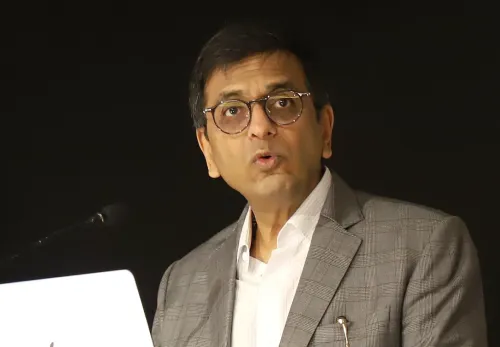
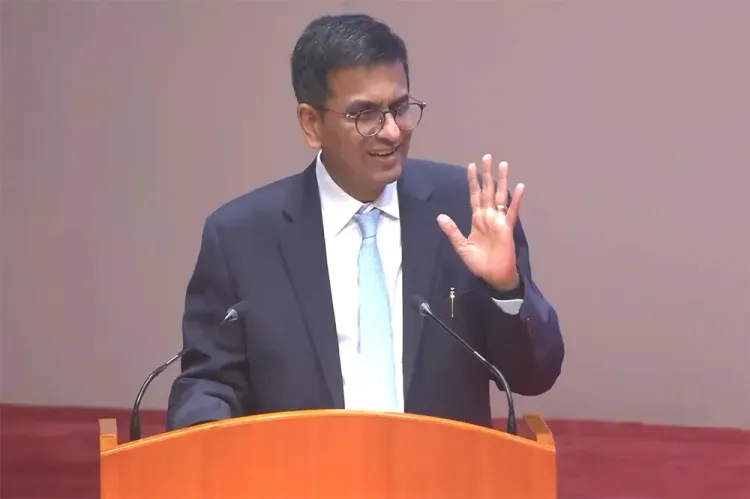
Jaipur, Jan 18 (NationPress) Former Chief Justice of India, Justice D.Y. Chandrachud, shared his candid and extensive thoughts on law, democracy, the bail process, and judicial operations during a session at the Jaipur Literature Festival. He provided unique personal and institutional perspectives informed by his tenure on the Bench.
Chandrachud emphasized the importance of understanding different generational perspectives, noting that while he belongs to the Baby Boomer cohort, his daughters, who are part of Generation Z, have special needs. He stated, “To stay connected with them, I must grasp how Gen Z thinks and operates,” highlighting the significance of empathy and adaptability across generations.
In relation to his recent publication, he clarified that it is not a traditional legal book but rather a collection of his speeches. This format naturally incorporates diverse influences, including rulings from the Indian and American Supreme Courts and philosophies from prominent thinkers like John Stuart Mill and Immanuel Kant.
Reflecting on the pivotal ruling that decriminalized homosexuality, he cited inspiration from a line by Leonard Cohen, illustrating the delicate balance of democracy and the enduring hope that accompanies it. He remarked, “Some judgments are straightforward, while others demand a touch of thoughtfulness and sensitivity.”
Addressing questions regarding the Umar Khalid case, he made it clear that he was expressing his views as a citizen, not as a judge. He reaffirmed that the bedrock of Indian criminal law is the presumption of innocence and emphasized that pre-trial detention should not be equated with punishment.
Chandrachud raised concerns about how the state could compensate individuals who spend five to seven years in jail as undertrials only to be acquitted later. He articulated that bail should only be denied under limited circumstances—if the accused represents a serious threat to society, is likely to flee, or may tamper with evidence. In the absence of these factors, “bail should be the default,” he maintained.
He also expressed worries about national security laws, stressing the need for courts to evaluate if detention is both necessary and proportionate. He cautioned that lengthy trials infringe upon the right to a speedy trial as guaranteed by Article 21.
Former CJI Chandrachud voiced apprehension about an increasing culture of fear within district and High Courts, where judges are reluctant to grant bail due to fears of scrutiny and potential career impacts. This, he noted, places an overwhelming burden on higher courts, with the Supreme Court managing nearly 70,000 cases each year.
On the topic of corruption, he underscored the necessity for robust accountability systems, warning against the inclination to label every unfavorable decision as corrupt. He concluded that fortifying institutions is the genuine pathway to justice.
Point of View
It is essential to highlight Justice D.Y. Chandrachud's perspectives on the legal system. His emphasis on the presumption of innocence and the critique of pre-trial detention as punishment reflect a growing concern for justice and fairness in India. It is vital that we pay attention to these discussions, as they shape the future of our judicial system.
NationPress
28 Sept 2026
Frequently Asked Questions
What does D.Y. Chandrachud say about pre-trial detention?
Justice D.Y. Chandrachud asserts that pre-trial detention should not be regarded as punishment and emphasizes the need for the presumption of innocence.
How does Chandrachud view the current state of the judiciary?
He expresses concern over a culture of fear among judges, which affects their willingness to grant bail and burdens higher courts.
What are the implications of national security laws mentioned by Chandrachud?
Chandrachud warns that national security laws should be scrutinized to ensure that detentions are necessary and proportional to avoid violating citizens' rights.
What is the significance of bail according to Chandrachud?
Bail should be the norm unless specific conditions are met, such as threats to society or risks of absconding.
What does Chandrachud suggest about corruption in the judiciary?
He stresses the importance of accountability and cautions against labeling every unfavorable decision as corrupt.