Priyanka Chaturvedi at Hudson Institute: US-India Trade Tariffs & Women's 33% Quota Delay
Synopsis
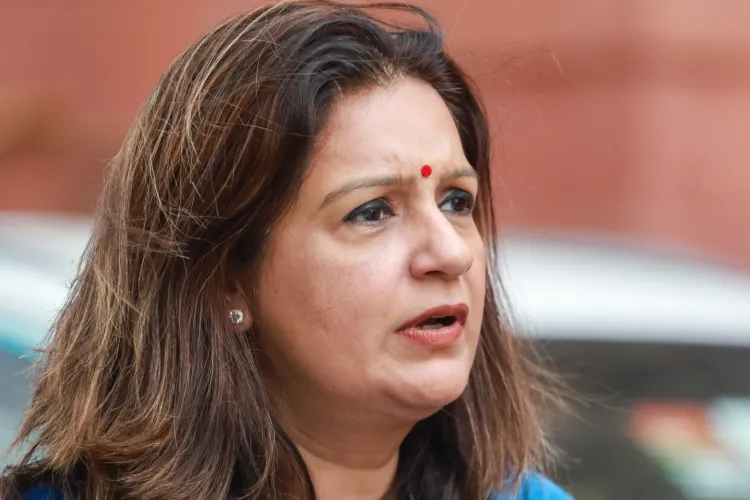
At Washington's Hudson Institute, former Rajya Sabha MP Priyanka Chaturvedi challenged the 18% US-India tariff framework, questioned the $500 billion trade target, defended India's energy sovereignty, and demanded immediate implementation of the 33% women's parliamentary reservation — calling out a three-decade delay that contradicts India's women-led development vision.
Key Takeaways
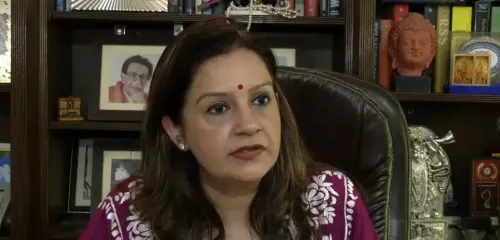
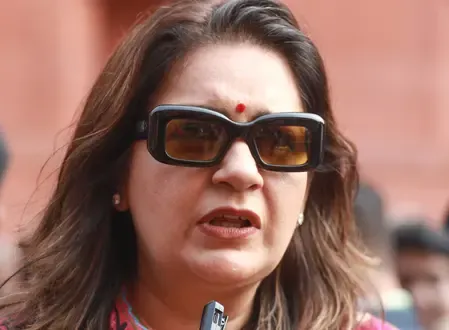
Priyanka Chaturvedi , former Rajya Sabha member, addressed the Hudson Institute's New India Conference in Washington D.C. on April 23, 2025 .
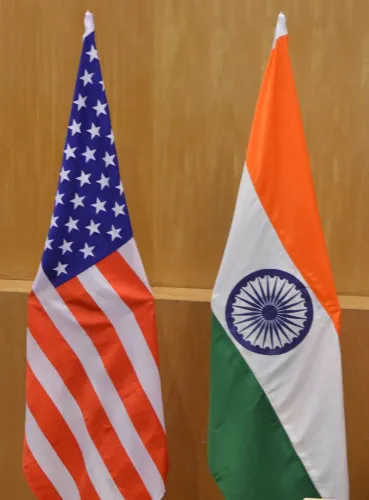
She revealed that US-India tariff negotiations have resulted in an 18 per cent tariff figure and questioned the credibility of the $500 billion bilateral trade target .
Chaturvedi defended India's sovereign right to decide its energy security strategy, including oil imports , free from external pressure.
She highlighted that women hold only 13-14 per cent of seats in India's Parliament despite comprising 50 per cent of the country's voters and population.
She called for immediate implementation of the 33 per cent women's reservation in Parliament without linking it to the pending delimitation exercise .
She described the women's reservation struggle as a three-decade-long fight and cited PM Modi's stated vision of " women-led development " as a framework that must be matched with action.
Washington, April 23 — Former Rajya Sabha member Priyanka Chaturvedi delivered a pointed address at the Hudson Institute's New India Conference in Washington D.C. on Thursday, challenging the framework of US-India trade negotiations and demanding urgent action on women's political reservation in India's Parliament. Her remarks came at a critical juncture as both nations navigate complex bilateral trade dynamics amid shifting global geopolitics.
Chaturvedi Challenges US-India Tariff Framework
Chaturvedi took direct aim at the manner in which tariff discussions between India and the United States have unfolded, noting that the negotiated tariff figure had reached 18 per cent. "We were negotiating on a tariff, which was imposed on us… and came to 18 per cent," she said, signalling discomfort with the asymmetric power dynamic in these talks.
She also questioned the credibility of the ambitious $500 billion bilateral trade target, asking plainly, "$500 billion… where would it come from?" Her concern was not merely rhetorical — she warned that such projections have already triggered anxiety among Indian farmers and dairy producers, sectors that are particularly sensitive to foreign trade pressures.
This comes amid broader concerns in India's agricultural community about the implications of a potential India-US Free Trade Agreement, where dairy and farm produce remain deeply contentious. Notably, India has historically resisted opening its agricultural markets under multilateral trade forums, including at the World Trade Organization.
Energy Sovereignty and Diplomatic Expectations
Chaturvedi firmly defended India's right to make independent decisions on energy security, particularly regarding oil imports — an apparent reference to external pressure over India's continued purchase of Russian crude oil following the Ukraine conflict. "That is our autonomic decision, and that is something that we should be deciding… in terms of the energy security needs back home," she asserted.
She outlined clear expectations from Washington, calling for mutual respect rather than coercive diplomacy. "Not throwing tantrums at us, not telling us what to do, actually understanding our challenges," she said — a statement that drew attention for its directness at an international forum.
Chaturvedi simultaneously acknowledged the value of the India-US partnership, describing the United States as a "reliable ally" and urging continuity in the relationship. "We have invested in this relationship… The continuity should remain," she said, striking a balance between assertiveness and cooperation.
Women's Parliamentary Reservation: A Three-Decade Fight
Shifting focus to domestic reform, Chaturvedi highlighted the glaring gap between women's demographic weight and their political representation. Despite women constituting nearly 50 per cent of India's voters and population, their share in Parliament has "barely managed to reach up to 13 per cent, 14 per cent," she said.
She described the push for women's reservation as "a fight which has been going on the past three decades for representation" — a reference to the long-delayed Women's Reservation Bill, which was finally passed as the Constitution (One Hundred and Sixth Amendment) Act in September 2023 but linked to a delimitation exercise that critics argue could delay actual implementation by years.
Chaturvedi expressed concern over this structural linkage, arguing it effectively postpones meaningful change. "Let's open the doors for women in the existing structure as it exists in the parliament," she urged, calling for immediate implementation rather than waiting for delimitation. This position directly challenges the government's timeline and reflects a broader frustration among women's rights advocates.
India's Global Role in Equity and Development
Beyond bilateral trade and domestic politics, Chaturvedi highlighted India's leadership on global equity issues. She cited the country's role in vaccine distribution during the COVID-19 pandemic and its advocacy at the World Trade Organization for making medicines more accessible. "India was at the forefront of fighting… to make it more accessible," she said.
She also referenced Prime Minister Narendra Modi's articulation of "a new paradigm, which is about women-led development" — a framework the government has promoted under various flagship schemes. However, critics note that the delayed rollout of the 33 per cent women's reservation in Parliament sits in tension with this stated vision.
The Hudson Institute's New India Conference brought together policymakers, diplomats, and strategic experts to examine India's evolving global posture and its partnership with the United States at a time of significant geopolitical realignment. Chaturvedi's remarks are expected to add to the ongoing debate in both countries about the terms of a rebalanced bilateral relationship — one where India increasingly asserts its strategic autonomy while remaining open to deeper cooperation.
As trade negotiations between New Delhi and Washington continue through 2025, and with the delimitation exercise determining the actual timeline for women's reservation implementation, both issues flagged by Chaturvedi are set to remain at the centre of India's political and diplomatic discourse in the months ahead.
Point of View
Yet the 33% parliamentary reservation passed in 2023 remains effectively frozen behind a delimitation clause. On the trade front, Chaturvedi's pushback on the $500 billion bilateral target reflects a growing unease that ambitious headline numbers mask real structural costs borne by farmers and dairy producers — constituencies that vote, but rarely negotiate. The mainstream narrative celebrates India-US convergence; what it misses is that India's new assertiveness is as much about domestic political pressure as it is about geopolitical confidence.
NationPress
21 Oct 2026
Frequently Asked Questions
What did Priyanka Chaturvedi say about US-India trade tariffs at the Hudson Institute?
Priyanka Chaturvedi said India was negotiating a tariff that reached 18 per cent and questioned the basis of the $500 billion bilateral trade target. She warned that such projections have raised serious concerns among Indian farmers and dairy producers.
What is Priyanka Chaturvedi's position on women's reservation in India's Parliament?
Chaturvedi called for immediate implementation of the 33 per cent women's reservation in Parliament without waiting for the delimitation exercise. She noted that women hold only 13-14 per cent of parliamentary seats despite comprising 50 per cent of India's voters.
Why did Priyanka Chaturvedi defend India's energy security decisions?
Chaturvedi asserted that India's decisions on oil imports are sovereign choices based on domestic energy security needs and should not be subject to external pressure. Her remarks were widely seen as a reference to Western criticism of India's continued purchase of Russian crude oil.
What is the current status of the Women's Reservation Bill in India?
The Women's Reservation Bill was passed as the Constitution (106th Amendment) Act in September 2023, guaranteeing 33 per cent seats for women in Parliament. However, its implementation is linked to a delimitation exercise, which critics argue could delay actual enforcement by several years.
What was the Hudson Institute's New India Conference about?
The Hudson Institute's New India Conference in Washington D.C. brought together policymakers, diplomats, and experts to discuss India's evolving global role and its strategic partnership with the United States. It took place on April 23, 2025, amid shifting geopolitical dynamics.