Is there a conspiracy behind the ECI's new process in West Bengal?
Synopsis
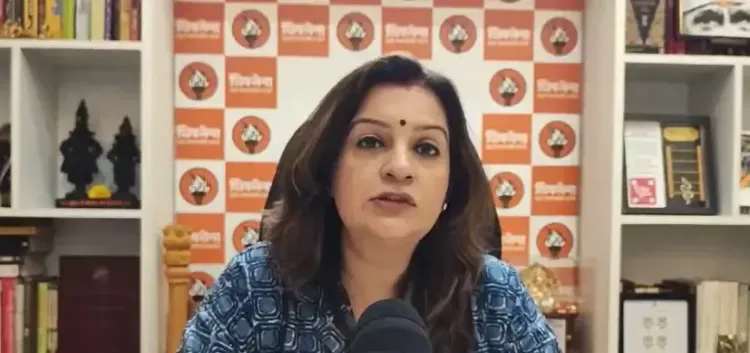
As the Special Intensive Revision is set to launch in West Bengal, Shiv Sena-UBT MP Priyanka Chaturvedi raises critical concerns about its implications. Could this be a well-planned conspiracy? Explore the implications for the Election Commission of India's integrity and the political landscape in Bihar and beyond.
Key Takeaways
Concerns raised by Priyanka Chaturvedi about the SIR process in West Bengal.
Allegations of voter manipulation and questions on the ECI's impartiality.
Historical context of BJP's alliance strategies and potential implications for democratic processes.
India's foreign policy regarding Israel and Palestine amidst ongoing conflicts.
Impact of Taliban restrictions on women on India's diplomatic stance.
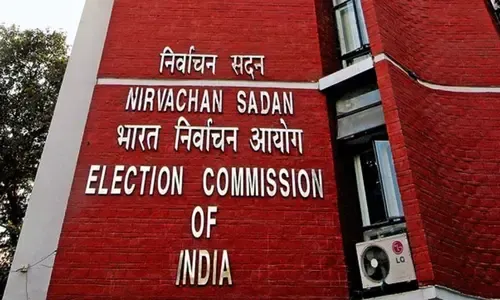
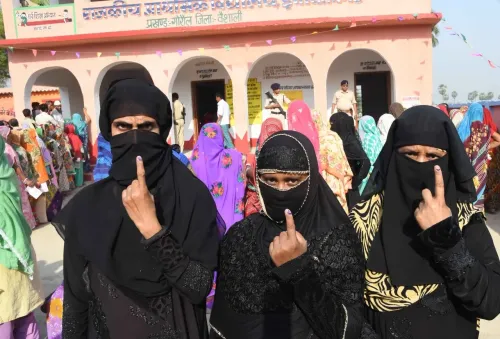
Mumbai, Oct 10 (NationPress) As the Special Intensive Revision (SIR) initiative, which was previously executed during the Bihar Assembly elections, is about to be launched in West Bengal, Shiv Sena-UBT MP Priyanka Chaturvedi expressed profound concerns on Friday. She stated that if the same strategy is being utilized in this state as in others, it seems to indicate a well-orchestrated conspiracy and raises significant inquiries regarding the role of the Election Commission of India (ECI).
In an interview with IANS, Chaturvedi remarked: "The way this process was executed—and the fact that it reached the Supreme Court—demonstrates that pro-opposition voters are being systematically eliminated. In Maharashtra, there were instances of anonymous voter manipulation, and the struggle against this continues. Similar occurrences were noted in Odisha, Haryana, and Delhi, where parties such as the BJD and the Aam Aadmi Party faced challenges. If West Bengal is experiencing the same approach, it undeniably appears to be a calculated conspiracy. This raises serious questions about the neutrality of the Election Commission. At this juncture, the ECI's office might as well merge with the BJP's office; it would save costs."
On the unrest within the NDA coalition in Bihar, particularly regarding discontent among certain leaders, she commented: "What is transpiring in Bihar is part of the BJP’s longstanding strategy. They establish alliances only to dismantle them later. In Maharashtra, our party was allied with the BJP for 25 years. When they lost power, they blatantly sabotaged us in violation of the Constitution—this illustrates a shameful and despicable conspiracy. Similar tactics were employed against Ram Vilas Paswan’s party and the Shiromani Akali Dal. This confirms that the BJP seeks not partnership but complete hegemony."
Responding to AIMIM leader Asaduddin Owaisi’s criticism of Prime Minister Modi’s admiration for Israeli Prime Minister Benjamin Netanyahu, whom Owaisi labeled as "the world’s biggest thug", Chaturvedi stated: "India’s foreign policy has historically endorsed a two-nation perspective, maintaining diplomatic relations with both Israel and Palestine. Amid a two-year conflict in West Asia, any movement towards a peace agreement should be embraced. All actions taken by Israel must be scrutinized by global institutions like the International Court of Justice and the United Nations. India has consistently provided medical and food assistance to the people of Gaza. It’s regrettable that a negative narrative surrounding peace initiatives is being fostered."
Chaturvedi also addressed remarks from Afghan Foreign Minister Amir Khan Muttaqi, who expressed that Afghanistan views India as a close ally during a meeting with External Affairs Minister S. Jaishankar.
"India and Afghanistan have a long, cooperative history. India has always supported the Afghan populace, including aiding their cricket team. However, the restrictions imposed on women by the Taliban regime are deeply troubling. This government is regressing the nation to a state of backwardness. As a nation that values democracy, the Constitution, and equality, India should critically assess whether enduring cooperation is feasible with a regime that curtails women’s rights."
Point of View
It is crucial to approach this situation with a balanced lens. While concerns regarding the Election Commission's neutrality are valid, the discourse must remain rooted in facts and respect for democratic processes. As the story unfolds, we prioritize transparency and accountability in our political landscape.
NationPress
29 Sept 2026
Frequently Asked Questions
What is the Special Intensive Revision process?
The Special Intensive Revision process is an electoral procedure aimed at updating and verifying the electoral rolls, ensuring that all eligible voters are accounted for.
Why is Priyanka Chaturvedi concerned about the SIR process in West Bengal?
Chaturvedi believes that if the same methods used in other states are adopted, it could indicate a conspiracy to manipulate voter demographics and undermine democratic integrity.
How has the ECI responded to these allegations?
As of now, the Election Commission of India has not publicly addressed these specific allegations made by Priyanka Chaturvedi.
What historical context is there regarding BJP's alliances?
Priyanka Chaturvedi has mentioned that the BJP has a history of forming alliances only to dismantle them later, often leading to political instability.
What are the implications of the Taliban's restrictions on women for India's foreign policy?
India's historical support for democratic values raises questions about its diplomatic relations with regimes that suppress human rights, like the Taliban.