Is Chennai Corporation Introducing Biogas Plants in Schools to Encourage Clean Energy?

Synopsis
In an innovative move, the Greater Chennai Corporation is planning to launch biogas plants in schools, promoting clean energy and sustainable waste management among students. This initiative not only reduces LPG dependency but also educates young minds on environmental responsibility. A pilot program is set to begin soon, promising significant benefits for both schools and the environment.
Key Takeaways
Chennai Corporation plans to implement biogas plants in schools.
The initiative aims to promote clean energy and sustainable waste management.
Biogas plants will reduce reliance on LPG cylinders .
Students will gain hands-on experience and knowledge about environmental practices.
The project will foster community collaboration and support.
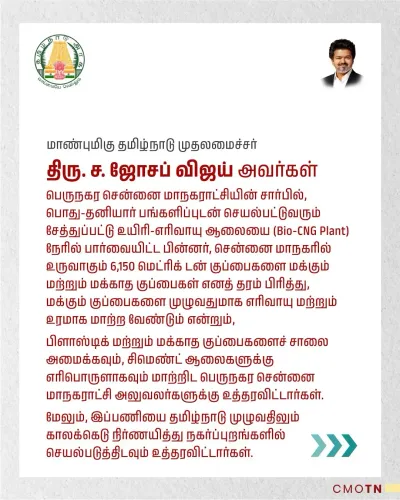
Chennai, Dec 16 (NationPress) The Greater Chennai Corporation (GCC) is set to implement biogas plants in various schools, aiming to promote clean energy for cooking and enlighten students about sustainable waste management.
The initiative will primarily target educational institutions with centralized kitchens that cater to several schools, maximizing the use of kitchen waste and the biogas produced.
According to Chennai Corporation Commissioner J. Kumaragurubaran, the municipal body plans to partner with interested non-governmental organizations, community members, and residents’ welfare associations to bring this project to fruition.
This initiative is anticipated to decrease reliance on LPG cylinders and lower cooking fuel expenses within schools.
As a trial, the GCC is contemplating the establishment of biogas plants at four cloud kitchens where significant amounts of vegetable and food waste are produced daily. These units will be integrated with composting facilities and biogas systems, designed to be cost-effective and requiring minimal maintenance, as stated by the commissioner.
This plan follows the successful installation of a biogas plant at a Corporation higher secondary school in South Chennai last month. The unit, with a capacity of 75 kg, was set up at a cost of Rs 5.7 lakh, supported by a local residents’ association and a service organization. The school’s kitchen prepares breakfast for approximately 10 Corporation schools. Currently linked to a single stove, the system processes around 15 to 20 kg of food waste daily, generating sufficient gas to cover part of the cooking needs.
The biogas system is projected to save one LPG cylinder every two months. Approximately 250 students on the campus directly benefit from this initiative, and they are also educated about the plant's operations as part of environmental awareness programs.
A similar biogas facility was inaugurated last year at another Corporation school in Adyar, supported by a residents’ association and an environmental group. Staff members reported that this plant helped save seven LPG cylinders over a span of 10 months.
During this timeframe, around 3,200 kg of food and wet waste were diverted from disposal, and the biogas produced was utilized for cooking for nearly 270 hours.
In addition to reducing LPG consumption, biogas plants produce slurry that can be converted into compost. This organic fertilizer can be employed for gardening and small-scale agricultural projects on school premises, fostering a self-sustaining system that harmonizes waste management, energy production, and environmental education.
Point of View
The Greater Chennai Corporation's initiative to implement biogas plants in schools represents a significant step towards sustainable energy and waste management. This project not only aims to reduce reliance on fossil fuels but also fosters environmental awareness among future generations. Such efforts highlight the importance of community involvement and innovative thinking in addressing ecological issues.
NationPress
19 Sept 2026
Frequently Asked Questions
What are biogas plants?
Biogas plants are facilities that convert organic waste into biogas through anaerobic digestion, providing a renewable source of energy.
How will this initiative benefit schools?
The initiative will reduce LPG dependency and costs, while also educating students about sustainable waste management practices.
What type of waste will be used?
The biogas plants will utilize food waste generated in school kitchens.
How many schools are involved in the pilot program?
The pilot program is considering four cloud kitchens for the initial rollout.
What are the expected savings from biogas plants?
The biogas plants are projected to save one LPG cylinder every two months, significantly lowering fuel costs.