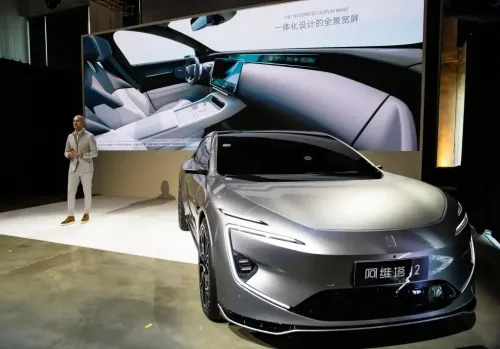
Are China’s ‘spy cars’ a threat to US automotive and national security?

Synopsis
In a tense Congressional hearing, U.S. lawmakers raised alarms over the potential risks posed by Chinese-made vehicles, described as 'computers on wheels' that could compromise national security and disrupt transportation networks. This growing concern highlights the intersection of economic competition and national safety in the automotive industry.
Key Takeaways
Chinese vehicles may pose surveillance risks.
China's auto exports surged over 300% recently.
Electric vehicles are critical for future market dynamics.
Concerns over forced labor in supply chains are escalating.
Lawmakers are considering restrictions on Chinese automakers .
Washington, Dec 12 (NationPress) Concerns have been raised by lawmakers and experts about the potential for Chinese-manufactured vehicles to transform into “computers on wheels”, capable of surveilling Americans, disrupting transportation infrastructure, and undermining the U.S. automotive industry. This was highlighted during a crucial Congressional hearing that framed China’s rapidly expanding auto sector as both an economic and national security concern.
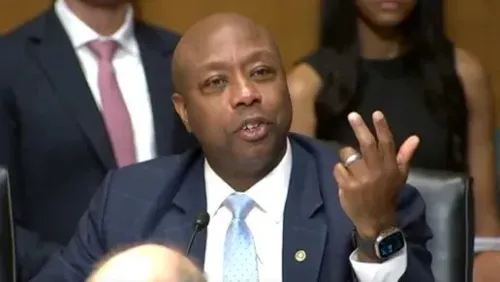
During the session titled “Trojan Horse: China’s Auto Threat to America,” House Select Committee on China Chairman John Moolenaar emphasized that Beijing’s emergence as the world’s leading auto exporter is not merely a market achievement but rather “a political initiative of the CCP,” supported by substantial subsidies, supply chain control, and aggressive tactics that U.S. and allied companies cannot compete against. He cautioned that cutting-edge vehicles equipped with cameras, microphones, sensors, and connectivity could serve as “potential spy platforms with a kill switch inside.”
“Modern vehicles act as digital eyes and ears on wheels,” Moolenaar stated, warning that systems developed in China might enable Beijing to extract sensitive information or incapacitate fleets in an emergency, thereby obstructing roads and complicating logistics.
Ranking Member Raja Krishnamoorthi pointed out that China has utilized a familiar strategy of enforced partnerships, intellectual property theft, overproduction, and dumping to achieve dominance in the auto industry. He noted a staggering increase of over 300 percent in China’s auto exports from 2021 to 2024, with Chinese electric vehicles often priced below production costs.
“Electric vehicles represent the future,” Krishnamoorthi remarked, highlighting that electric vehicles are predicted to account for 60 percent of global new car sales by 2040. “The pressing question is this: who will dominate the EV market in the next 15 years?”
Elaine Dezenski, a senior director at the Foundation for Defence of Democracies and a former U.S. homeland security official, stated that China is inundating global markets with cars through “massive overcapacity” orchestrated by the state, leading to industrial dumping that “eliminates competitors and skews the market before cars even hit the showroom.”
“This is not typical industrial production or competition,” Dezenski remarked, elaborating on practices that include forced technology transfers, price manipulation, forced labor, and strategic market cornering. She expressed concern that small and medium-sized suppliers—the backbone of U.S. auto manufacturing—are particularly endangered.
Charles Parton, a former British diplomat and China specialist, articulated that vehicle connectivity systems present a significant security risk, describing cellular modules as “the gateway” to modern automobiles and vital infrastructure. He revealed that China currently provides about 70 percent of these modules worldwide.
“Why would China engage in conflict with America? Why not just disable you?” Parton questioned, warning that malware inserted via software updates could incapacitate vehicles, cranes, pipelines, or payment systems, while vast amounts of data could be harvested for surveillance.
Peter Ludwig, co-founder of the automotive software company Applied Intuition, indicated that Chinese automakers are now producing advanced vehicles comparable in quality to Western models but at prices as low as $10,000, a result of long-term industrial policies, state subsidies, and supply chain superiority.
“Chinese vehicles pose similar risks in the physical realm that TikTok does in the digital realm,” Ludwig cautioned, stating that once such systems are widely implemented, “reversing that reliance will be slow, expensive, and politically challenging.”
Several lawmakers inquired about whether the U.S. should prohibit Chinese automakers and key suppliers from accessing the American market. Ludwig responded affirmatively, stating that restrictions should align with the Commerce Department’s connected vehicle regulations but require enhancement.
The hearing also underscored worries regarding forced labor within China’s auto supply chains and the possibility that Chinese companies might use Mexico as a backdoor into the U.S. market through transshipment and investment.
This push from China’s auto industry unfolds against a backdrop of escalating tensions between Washington and Beijing concerning technology, trade, and national security. U.S. officials have increasingly likened the risks posed by Chinese vehicles and components to earlier dependencies on Huawei telecom equipment, which later necessitated costly “rip and replace” strategies.
For India, this Congressional discussion is crucial to observe as New Delhi navigates its own aspirations in electric mobility and manufacturing while grappling with concerns about Chinese dominance in batteries, critical minerals, and automotive components—key sectors for both economic advancement and strategic independence.
Point of View
I believe it is crucial to remain vigilant about the implications of foreign influence in critical sectors such as automotive manufacturing. The concerns raised during this hearing reflect the broader geopolitical dynamics at play, emphasizing the need for a balanced approach that safeguards national security while fostering innovation in the industry.
NationPress
19 Sept 2026
Frequently Asked Questions
What are the primary concerns regarding Chinese-made vehicles?
Lawmakers warn that these vehicles could act as 'computers on wheels,' enabling espionage and disruption of U.S. transportation networks, posing significant risks to national security.
How has China's auto export industry changed recently?
China's auto exports have surged by over 300% between 2021 and 2024, raising alarms about unfair competition and market dominance.
What are the implications of forced labor in the auto supply chain?
Concerns about forced labor highlight ethical issues and potential legal repercussions for companies involved in the supply chain linked to Chinese manufacturers.
How do electric vehicles factor into this discussion?
Electric vehicles are projected to dominate the market in the coming years, emphasizing the importance of who controls this sector amid rising competition from China.
What steps are lawmakers considering to address these threats?
Lawmakers are discussing potential restrictions on Chinese automakers and suppliers to protect U.S. interests and ensure national security.