Tariff, non-tariff barriers complicating trade: CII's Mallick
Synopsis
A CII committee chief says trade barriers worldwide are shifting “much like the stock market.” His answer for India is to scale up recycling to industrial levels, cut import dependence, and start with something basic: households segregating wet and dry waste at source.
Key Takeaways
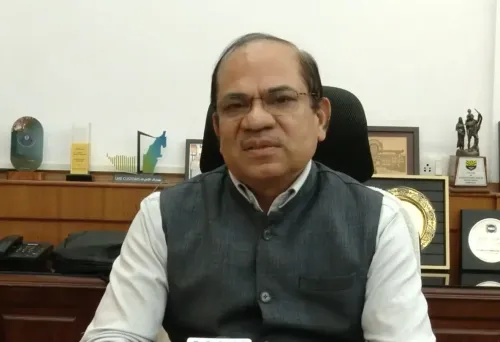
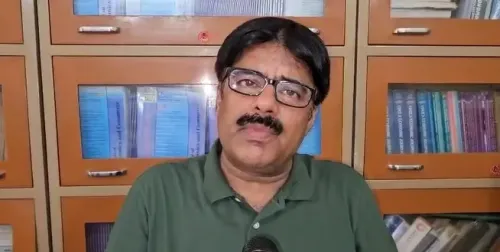
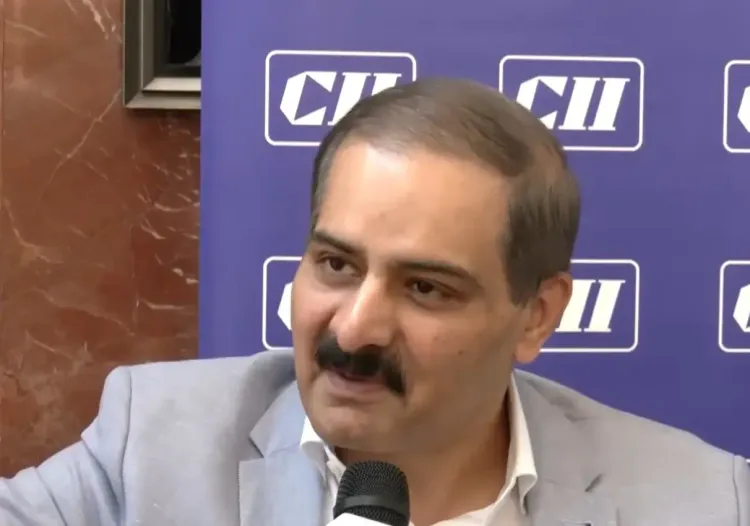
Masood Mallick , Chairman of the CII National Committee on Waste to Worth Technologies, spoke in New Delhi on 26 November 2026 .
He said tariff and non-tariff barriers will make global trade more complicated, a trend that goes beyond recent US tariff proposals.
He compared the US tariff situation to the stock market: “One day it's up, one day it's down.” He said India's recycling ecosystem is fragmented and must move to industrial scale to cut import dependence.
He called waste segregation at source , a key part of the Swachh Bharat Mission , essential to making recycling economically viable.
Growing tariff and non-tariff barriers across major economies are making global trade increasingly complex, Masood Mallick, Chairman of the Confederation of Indian Industry (CII) National Committee on Waste to Worth Technologies, said in New Delhi on Thursday, 26 November 2026. He also said India must speed up its shift to industrial-scale recycling to reduce import dependence and strengthen its circular economy.
Mallick's remarks link two concerns for Indian industry. Shifting trade rules abroad are raising uncertainty for exporters and importers, while domestic recycling capacity could ease reliance on imported raw materials.
Unpredictable Global Trade Environment
Mallick said the changing global tariff landscape goes beyond the recent US tariff proposals. He described it as a broader trend that could reshape international trade flows.
“I think the global tariff situation, as well as other non-tariff barriers, will make global trade more complicated,” he said.
He compared the volatility of trade measures to equity markets. “The US tariff situation is quite dynamic. It keeps changing much like the stock market. One day it's up, one day it's down. But overall, tariff and non-tariff barriers are going to make global trade more complicated,” Mallick added.
For Indian businesses, this kind of volatility makes it harder to plan sourcing, pricing and long-term investment. Non-tariff barriers can include regulatory standards, certification rules and other compliance requirements, and they often take longer to address than headline duty rates.
Private Sector's Role in Circular Economy
On India's circular economy goals, Mallick said the private sector has a central role in formalising and scaling up the country's recycling ecosystem.
“The private sector provides the entrepreneurial energy and ecosystem that can shape the formalisation of the recycling sector,” he said.
According to Mallick, much of India's circularity ecosystem is still fragmented and operates on a small scale. He said recycling in a country as large and diverse as India will need to reach a much larger industrial scale before its full economic and environmental benefits can be realised.
Waste Segregation at Source
Mallick also stressed the need for behavioural change among consumers, particularly segregation of waste at the point of generation.
“Waste must be segregated at the point of generation. If wet and dry waste are mixed, recyclability is affected and significant resources have to be spent cleaning the waste before it can be processed, making recycling economically unviable,” he said.
He noted that source-level segregation is also a key component of the Swachh Bharat Mission. He said it remains essential for improving recycling efficiency and lowering processing costs.
Why It Matters
Mallick's comments tie trade policy to resource security. If tariff and non-tariff barriers keep making cross-border supply chains less predictable, domestic recovery of materials from waste could give Indian manufacturers a more stable source of inputs.
His remarks also suggest that scaling up recycling depends on households as much as on industry. Without consistent segregation at source, larger recycling plants would still face contaminated feedstock and higher costs.
How quickly India can formalise its recycling sector, and how far global trade barriers continue to shift, will shape the push towards a circular economy in the coming years.
Point of View
And a fragmented, largely informal recycling sector cannot absorb that risk. The gap is behavioural as much as industrial: Swachh Bharat has preached source segregation for years, yet mixed waste still undermines recycling economics. Without enforceable segregation and incentives for formal recyclers, industrial-scale circularity will remain an industry-forum aspiration rather than a hedge against trade shocks.
NationPress
26 Nov 2026
Frequently Asked Questions
What did CII's Masood Mallick say about global trade?
Masood Mallick said growing tariff and non-tariff barriers across major economies will make global trade more complicated. He described the US tariff situation as dynamic, changing much like the stock market.
Why does Masood Mallick want industrial-scale recycling in India?
He said India must move towards industrial-scale recycling to reduce import dependence and strengthen its circular economy. In his view, the current recycling ecosystem is fragmented and too small to deliver its full economic and environmental benefits.
What role does the private sector play in India's recycling ecosystem?
According to Mallick, the private sector provides the entrepreneurial energy and ecosystem needed to formalise the recycling sector. He sees it as crucial to scaling up circular economy efforts.
Why is waste segregation at source important for recycling?
Mixing wet and dry waste reduces recyclability and means significant resources must be spent cleaning the waste before processing. Mallick said this makes recycling economically unviable, which is why source segregation, a key part of the Swachh Bharat Mission, is essential.
Who is Masood Mallick?
Masood Mallick is Chairman of the Confederation of Indian Industry (CII) National Committee on Waste to Worth Technologies. He made these remarks in New Delhi on 26 November 2026.