CJI Surya Kant: Mediation Key to Fast Dispute Resolution
Synopsis
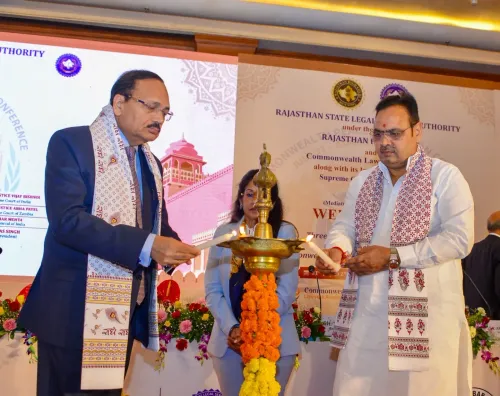
CJI Justice Surya Kant called mediation and Lok Adalats the fastest route to justice, urging Indians to skip courts for ADR. With 5 crore pending cases nationally, his Jaipur address — alongside Rajasthan CM Bhajan Lal Sharma — signals a major push to harness retired judges as frontline dispute resolvers under India's new legal framework.
Key Takeaways
CJI Justice Surya Kant on April 25, 2025 urged Indian citizens to use mediation centres and Lok Adalats before filing formal court cases.
CJI Surya Kant called retired judges "living libraries" and likened elderly citizens to a "stepwell (baoli)" of wisdom, stressing their role in ADR.
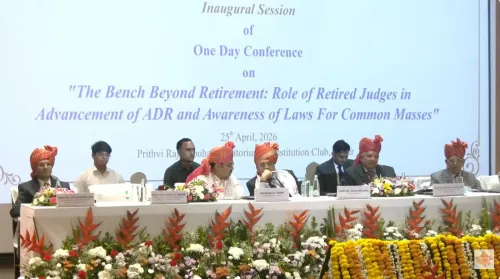
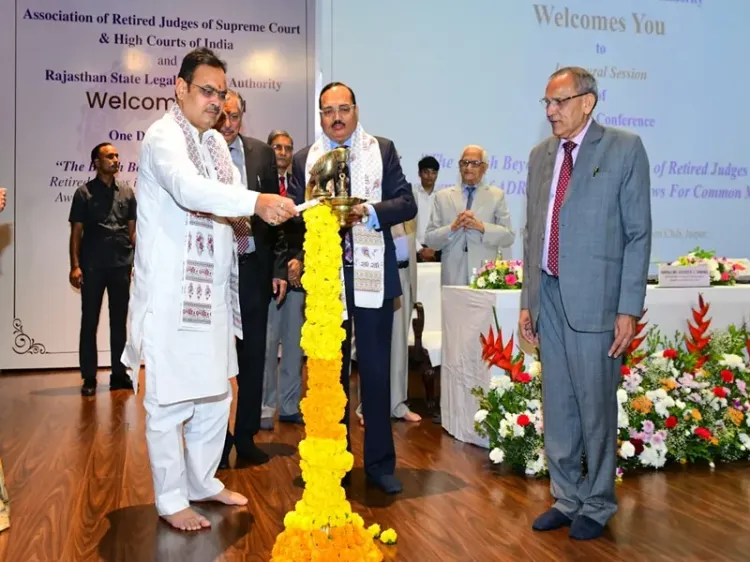
The conference was jointly organised by the Association of Retired Judges and Rajasthan State Legal Services Authority at the Constitution Club, Jaipur .
Rajasthan CM Bhajan Lal Sharma asked citizens to visit a mediation centre or Lok Adalat at least once before approaching courts, endorsing ADR as a first step .
The Rajasthan High Court launched its 'Uniform Registration Number System' and flagged off multi-utility legal services vehicles to improve access in remote areas.
CM Sharma highlighted the shift from the Indian Penal Code to the Bharatiya Nyaya Sanhita and ongoing Digital India reforms to modernise justice delivery.
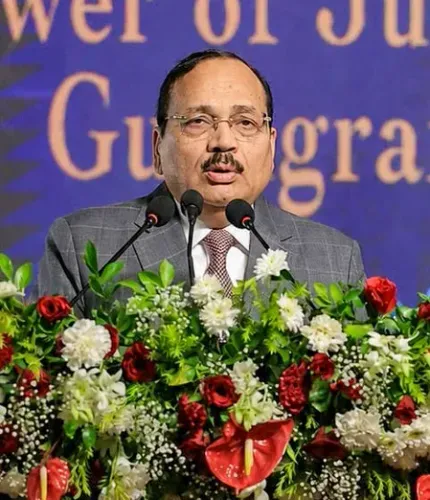
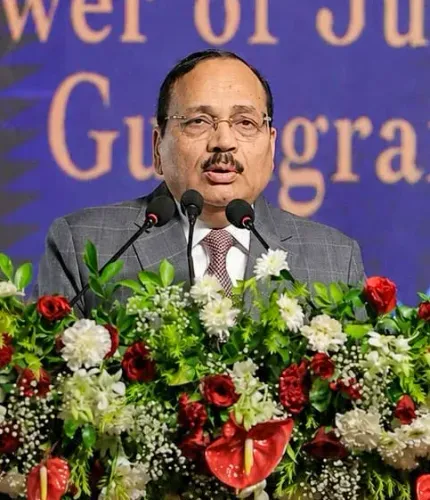
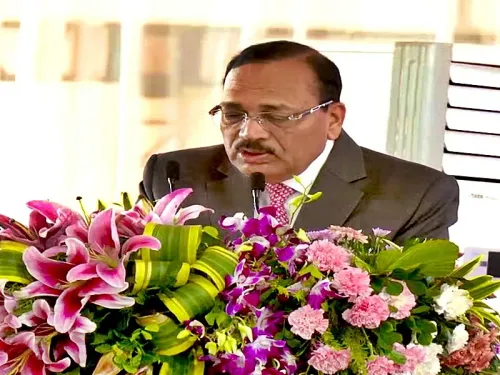
Chief Justice of India (CJI) Justice Surya Kant on Saturday, April 25, declared that mediation provides an effective and expeditious route for resolving disputes, urging citizens across India to approach mediation centres and Lok Adalats before resorting to formal court litigation. Speaking at a high-level conference held at the Constitution Club, Jaipur, CJI Surya Kant reinforced the critical role of Alternative Dispute Resolution (ADR) in easing India's overburdened judicial system.
CJI Compares Retired Judges to 'Living Libraries'
Justice Surya Kant used a powerful metaphor to describe the elderly members of society, likening them to a "stepwell" (baoli) — a deep reservoir of wisdom capable of offering solutions rooted in lived experience. He extended this analogy to retired judges, calling them "living libraries" whose accumulated legal knowledge continues to serve and guide society long after their tenure on the bench.
"A judge remains a judge forever," he stated, underscoring the enduring contribution of retired judicial officers through mediation services and legal awareness campaigns. This remark resonated strongly in a country where over 5 crore cases are pending across various courts, according to the National Judicial Data Grid.
The conference was jointly organised by the Association of Retired Judges and the Rajasthan State Legal Services Authority (RSLSA), centred on the theme: "The Bench Beyond Retirement: Role of Retired Judges in Promoting ADR and Legal Awareness."
Chief Minister Bhajan Lal Sharma Backs Lok Adalats
Rajasthan Chief Minister Bhajan Lal Sharma delivered a strong endorsement of the judiciary's transformative role in Indian democracy. He stated that "people look up to judges, and their words often lay the foundation for positive social change."
Citing landmark rulings by the Supreme Court and various High Courts, he acknowledged their far-reaching impact on millions of lives. The Chief Minister appealed to citizens to visit a mediation centre or Lok Adalat at least once before approaching formal courts — a call that CJI Surya Kant specifically appreciated during his address.
CM Sharma also urged the youth to draw upon the wisdom of elders for nation-building, describing the judiciary as both a cornerstone of democracy and the guardian of the Constitution. He highlighted the judiciary's consistent role in protecting fundamental rights, advancing women's rights, safeguarding the environment, and combating corruption.
Bharatiya Nyaya Sanhita and Digital Justice Reforms
Reiterating Prime Minister Narendra Modi's vision of accessible and transparent justice, CM Sharma spotlighted ongoing reforms under Digital India and e-Governance initiatives aimed at modernising the justice delivery system. He noted the landmark shift from a punitive legal framework to a justice-oriented model with the introduction of the Bharatiya Nyaya Sanhita (BNS), which replaced the colonial-era Indian Penal Code (IPC).
The state government, he said, is ensuring effective implementation of the new laws through targeted training for police and prosecution personnel, expansion of courts, and comprehensive modernisation of judicial infrastructure across Rajasthan.
Rajasthan High Court Launches Uniform Registration Number System
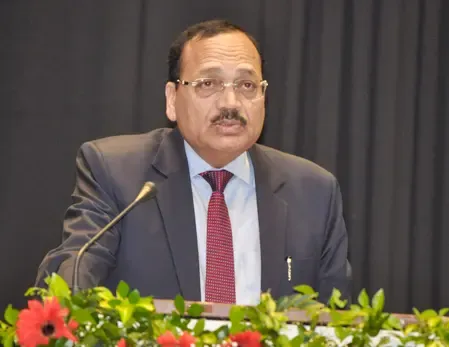
Justice Sanjeev Prakash Sharma, Acting Chief Justice of the Rajasthan High Court, highlighted the pivotal role of the Rajasthan State Legal Services Authority in promoting legal awareness and facilitating dispute resolution through Lok Adalats across the state.
In a significant development on the occasion, the Rajasthan High Court officially launched its 'Uniform Registration Number System' — a step towards streamlining case tracking and judicial administration. The event also saw the release of a compilation of articles authored by former judges, and the flagging off of multi-utility vehicles designed to improve access to legal services in remote and underserved areas.
Dignitaries present included Deputy Chief Minister Diya Kumari, members of the Association of Retired Judges, sitting High Court judges, judicial officers, and law students.
Why This Matters: India's Pending Case Crisis
India's judicial backlog is one of the most pressing governance challenges of our time. With over 5 crore cases pending across district, High Court, and Supreme Court levels, the push for ADR mechanisms like mediation, conciliation, and Lok Adalats is not merely symbolic — it is a structural necessity. Disputes resolved through these channels save time, reduce costs for litigants, and critically, ease the burden on an already stretched judiciary.
This conference signals a broader, coordinated effort by India's judicial leadership to institutionalise the role of retired judges in the ADR ecosystem — effectively creating a second tier of dispute resolution powered by decades of judicial experience. As the Mediation Act, 2023 begins to take deeper root, events like this one in Jaipur are likely to serve as blueprints for similar initiatives nationwide.
With the Rajasthan High Court's new digital and administrative reforms now underway, stakeholders will be watching closely to see how quickly these measures translate into measurable reductions in case pendency across the state.
Point of View
Effectively building a parallel, experience-driven justice infrastructure. While the Bharatiya Nyaya Sanhita signals legislative intent, the missing link has always been grassroots access — and Lok Adalats, empowered by retired judicial officers, could fill that gap. The question is whether state governments will fund this ecosystem adequately or let it remain a well-intentioned but under-resourced initiative.
NationPress
19 Sept 2026
Frequently Asked Questions
What did CJI Surya Kant say about mediation at the Jaipur conference?
CJI Justice Surya Kant said mediation offers an effective and expeditious pathway for resolving disputes and urged citizens to explore mediation centres and Lok Adalats before initiating formal litigation. He made these remarks at a conference held at the Constitution Club in Jaipur on April 25, 2025.
What is the role of retired judges in ADR according to CJI Surya Kant?
CJI Surya Kant described retired judges as 'living libraries' whose legal knowledge continues to guide society after retirement. He emphasised that 'a judge remains a judge forever,' highlighting their ongoing contribution through mediation and legal awareness initiatives.
What is the Uniform Registration Number System launched by the Rajasthan High Court?
The Rajasthan High Court launched its 'Uniform Registration Number System' at the April 25 conference to streamline case tracking and improve judicial administration across the state. It is part of broader digital and infrastructure modernisation efforts in Rajasthan's judiciary.
Why is mediation being promoted over court litigation in India?
India has over 5 crore cases pending across its courts, creating severe delays in justice delivery. Mediation, conciliation, and Lok Adalats resolve disputes faster, at lower cost, and reduce the burden on the formal judicial system, making them critical tools under India's new legal framework including the Mediation Act, 2023.
What did Rajasthan CM Bhajan Lal Sharma say about dispute resolution?
CM Bhajan Lal Sharma appealed to citizens to visit a mediation centre or Lok Adalat at least once before approaching formal courts. He also highlighted judicial reforms under the Bharatiya Nyaya Sanhita and Digital India initiatives aimed at making justice more accessible and transparent.