UIDAI, NFSU sign 5-year MoU on cybersecurity and digital forensics

Synopsis
UIDAI and NFSU have formalised a five-year MoU covering AI, deepfakes, blockchain, and forensic lab development — embedding academic expertise directly into the security backbone of India's billion-plus Aadhaar identity system. It is the most comprehensive institutional cybersecurity tie-up UIDAI has announced to date.
Key Takeaways
UIDAI and NFSU signed a five-year MoU on 5 May 2025 covering digital forensics, cybersecurity, and advanced technology research.
The collaboration spans six strategic pillars , including joint research in AI , blockchain , deepfake detection , and cryptographic technologies .
UIDAI CEO Vivek Chandra Verma said the MoU strengthens security and forensic capabilities for India's digital public infrastructure.
The partnership also creates a structured placement pathway for NFSU graduates into cybersecurity roles.
UIDAI has separately partnered with MapmyIndia and Google to display authorised Aadhaar centres on digital maps.
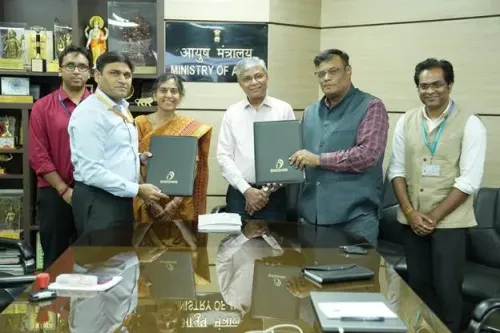
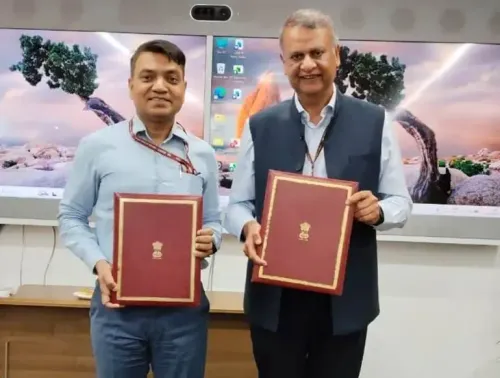
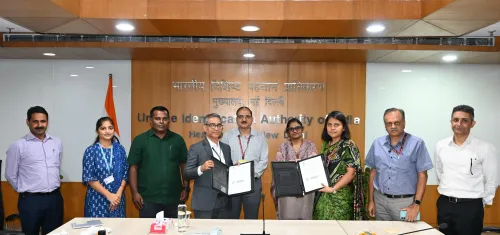
The Unique Identification Authority of India (UIDAI) and the National Forensic Sciences University (NFSU) on Tuesday, 5 May signed a five-year memorandum of understanding (MoU) to establish a structured collaboration in digital forensics, cybersecurity, and advanced technology research. The partnership, backed by the Ministry of Electronics and Information Technology (MeitY), is aimed at reinforcing the security architecture of India's digital identity ecosystem.
Six Strategic Pillars of the Partnership
The collaboration is structured around six key focus areas: academic and professional development; information security and system integrity; forensic infrastructure and laboratory excellence; technical support for cybersecurity activities; technical advisory and joint research in emerging domains such as artificial intelligence (AI), blockchain, deepfake detection, and cryptographic technologies; and strategic placement and outreach for NFSU students. The breadth of the framework signals a long-term institutional commitment rather than a one-off initiative.
What the Government Said
The IT Ministry described the MoU as an umbrella framework that brings together two key national institutions. According to the ministry's statement, the agreement is intended to "further strengthen cyber resilience across UIDAI's digital infrastructure, which underpins India's digital identity ecosystem."
Vivek Chandra Verma, Chief Executive Officer of UIDAI, said: "This collaboration marks a significant step towards further strengthening the security, resilience, and forensic capabilities supporting India's digital public infrastructure and ensuring further safeguards for India's digital identity systems." The MoU ceremony was attended by Abhishek Kumar Singh, Deputy Director General of UIDAI, along with senior officials from both institutions.
Context: UIDAI's Expanding Digital Partnerships
This agreement is part of a broader pattern of UIDAI forging institutional alliances to expand the reach and security of the Aadhaar ecosystem. Last month, UIDAI partnered with MapmyIndia to enable display of authorised Aadhaar enrolment centres on the Mappls App, allowing residents to locate centres by service type — including adult enrolment, child enrolment, and address or mobile number updates. MapmyIndia is responsible for integrating UIDAI-provided centre data into the Mappls platform with accurate digital mapping and distinct listings.
Earlier, UIDAI had entered a similar mapping partnership with Google for the display of authorised Aadhaar centres on Google Maps, with additional information on accessibility features such as divyang-friendly infrastructure, parking availability, and operating hours.
Why This Matters for India's Digital Infrastructure
With over 1.4 billion Aadhaar holders, UIDAI operates one of the world's largest biometric identity databases. Deepfake threats, AI-driven fraud, and increasingly sophisticated cyberattacks have raised the stakes for identity infrastructure security. The NFSU tie-up brings academic and forensic expertise directly into UIDAI's security and research pipeline — a model that could set a precedent for other critical national digital institutions. The collaboration also opens a structured placement pathway for NFSU graduates into cybersecurity roles within India's public digital infrastructure.
Sectoral observers note that the partnership's emphasis on emerging technologies like deepfake detection is particularly timely, given the rapid proliferation of AI-generated content that could potentially be used to compromise identity verification systems. How the two institutions translate the MoU's six pillars into operational outcomes over the next five years will be closely watched.
Point of View
Not just administrative oversight. The inclusion of deepfake detection and cryptographic research in the mandate is a rare acknowledgment that biometric systems face AI-era threats that traditional IT security frameworks were not designed to handle. The real test will be whether the six pillars produce published research, deployable tools, and measurable improvements in incident response — or remain aspirational language in a signed document. Given UIDAI's track record of expanding partnerships without always disclosing outcomes, independent benchmarking of this collaboration's deliverables would serve the public interest.
NationPress
1 Oct 2026
Frequently Asked Questions
What is the UIDAI-NFSU MoU about?
The MoU is a five-year structured collaboration between UIDAI and the National Forensic Sciences University covering digital forensics, cybersecurity, AI research, deepfake detection, blockchain, and cryptographic technologies. It also includes a placement pathway for NFSU students within India's digital public infrastructure.
Why did UIDAI partner with NFSU?
UIDAI partnered with NFSU to bring dedicated forensic and academic expertise into the security ecosystem protecting Aadhaar — India's biometric identity system used by over 1.4 billion people. The collaboration is intended to strengthen cyber resilience against emerging threats including AI-driven fraud and deepfakes.
What are the six pillars of the UIDAI-NFSU collaboration?
The six pillars are: academic and professional development; information security and system integrity; forensic infrastructure and lab excellence; technical support for cybersecurity; technical advisory and joint research in AI, blockchain, deepfake detection, and cryptography; and strategic placement and outreach for NFSU students.
How does this MoU fit into UIDAI's broader partnership strategy?
It follows recent tie-ups with MapmyIndia and Google to display authorised Aadhaar centres on digital maps. The NFSU MoU, however, is the most substantive in scope, embedding research and forensic capabilities directly into UIDAI's security infrastructure rather than focusing on service delivery.
Who attended the MoU signing ceremony?
The ceremony was attended by Abhishek Kumar Singh, Deputy Director General of UIDAI, and senior officials from both UIDAI and NFSU. UIDAI CEO Vivek Chandra Verma made a formal statement marking the occasion.