Tripura CM Manik Saha: Opposition Blocked Women's Reservation Amendment
Synopsis
Tripura CM Manik Saha accused the INDIA bloc of blocking a crucial Women's Reservation Amendment in Parliament on April 17, 2026, potentially delaying 33% women's reservation in the Lok Sabha until after 2029 — a fight that has been ongoing for nearly three decades.
Key Takeaways
Tripura CM Manik Saha accused the INDIA bloc of blocking the Women's Reservation Amendment in Parliament on April 17, 2026 , calling it an insult to women.
The amendment was designed to implement 33% women's reservation in the Lok Sabha and State Assemblies ahead of the 2029 general elections , bypassing the census requirement.
The Nari Shakti Vandan Act was passed in September 2023 but cannot be enforced until the national census and delimitation process are completed.
The Women's Reservation Bill has a history spanning nearly 30 years , with failed attempts in 1996 , 1998-2003 , and 2010 before being passed in 2023 .
Women constitute 55% of India's population , according to CM Saha, who stated they have been deprived due to repeated delays in implementation.
Senior BJP women leaders including Minister Santana Chakma , MLA Mina Rani Sarkar , and MLA Antara Dev Sarkar were present at the Agartala press conference .
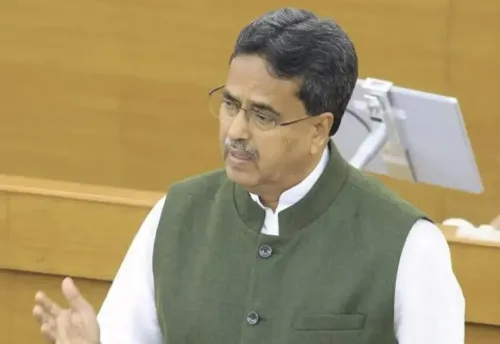
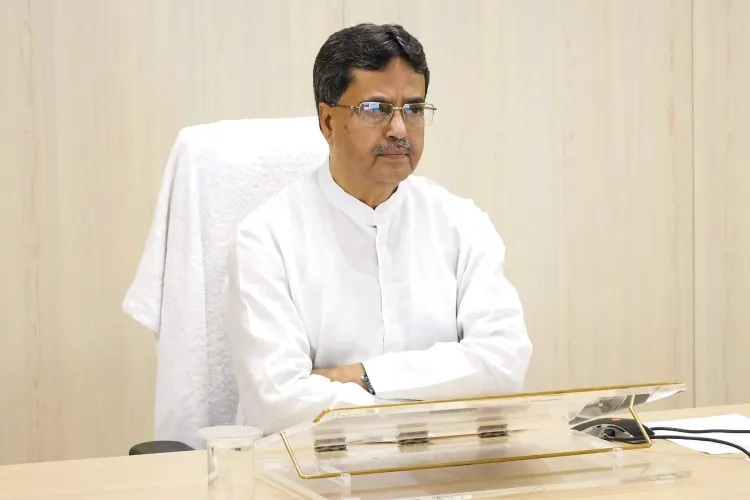
Agartala, April 23: Tripura Chief Minister Manik Saha launched a sharp attack on the Indian National Developmental Inclusive Alliance (INDIA bloc) on Thursday, accusing the opposition of deliberately blocking an amendment to the Women's Reservation Bill in Parliament on April 17, 2026, and calling it a direct insult to the women of India. Speaking at a press conference at the Bharatiya Janata Party (BJP) state office in Agartala, Saha alleged that the opposition's obstruction was driven purely by self-serving political motives rather than any genuine concern for women's welfare.
What Happened in Parliament on April 17
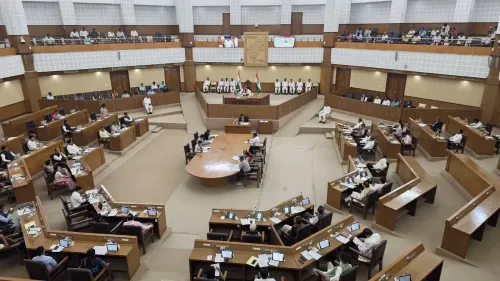
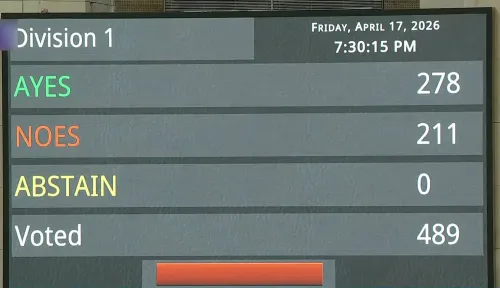
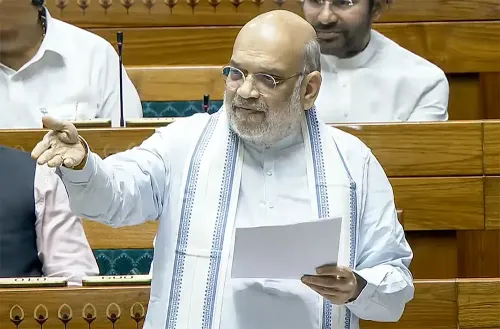
The amendment to the Women's Reservation Bill, which sought to fast-track the implementation of 33 per cent reservation for women in the Lok Sabha and State Legislative Assemblies, could not be passed on April 17 due to stiff resistance from opposition parties. According to CM Saha, while there was detailed discussion in the Lok Sabha and the opposition participated in the debate, they ultimately refused to allow the amendment to pass.
The amendment was introduced with the specific aim of enabling the reservation to take effect ahead of the 2029 Lok Sabha elections, bypassing the current dependency on the completion of the national census, which has delayed the original law's enforcement by several years.
Background: A Three-Decade-Long Fight for Women's Representation
CM Saha provided a detailed historical account of the Women's Reservation Bill, noting that the demand has been alive for nearly 30 years. The bill was first introduced in 1996 under former Prime Minister H. D. Deve Gowda but failed to pass. Multiple attempts were made between 1998 and 2003 under former Prime Minister Atal Bihari Vajpayee, yet the legislation repeatedly stalled.
In 2010, the bill was passed in the Rajya Sabha during the tenure of former Prime Minister Manmohan Singh, but it could not clear the Lok Sabha. Parties including the Samajwadi Party and Rashtriya Janata Dal (RJD) were among those who opposed it at the time.
It was finally passed in September 2023 during a special session held in the new Parliament building, with an overwhelming majority in both Houses, under Prime Minister Narendra Modi. The legislation, officially called the Nari Shakti Vandan Act, was described by Saha as a revolutionary milestone in the history of Indian democracy.
Key Provisions of the Nari Shakti Vandan Act
The Nari Shakti Vandan Act, 2023 mandates 33 per cent reservation for women in the Lok Sabha, all State Legislative Assemblies, and the Delhi Assembly. The reservation also applies within Scheduled Castes (SC) and Scheduled Tribes (ST) reserved constituencies.
Seats are to be rotated after each election through the delimitation process to ensure broader representation across constituencies. The law has a validity of 15 years, extendable by Parliament. However, it applies only to directly elected members and does not cover the Rajya Sabha.
The critical bottleneck remains the national census, which must be completed before the law can be implemented. Since the census is still underway, the April 2026 amendment was specifically designed to remove this dependency and enable implementation by the 2029 general elections.
CM Saha's Allegations Against Congress and INDIA Bloc
Saha alleged that Congress has historically worked against women's interests, pointing to the bill's repeated failures during Congress-led governments. He stated that women constitute 55 per cent of India's population and have been systematically deprived due to decades of delayed implementation.
He strongly condemned the INDIA bloc, including Congress and the Communist Party of India (Marxist) [CPI-M], asserting that Prime Minister Modi continues to enjoy the trust and support of crores of women across the country. He predicted that the opposition would face a strong electoral response for blocking the amendment.
Present at the press conference were prominent women leaders including Industries and Commerce Minister Santana Chakma, MLA Mina Rani Sarkar, and MLA Antara Dev Sarkar, underscoring the BJP's effort to project the issue as central to women's political empowerment.
What Comes Next: 2029 Elections and the Census Timeline
With the April 2026 amendment having failed to pass, the implementation of women's reservation remains contingent on the completion of the national census and subsequent delimitation exercise. Political analysts note that this could push actual implementation well beyond 2029, making the amendment's defeat a significant setback for women's political representation in India.
The BJP is expected to continue using this issue as a political rallying point ahead of upcoming state elections and the 2029 Lok Sabha elections, framing the opposition's resistance as anti-women. Whether the government will introduce the amendment again in the next Parliamentary session remains to be seen, but the debate over women's reservation is far from over.
Point of View
Especially given that the opposition's own historical record on this bill, from the SP and RJD blocking it in 2010 to the current impasse, is deeply inconsistent. The deeper irony is that the census delay — a bureaucratic failure of successive governments — is now the gatekeeper of women's political representation, and neither side has moved urgently enough to resolve it. Until the census is completed and delimitation done, the Nari Shakti Vandan Act remains a landmark law on paper with no teeth on the ground.
NationPress
1 Oct 2026
Frequently Asked Questions
Why was the Women's Reservation Amendment blocked in Parliament in April 2026?
The Women's Reservation Amendment, introduced in April 2026 to enable 33% reservation for women ahead of the 2029 Lok Sabha elections, was blocked due to opposition resistance from the INDIA bloc. While the opposition participated in the Lok Sabha debate on April 17, they ultimately did not allow the amendment to pass.
What is the Nari Shakti Vandan Act and when was it passed?
The Nari Shakti Vandan Act, also known as the Women's Reservation Bill 2023, was passed in September 2023 during a special session in the new Parliament building. It mandates 33% reservation for women in the Lok Sabha, State Legislative Assemblies, and the Delhi Assembly, with a validity of 15 years.
Why has the Women's Reservation Act not been implemented yet?
The Nari Shakti Vandan Act cannot be implemented until the national census is completed and a delimitation exercise is conducted. Since the census is still underway, the law's enforcement has been delayed by several years, which is why the 2026 amendment was introduced to bypass this requirement.
What is the history of the Women's Reservation Bill in India?
The Women's Reservation Bill was first introduced in 1996 under PM H. D. Deve Gowda and failed to pass. Multiple attempts were made between 1998 and 2003 under PM Vajpayee, and in 2010 it passed the Rajya Sabha under PM Manmohan Singh but was blocked in the Lok Sabha. It was finally passed in 2023 under PM Modi.
What did Tripura CM Manik Saha say about the opposition and women's reservation?
Tripura CM Manik Saha accused the INDIA bloc, including Congress and CPI-M, of insulting women by blocking the Women's Reservation Amendment for political self-interest. He alleged that Congress has historically worked against women's interests and predicted that the opposition would face a strong electoral response from crores of women voters.