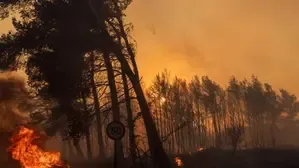
Colombia wildfires: 12 active blazes in 3 departments under El Nino
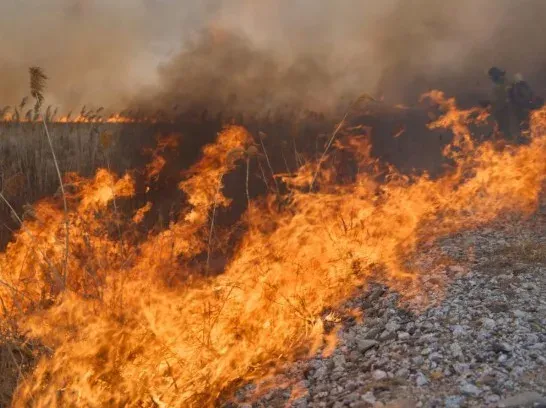
Synopsis
Colombia is battling 12 active wildfires across three departments, with the municipality of Coello in Tolima alone seeing over 2,000 hectares burned and 7,000 people affected. El Nino conditions — now forecast to last until March 2027 — are driving the crisis, and local officials are urgently calling for aerial support as ground crews struggle to contain multiple simultaneous fire fronts.
Key Takeaways
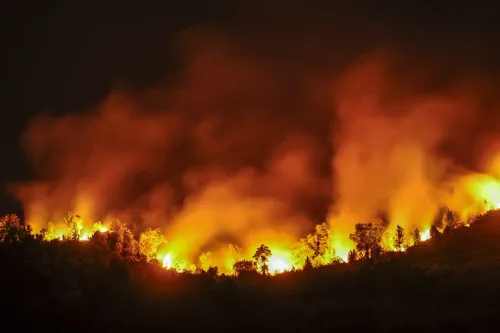
Colombia's National Unit for Disaster Risk Management confirmed 12 active wildfires across three departments as of 25 August .
84 fires were extinguished in the preceding seven days, but containment remains incomplete.
Tolima is the worst-hit department with 10 active blazes; Coello municipality has 6 fire spots across three rural zones.
More than 2,000 hectares have been affected in Coello alone, impacting around 7,000 people , especially in the Chaguala rural area.
El Nino conditions are forecast to persist in Colombia until March 2027 , prolonging the fire risk.
Global average sea surface temperature hit a record 21.1°C on 22 August , according to the Copernicus Climate Change Service .
Colombia's National Unit for Disaster Risk Management confirmed on Monday, 25 August that 12 wildfires remain active across three departments as the country battles worsening conditions linked to the El Nino climate pattern. The agency reported that 84 fires had been extinguished over the preceding seven days, even as active blazes continued to strain local response capacity.
Where the Fires Are Burning
The active fires are concentrated primarily in the department of Tolima, which accounts for 10 of the 12 active blazes. The departments of Caldas and Huila each report one active fire. The municipality of Coello in Tolima has emerged as one of the hardest-hit areas, with six active fire spots spread across three rural zones.
Coello in Critical Condition
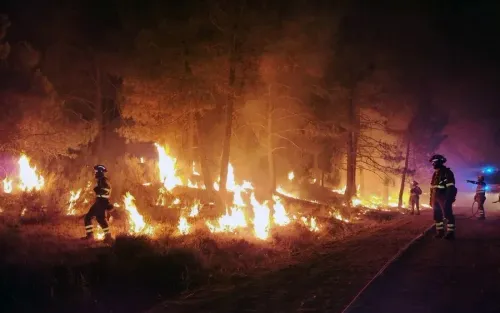
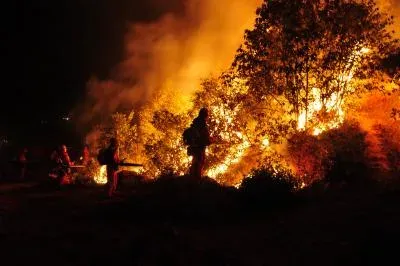
Santiago Herrera, mayor of Coello, described the municipality as being in a critical situation, citing high temperatures, strong winds, and the sheer number of simultaneous fire fronts as factors making full containment extremely difficult. He said approximately 100 specialists in rescue and wildfire response were working alongside local residents, but that ground crews faced serious logistical strain attempting to cover all affected points.
Herrera has called for immediate national government intervention, specifically requesting aerial support. 'Only aerial support,' he said, 'could help lower temperatures and allow ground crews to reach the fire spots more effectively.' More than 2,000 hectares have been affected in Coello alone, impacting around 7,000 people, particularly in the rural area of Chaguala.
El Nino's Role and Timeline
Colombia's wildfires began in early August and are primarily attributed to El Nino conditions — a natural climate pattern driven by the warming of ocean surface temperatures in the central and eastern tropical Pacific. Authorities warn that El Nino conditions could persist in the country until March 2027, raising fears of a prolonged fire season with limited relief in sight.
This comes amid a broader global climate signal: the Copernicus Climate Change Service (C3S) reported on Monday that the daily global average sea surface temperature reached 21.1 degrees Celsius on 22 August, surpassing the previous record of 21.09 degrees Celsius set in March 2024. Scientists say such ocean warming directly amplifies El Nino-driven droughts and fire conditions in South America.
What Comes Next
With aerial assets identified as the critical gap in the response, pressure is mounting on Colombia's national government to deploy helicopter support to Tolima and other affected departments. If El Nino conditions hold through early 2027 as projected, fire managers and disaster agencies face the prospect of managing wildfire risk for well over a year. The situation in Coello and the broader Tolima region will serve as a bellwether for how effectively Colombia can scale its disaster response under sustained climate stress.
Point of View
The record global sea surface temperature logged by Copernicus on 22 August signals that the atmospheric conditions feeding these fires are intensifying, not stabilising. The real question is whether Colombia's national government will treat this as a one-off response event or begin investing in pre-positioned aerial assets and community-level firebreaks before the next dry season arrives.
NationPress
9 Oct 2026
Frequently Asked Questions
How many wildfires are currently active in Colombia?
As of 25 August, 12 wildfires remain active across three Colombian departments — Tolima (10 fires), Caldas (1), and Huila (1). The disaster management agency also reported that 84 fires had been extinguished in the previous seven days.
Why are wildfires spreading in Colombia right now?
The fires are primarily linked to El Nino conditions, which bring higher temperatures, reduced rainfall, and stronger winds to parts of Colombia. Authorities say El Nino could persist in the country until March 2027, extending the period of elevated fire risk.
How severe is the situation in Coello, Tolima?
Coello is among the hardest-hit municipalities, with six active fire spots across three rural zones, more than 2,000 hectares burned, and approximately 7,000 people affected — particularly in the rural area of Chaguala. Mayor Santiago Herrera has called it a critical situation and is urgently requesting aerial firefighting support from the national government.
What support is being requested by local officials?
Mayor Herrera has specifically called for helicopter support, stating that aerial assistance is the only way to lower temperatures at fire spots and allow ground crews to operate effectively. Around 100 wildfire response specialists are already deployed alongside local residents, but logistical capacity is stretched.
Is the Colombia wildfire crisis connected to broader global climate trends?
Yes. The Copernicus Climate Change Service reported that the daily global average sea surface temperature reached a record 21.1 degrees Celsius on 22 August 2024, surpassing the previous record of 21.09 degrees Celsius set in March 2024. Scientists link elevated ocean temperatures to the El Nino pattern driving Colombia's drought and fire conditions.