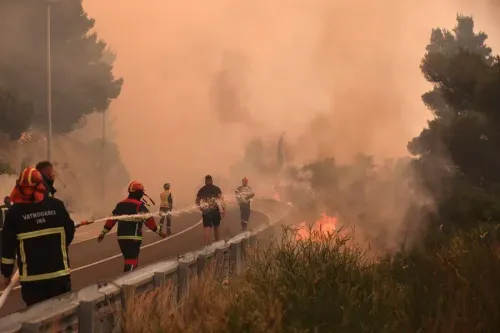
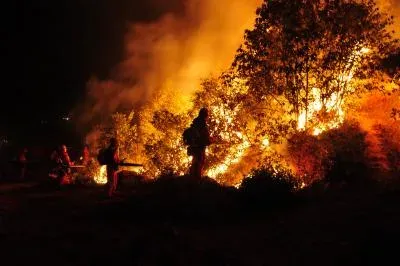
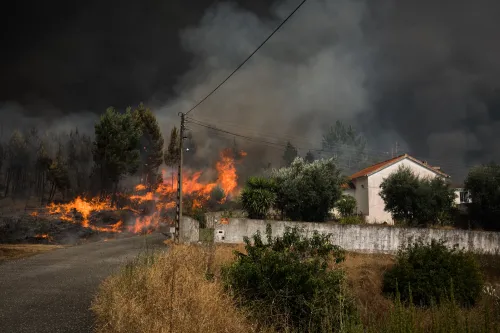
Spain wildfire crisis: 91,000 evacuated as Madrid, Avila blaze hits 45,000 hectares
Synopsis
Spain's wildfire season has reached crisis point — 91,000 people displaced, 45,000 hectares scorched in Madrid and Avila alone, and firefighters forced to abandon direct attacks on the blaze because conditions are too lethal. With EU nations scrambling aircraft and Portugal sending 129 personnel, this is no longer a national emergency in name only.
Key Takeaways
Approximately 91,000 people have been evacuated or ordered indoors across Madrid , Avila , and parts of Toledo as of 26 July .
Wildfires have destroyed or damaged roughly 45,000 hectares in the Madrid and Avila provinces; nearly 130,000 hectares have burned across Spain since January.
Madrid regional president Isabel Diaz Ayuso called it the 'worst fire in the history of the region.' Greece and Italy each deployed two Canadair aircraft under the EU Civil Protection Mechanism ; Portugal sent 129 personnel and 41 vehicles .
Firefighters abandoned direct attacks on the fire's head due to lethal conditions; wind gusts of 50–60 km/h and temperatures above 32°C continue to hamper suppression efforts.
Large parts of eastern, southern, and central Spain remain at high or extreme wildfire risk , with no immediate easing forecast.
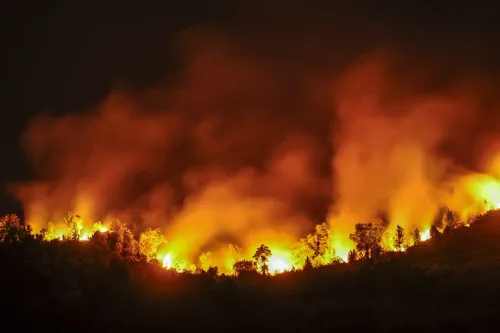
Spain is battling one of its most devastating wildfire seasons in recent memory, with fast-moving blazes tearing through the Madrid region and the neighbouring province of Avila, forcing approximately 91,000 people to evacuate or shelter indoors as of 26 July. The government has declared a national emergency as fires continue to spread across central Spain.
Scale of Destruction
The wildfires have destroyed or damaged roughly 45,000 hectares across the provinces of Madrid and Avila, with additional blazes reported in parts of Toledo. Since the start of the year, nearly 130,000 hectares have burned across Spain, according to the European Forest Fire Information System.
Madrid's regional president Isabel Diaz Ayuso described the situation as the 'worst fire in the history of the region.' Interior Minister Fernando Grande-Marlaska acknowledged on Saturday that 'the situation is complex' and that it 'has not been a positive day' for firefighting operations amid 'extremely difficult' weather conditions.
Why the Fires Are So Severe
Javier Armeteros, Madrid delegate of Spain's State Meteorological Agency, said the blazes developed under what firefighters call the '30-30-30 rule' — temperatures above 30 degrees Celsius, relative humidity below 30 per cent, and wind speeds exceeding 30 kilometres per hour. In practice, conditions were even more extreme: temperatures surpassed 32 degrees Celsius, humidity dropped below 30 per cent, and wind gusts reached between 50 and 60 kilometres per hour.
Israel Naveso, spokesperson of Madrid firefighters' union, described the emergency as the result of 'a perfect storm' — abundant vegetation following a wet winter, three heatwaves in six weeks, and strong winds creating ideal conditions for multiple fast-moving fires. This is the broader pattern of a summer that has already seen deadly fires in Almeria claim 13 lives this month, and major blazes in the eastern province of Castellon.
Firefighting Tactics and Challenges
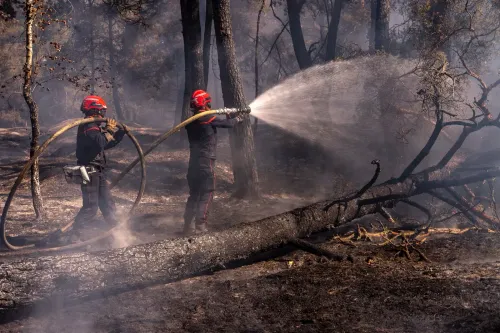
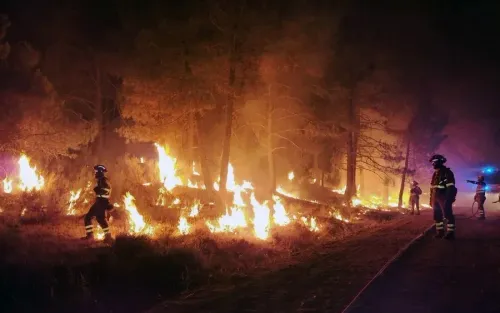
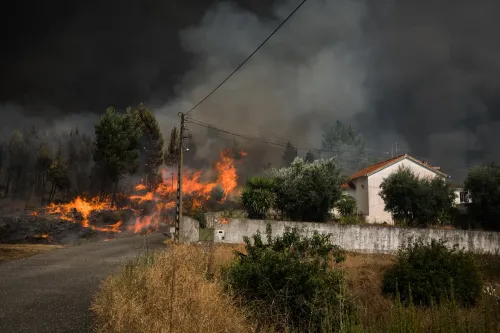
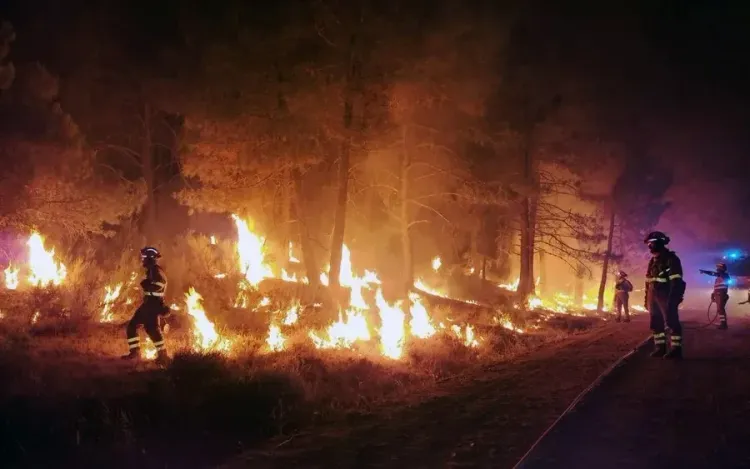
Jose Maria Bermudez, spokesperson for the Forest Rangers Corps in Madrid, said emergency crews had to abandon direct attacks on the fire's head because doing so would be 'going straight to death.' Teams have instead focused on protecting populated areas and critical infrastructure. Authorities warned that strong winds and low humidity continued to hamper suppression efforts despite cooler overnight temperatures.
Thousands of firefighters, soldiers, police officers, and civil protection personnel have been deployed across the affected zones, with the Military Emergency Unit playing a central role in protecting communities and critical infrastructure.
International Assistance
Spain has activated the European Union Civil Protection Mechanism, under which Greece and Italy each offered two Canadair firefighting aircraft along with an additional support aircraft. Italian aircraft had already joined suppression operations over Madrid and Avila by Saturday. A total of 33 Greek and 14 Italian emergency personnel have been deployed to support Spanish services.
Portugal dispatched 129 firefighters and emergency personnel along with 41 vehicles — including fire engines, command vehicles, bulldozers, and ambulances — to reinforce the response on the ground.
What Comes Next
The wildfire threat shows no sign of easing. Spain's latest national wildfire risk assessment indicates that large parts of eastern, southern, and central Spain remain at high or extreme risk, with weather conditions continuing to favour rapid ignition and spread. How quickly authorities can contain the active fronts in Madrid and Avila will determine whether Spain's 2025 fire season becomes its worst on record.
Point of View
A vegetation-heavy landscape after a wet winter, and wind gusts that rendered direct firefighting suicidal: these are not anomalies but a compounding pattern that climate projections have flagged repeatedly. What is notable here is the tactical retreat — when frontline commanders publicly say attacking the fire directly means 'going straight to death,' the scale of institutional unpreparedness becomes visible. The EU Civil Protection Mechanism provides a political safety valve, but two Canadair aircraft from Greece and Italy are not a structural solution to a fire season that has already consumed 130,000 hectares before summer peaks. Spain needs a reckoning with land management and early-warning infrastructure, not just mutual aid agreements.
NationPress
26 Oct 2026
Frequently Asked Questions
How many people have been evacuated due to the Spain wildfires?
Approximately 91,000 people have been evacuated or ordered to stay indoors across the Madrid region, the province of Avila, and parts of Toledo as of 26 July. The fires in these areas have destroyed or damaged around 45,000 hectares.
Why are the Spain wildfires so difficult to contain?
Firefighters are battling conditions that meet the so-called '30-30-30 rule' — temperatures above 30°C, humidity below 30 per cent, and winds above 30 km/h. In practice, gusts reached 50–60 km/h, forcing crews to abandon direct attacks on the fire's head and focus instead on protecting populated areas.
What international help has Spain received for the wildfires?
Spain activated the EU Civil Protection Mechanism, receiving two Canadair aircraft each from Greece and Italy, plus additional support aircraft. Portugal deployed 129 firefighters and emergency personnel along with 41 vehicles including fire engines, bulldozers, and ambulances.
How much land has burned in Spain in 2025?
Nearly 130,000 hectares have burned across Spain since the start of the year, according to the European Forest Fire Information System. The Madrid and Avila fires alone account for approximately 45,000 hectares of that total.
Is the wildfire threat in Spain expected to ease soon?
No. Spain's latest national wildfire risk assessment indicates that large parts of eastern, southern, and central Spain remain at high or extreme risk. Weather conditions continue to favour rapid ignition and spread, with no immediate improvement forecast.