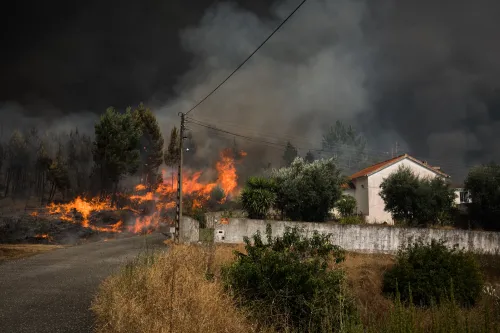
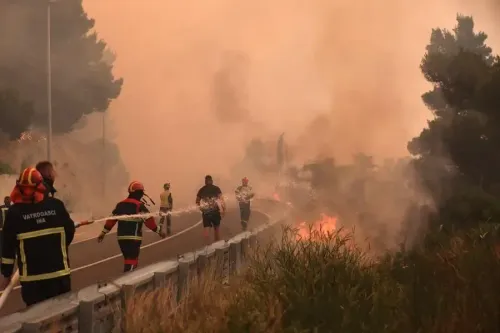
Portugal wildfire 2025: Burned area nearly quadruples, 30,155 hectares lost
Synopsis
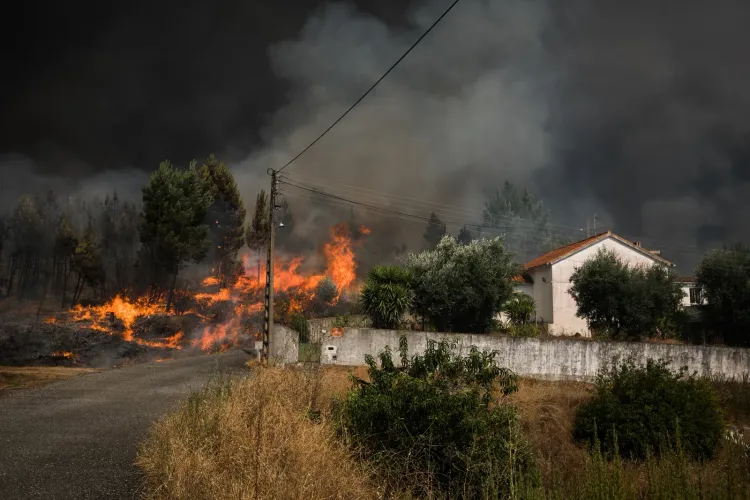
Portugal's wildfire season has exploded in 2025 — 30,155 hectares burned, nearly four times last year's figure for the same period, with more than half the damage done in just five days. PM Montenegro has already pulled in the EU Civil Protection Mechanism and bilateral aid from Spain and Morocco, and fire season peak is still ahead.
Key Takeaways
30,155 hectares have burned in Portugal so far in 2025 — nearly four times the area recorded in the same period of 2024 .
4,592 wildfires recorded nationwide, up approximately 70 per cent year on year — the highest count for this period since 2022 .
More than half the total burned area was recorded in just five days (Wednesday to Sunday).
12 of Portugal's 18 mainland districts are under red alert due to extreme heat.
PM Luis Montenegro activated the European Civil Protection Mechanism and bilateral agreements with Spain and Morocco on 3 July .
The Portuguese government declared a nationwide state of alert on Friday, citing surging rural fire risk.
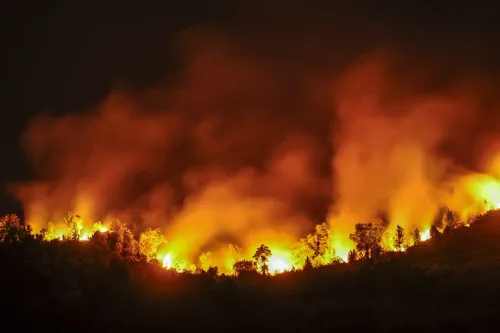
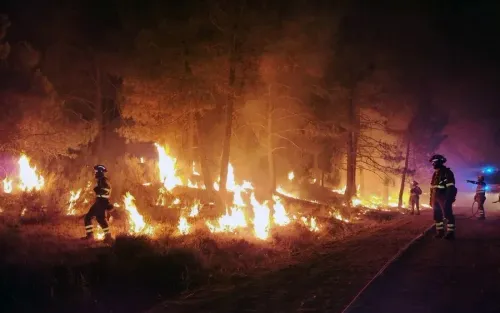
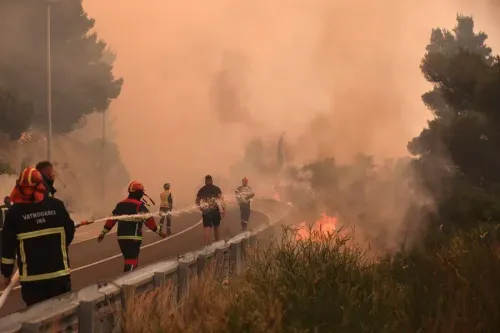
Portugal's wildfire crisis has intensified sharply in 2025, with 30,155 hectares burned so far this year — nearly four times the area recorded during the same period in 2024 — as an extreme heat wave drives unprecedented rural fire activity across the country, according to official data. The burned area is the highest recorded for this period since 2017.
Scale of the Crisis
Data from Portugal's Rural Fire Integrated Management System (SGIFR) shows 4,592 wildfires have been recorded nationwide this year. More than half of the total burned area was logged in just five days, between Wednesday and Sunday alone. The number of wildfires has risen by approximately 70 per cent year on year, the highest figure for this period since 2022.
Extreme Heat Driving the Danger
Portugal has been experiencing exceptionally high temperatures since late June, prompting the highest-level red heat warning in several regions. Currently, 12 of Portugal's 18 mainland districts are under red alert due to extreme heat, with virtually the entire continental territory facing elevated wildfire risk. On Friday, the Portuguese government declared a nationwide state of alert, citing a 'significant increase in the risk of rural fires.'
Government Response and International Aid
Portuguese Prime Minister Luis Montenegro announced on 3 July that Portugal would activate the European Civil Protection Mechanism alongside bilateral cooperation agreements with Spain and Morocco. 'We decided, at this point, to activate the European Civil Protection Mechanism and also the bilateral agreements with Spain and Morocco,' Montenegro said, stressing that the move was precautionary and that national capacity had not yet been exhausted. He added that the goal was to avoid transferring firefighting assets between regions, citing a 'significant deterioration in rural fire risk.'
What the European Civil Protection Mechanism Does
The European Civil Protection Mechanism allows EU member states and other participating countries to request international assistance when national resources are insufficient or when they wish to reinforce response capacity preventively. Portugal's early activation signals the government's intent to get ahead of a worsening situation rather than wait for a full-scale emergency.
What Comes Next
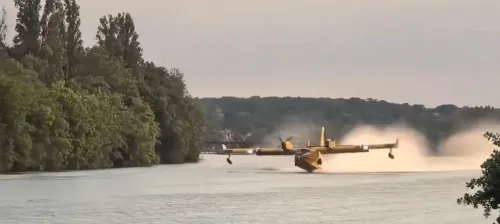
With temperatures remaining elevated and the peak of the fire season still ahead, authorities are on high alert. The deployment of international assets from Spain and Morocco is expected to supplement Portugal's own firefighting capacity across the most vulnerable districts. The situation will likely be closely watched across southern Europe, where climate-driven wildfire seasons have grown progressively more severe.
Point of View
A lesson drawn from catastrophic fire seasons past. Yet the underlying driver — extreme heat arriving earlier and more intensely each year — sits beyond any government's immediate control. The 30,155-hectare figure is a data point in a long-run trend: southern Europe's fire seasons are lengthening and deepening, and the EU's collective response architecture is being stress-tested in real time. Whether bilateral aid from Spain and Morocco proves sufficient will depend on how long the heat persists — and that is a climate variable, not a policy one.
NationPress
5 Oct 2026
Frequently Asked Questions
How much area has burned in Portugal in 2025?
As of early July 2025, wildfires have burned 30,155 hectares across Portugal — nearly four times the area recorded during the same period in 2024, and the highest figure for this period since 2017, according to official SGIFR data.
Why are Portugal's wildfires so severe in 2025?
An extreme heat wave has gripped Portugal since late June 2025, triggering the highest-level red heat warnings in multiple regions. The combination of record temperatures and dry conditions has dramatically elevated rural fire risk, with 12 of 18 mainland districts under red alert.
What is the European Civil Protection Mechanism and why did Portugal activate it?
The European Civil Protection Mechanism allows EU member states to request international firefighting assistance, either when national resources are exhausted or as a precautionary reinforcement. Portugal activated it on 3 July 2025, alongside bilateral agreements with Spain and Morocco, to avoid stretching domestic assets too thin across regions simultaneously under threat.
What did Portuguese PM Luis Montenegro say about the wildfire response?
PM Montenegro said on 3 July that Portugal was activating the European Civil Protection Mechanism and bilateral agreements with Spain and Morocco as a precautionary measure, stressing that national capacity had not yet been exhausted. He cited a 'significant deterioration in rural fire risk' as the reason for early international coordination.
How does 2025 compare to previous wildfire years in Portugal?
The burned area in 2025 is the highest for this period since 2017, while the number of wildfires is the highest for this period since 2022. The 70 per cent year-on-year increase in fire count underscores a sharp acceleration compared with recent seasons.