Is the Modi Government's Governance Approach Flawed?
Synopsis
Congress has criticized the Modi government’s governance style after plans for a controversial Chandigarh bill were shelved. This incident raises questions about decision-making processes and political strategy. As Punjab's political landscape heats up, the implications for Chandigarh's governance remain uncertain, making this a pivotal moment in regional politics.
Key Takeaways
Congress criticizes Modi government’s decision-making.
Home Ministry retracts on Chandigarh Bill amid opposition.
Political tensions in Punjab are reignited.
The bill aims to change governance structure for Chandigarh.
Winter Session of Parliament has limited working days for crucial legislation.
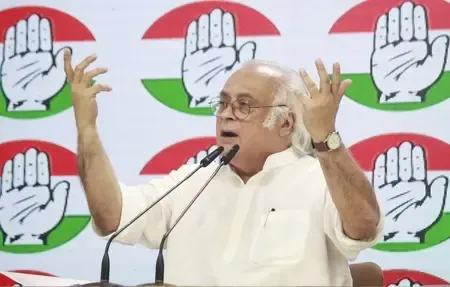
New Delhi, Nov 23 (NationPress) In a sharp condemnation, Congress General Secretary Jairam Ramesh has charged the Narendra Modi administration with a rushed "FAST approach to governance -- First Announce, Second Think" -- following the Union Home Ministry's retreat on its plan to present a contentious Constitution Amendment Bill related to Chandigarh during the upcoming Winter Session of Parliament.
“Only yesterday, the Parliament Bulletin for the forthcoming Winter Session indicated the introduction of a Constitution Amendment Bill aimed at appointing a full-time Lieutenant Governor for Chandigarh. This was met with immediate and vigorous opposition from the INC and other factions in Punjab, where the Governor also acts as the Administrator of Chandigarh. Now, the Union Home Ministry has stated that it does not plan to introduce the Bill in the Winter Session,” Ramesh posted on X on Sunday morning, sharing the parliamentary bulletin.
His social media update has sparked a political discussion in Punjab, where Chandigarh serves as a joint capital for both Punjab and Haryana.
The Constitution (131st Amendment) Bill, 2025, referenced in Lok Sabha and Rajya Sabha bulletins on November 22, sought to place Chandigarh under Article 240 of the Constitution, thereby allowing the President to formulate regulations for the Union Territory, similar to provisions for Andaman and Nicobar Islands, Lakshadweep, and other regions without legislatures.
In a statement on X, the Home Ministry clarified: "The proposal is merely to streamline the Central government's law-making process... and remains under consideration. No definitive resolution has been reached... A suitable decision will be made only after thorough consultations with all stakeholders, considering the interests of Chandigarh."
It stressed that there is no intention to modify Chandigarh's governance or its “traditional arrangements” with Punjab and Haryana.
This situation brings back to the forefront the age-old disputes concerning Chandigarh, originally envisioned as Punjab's capital post-Partition in 1948 but shared since 1966.
With the Winter Session scheduled to run from December 1-19 -- a mere 15 working days -- opposition parties are criticizing the limited timeline, especially amidst other significant legislation like the Atomic Energy Bill.
Point of View
The recent developments regarding the Chandigarh L-G Bill highlight ongoing tensions between state and central governance. The Modi government's approach raises valid concerns about policy-making efficiency and stakeholder engagement. As the situation unfolds, it’s crucial to ensure that the interests of Chandigarh’s diverse population remain at the forefront of any decisions.
NationPress
19 Sept 2026
Frequently Asked Questions
What is the Chandigarh Constitution Amendment Bill?
The Chandigarh Constitution Amendment Bill seeks to empower the President to frame regulations for Chandigarh under Article 240, similar to other Union Territories without legislatures.
Why did the Union Home Ministry backtrack on the bill?
The Union Home Ministry stated that it is still considering the proposal, emphasizing the need for consultations with stakeholders before making a final decision.
What are the implications of the bill for Chandigarh's governance?
If passed, the bill could alter the governance structure of Chandigarh, impacting its relationship with Punjab and Haryana.
How have political parties reacted to this development?
Opposition parties, particularly in Punjab, have expressed strong disapproval, citing concerns over the rapid decision-making process and its implications.
What is the significance of Chandigarh in Indian politics?
Chandigarh serves as a joint capital for Punjab and Haryana, making it a focal point for political dynamics and governance issues in the region.