Assam Congress Forms 7 Teams for May 4 Vote Count Vigil

Synopsis
With Assam's vote counting set for May 4 and a record 85.96% voter turnout on the line, the Congress party has deployed 7 region-specific teams to monitor EVMs, strongrooms, and counting centres — a move that signals both organisational discipline and high political stakes in the Northeast.
Key Takeaways
Seven specialised teams have been formed by the Assam Pradesh Congress Committee (APCC) to monitor vote counting on May 4 .
The initiative was jointly announced by APCC President Gaurav Gogoi and General Secretary Jitendra Singh on April 23 .
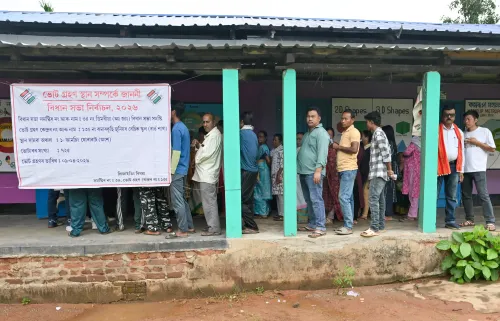
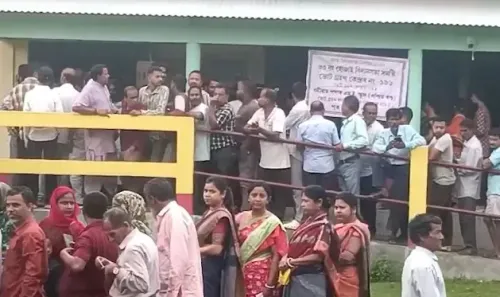
Assam recorded a voter turnout of 85.96 per cent during the April 9 Assembly elections , one of the highest in recent years.
Teams are assigned to all major regions: Upper Assam, North Bank, Central Assam, hill districts, Lower Assam, Barak Valley, and BTR .
Key responsibilities include EVM strongroom inspections , candidate coordination, and district-level committee liaison.
Team members will be present at counting centres before May 4 and will remain until the final results are declared.
The Assam Pradesh Congress Committee (APCC) has formed seven specialised monitoring teams to oversee the vote counting process for the Assam Assembly Elections, with counting officially scheduled for May 4. The decision, announced on Thursday, April 23, reflects the party's intent to ensure transparency, prevent irregularities, and maintain active coordination across all counting centres and strongrooms in the state.
Strategic Deployment Across All Regions
According to a formal statement jointly issued by APCC General Secretary and Assam in-charge Jitendra Singh and APCC President Gaurav Gogoi, the teams will be deployed across districts that participated in the April 9 Assembly polls. Assam recorded a remarkable voter turnout of 85.96 per cent — one of the highest in recent years — making the counting phase especially consequential for all political stakeholders.
Each team has been assigned clearly defined responsibilities, including physical inspection of strongrooms housing Electronic Voting Machines (EVMs), direct coordination with party candidates, and regular communication with district Congress committees to ensure seamless information flow.
Team-Wise Breakdown by Region
In Upper Assam, the monitoring team includes senior leaders Debabrata Saikia, Raju Sahu, Utpal Gogoi, Rajkumar Nalatira Neog, David Phukan, and Mrityunjay Duarah. They will oversee districts including Tinsukia, Dibrugarh, Sivasagar, Charaideo, Jorhat, and Golaghat.
The North Bank region will be managed by Ripun Bora, Ghana Burhagohain, J.P. Das, Shailen Sonowal, Kartik Kurmi, Shankar Kutum, and Meghnath Chetri, who have been assigned specific district-level responsibilities.
For Central Assam and the hill districts — including Nagaon, Morigaon, Karbi Anglong, West Karbi Anglong, and Dima Hasao — a larger team has been constituted, comprising Bhimananda Bora, Diganta Barman, Satyabrata Kalita, Mira Borthakur Goswami, Swapan Kar, Mrinal Hazarika, Akram Hussain, Nirmal Langthasa, Ratan Engti, Augustine Engti, Ashok Teron, Pallav Chetia, and Charaniki Engti.
Dedicated teams have also been assigned to Lower Assam, Barak Valley, and the Bodoland Territorial Region (BTR), with senior regional leaders tasked with ensuring smooth coordination and vigilance during the counting process.
Why This Move Matters
The formation of these teams signals that the Congress party is treating the May 4 counting day as a high-stakes operation. With an 85.96 per cent voter turnout, the election outcome carries significant democratic weight, and any procedural lapse during counting could trigger legal and political consequences.
This initiative also reflects a broader national trend where opposition parties have intensified scrutiny of EVM strongrooms and counting procedures following controversies in past state elections. Congress has previously raised concerns about EVM integrity in multiple states, making strongroom monitoring a standard pre-counting protocol for the party.
Party leaders confirmed that team members will visit counting centres ahead of May 4 and remain engaged until the final results are declared, underscoring the party's commitment to safeguarding the integrity of the electoral process.
Broader Political Context
The Assam Assembly Elections are being closely watched as a barometer of the Congress party's revival in the Northeast, where it has faced significant setbacks over the past decade. The party's organisational response — deploying structured, region-specific teams — suggests a more disciplined approach compared to previous election cycles.
Notably, APCC President Gaurav Gogoi, who also serves as a prominent Lok Sabha MP, has been actively involved in strengthening the party's ground machinery in Assam ahead of the results. His co-authorship of the deployment order signals top-level ownership of the counting strategy.
As May 4 approaches, all eyes will be on whether Congress's meticulous monitoring translates into electoral gains — and whether the record voter turnout signals a shift in Assam's political landscape.
Point of View
Candidates, and rivals that the party is organised, alert, and serious about accountability. With EVM integrity controversies having dogged multiple state elections in recent years, this move also serves as a pre-emptive legal shield: if results disappoint, the party can point to documented monitoring as evidence of due diligence. More significantly, the personal involvement of APCC President Gaurav Gogoi suggests that Congress views Assam not as a peripheral battleground but as a critical test case for its Northeast revival strategy — one that national leadership is watching closely.
NationPress
19 Sept 2026
Frequently Asked Questions
Why has Assam Congress formed seven teams for vote counting?
The APCC formed seven specialised teams to ensure transparency and prevent irregularities during the May 4 vote counting process. The teams are tasked with monitoring EVM strongrooms, coordinating with candidates, and maintaining communication with district Congress committees.
When is the Assam Assembly election vote counting scheduled?
Vote counting for the Assam Assembly elections is scheduled for May 4. The elections were held on April 9, with Assam recording a voter turnout of 85.96 per cent.
Who are the key leaders overseeing the APCC counting teams?
The deployment order was jointly issued by APCC President Gaurav Gogoi and APCC General Secretary and Assam in-charge Jitendra Singh. Regional leaders like Debabrata Saikia, Ripun Bora, and Bhimananda Bora are heading district-level teams.
What is the voter turnout in the 2025 Assam Assembly elections?
Assam recorded a voter turnout of 85.96 per cent in the April 9 Assembly elections, one of the highest in recent years. This high turnout has added greater significance to the May 4 counting process.
Which regions will the APCC counting teams cover in Assam?
The seven APCC teams will cover Upper Assam, North Bank, Central Assam, hill districts including Karbi Anglong and Dima Hasao, Lower Assam, Barak Valley, and the Bodoland Territorial Region (BTR).