Are Government Policies Causing Jobless Growth?
Synopsis
The Congress party's recent report criticizes the Modi government's economic policies, alleging a troubling trend of jobless growth. Highlighting significant declines in manufacturing and services employment, the report raises questions about the reliability of official data and the impact on households, urging a reevaluation of economic priorities amidst rising inequality.
Key Takeaways
Jobless Growth: Declines in manufacturing and services employment.
Informal Sector Growth: Increased reliance on gig and informal work.
Trust Issues: Concerns over the accuracy of official economic data.
IMF Rating: India's economic statistics rated 'C' by the IMF.
Welfare Programs: Criticism of weakened social safety nets.
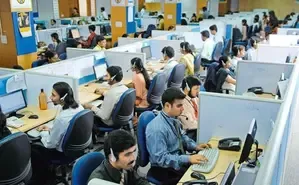
New Delhi, Jan 27 (NationPress) - The Congress party unveiled a report on Tuesday, condemning the economic strategies implemented by the Narendra Modi administration and asserting that the nation is experiencing jobless growth. The report indicated that from 2017-18 to 2023-24, employment in the manufacturing sector has decreased from 12.1% to 11.4%, while the services sector saw a decline from 31.1% to 29.7%.
In contrast, employment within the agriculture sector increased from 44.1% to 46.1%, suggesting a regression to low-productivity work due to a lack of job creation in manufacturing, as highlighted in the report.
Most job creation is occurring in informal and gig roles, with 40% of salaried workers lacking contracts, paid leave, or social security, the report pointed out.
Prepared by the Congress's Research Department, the report raises concerns regarding the trustworthiness of official macroeconomic data, claiming a widening gap between official statistics and the actual experiences of the populace.
The document asserts that the IMF has rated India's statistics with a grade of C, and former Chief Economic Adviser Arvind Subramanian has suggested that India's GDP growth figures may be inflated by 2.5 percentage points.
“If inflation is officially recorded at 0.5%, why is the cost of living escalating for every family? Why have household savings plummeted while debt has surged?” the report questioned.
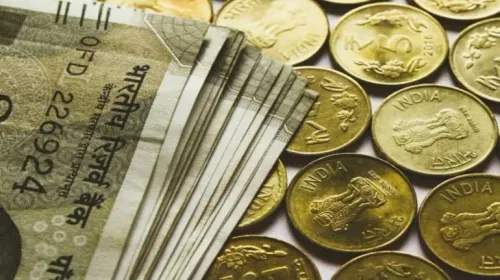
It also noted that despite assertions of a robust economy, the rupee ranked as Asia’s worst-performing currency in 2025, with its decline persisting into 2026, and net foreign direct investment was negative for four of the ten months in 2025.
The report criticized the MGNREGA scheme, stating it had been systematically weakened before the crucial social safety net was dismantled, replacing the right to employment with the restrictive VB-G RAM G scheme.
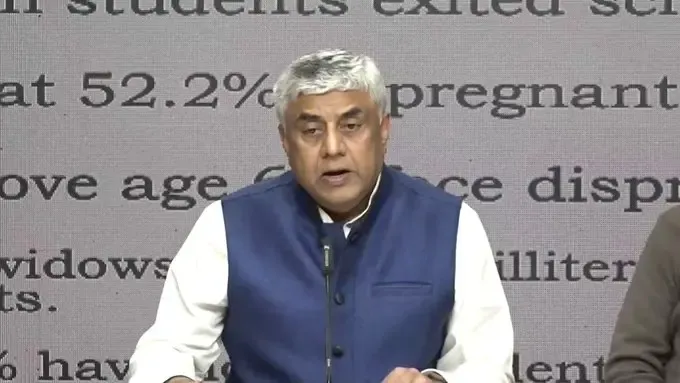
While unveiling the report, Congress Research Department Chairman Rajeev Gowda stated: “The Real State of the Economy 2026 reveals the Modi government’s priorities. As inequality widens, corporate profits soar, and meaningful job creation remains stagnant.”
“The Modi government appears intent on reducing welfare, dismantling the social safety net for the poor, youth, farmers, and women—the four groups the Prime Minister professes to support. Furthermore, the credibility of India’s data is increasingly being questioned,” he added.
Point of View
It's essential to approach this report with a balanced perspective. While the Congress party highlights significant concerns regarding job creation and economic policies, it's crucial to consider the broader economic context and the varying factors influencing these trends. A thorough analysis is needed to understand the implications of such claims on public perception and policy.
NationPress
30 Sept 2026
Frequently Asked Questions
What does the Congress report claim about job growth?
The report claims that there is jobless growth in India, with declines in manufacturing and services employment, while agriculture jobs have increased, indicating a shift to low-productivity work.
How does the report view official economic data?
The report questions the reliability of official macroeconomic data, suggesting a significant disconnect between these figures and the lived experiences of citizens.
What has the IMF said about India's statistics?
The IMF has rated India's statistics with a 'C' grade, indicating concerns about their accuracy, with former Chief Economic Adviser Arvind Subramanian suggesting GDP growth may be overstated.
What are the implications of the report's findings?
The findings suggest a need for urgent reevaluation of economic policies and priorities, especially regarding job creation and social safety nets.
What is the current state of the Indian Rupee according to the report?
The report states that the Indian Rupee was Asia's worst-performing currency in 2025, with its decline continuing into 2026.