Minister Reports Rise in Household Savings to 21.7% of GDP for 2024-25
Synopsis
In a recent Parliamentary session, it was revealed that household savings as a percentage of GDP have risen to 21.7% for 2024-25, highlighting the impact of government policies aimed at boosting economic stability and family financial resilience.
Key Takeaways
Household savings increased to 21.7% of GDP for 2024-25.
Government policies aim to enhance financial stability .
No food or fuel inflation reported for 2025-26.
Retail food prices have decreased significantly.
Food inflation driven by agricultural and supply chain factors.
New Delhi, March 17 (NationPress) The proportion of household savings relative to GDP has risen from 20% in 2022-23 to 21.7% in 2024-25, according to the latest GDP estimates (Base Year 2022-23), as reported in Parliament on Tuesday.
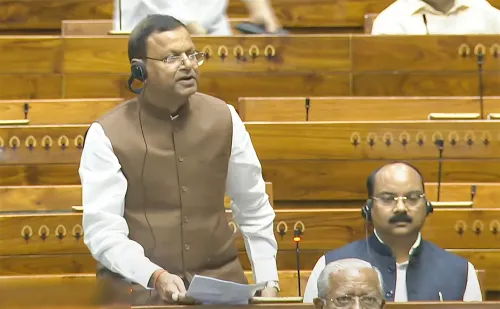
Minister of State for Finance, Pankaj Chaudhary, informed the Rajya Sabha that household savings serve as a crucial source for financing economic investments and are vital for enhancing the financial stability of families.
“In recent years, the government has implemented various policies aimed at improving the ease of doing business, expanding skill development initiatives, creating job opportunities, promoting comprehensive human resource development, and enhancing infrastructure. These measures are anticipated to foster consistent growth in household incomes and savings,” he stated.
Additionally, the minister mentioned that recent policy changes, including an income tax exemption for annual earnings up to Rs 12 lakh and GST rate adjustments, are expected to boost disposable incomes, consequently supporting increased household consumption, savings, and investments in the medium term, thus reducing reliance on credit.
In response to another inquiry, Chaudhary noted that there was no reported food or fuel inflation in 2025-26.
Average retail food prices saw a decline to (-)0.98% during the financial year 2025-26 (April–January), compared to 7.3% in FY 2024-25.
“In the revised CPI series, there is no distinct fuel category. The average fuel inflation, according to WPI, is (-)3.16% during April-January of FY 2025-26. Global crude oil prices, as well as the Indian basket rates, have been on a downward trend over the past year; however, recent geopolitical tensions in West Asia have caused prices to surpass the $100 per barrel mark,” the minister elaborated.
Food and fuel inflation are shaped by a mix of domestic and international factors. Food inflation is chiefly influenced by agricultural yields, which are contingent on monsoon conditions, weather patterns, seasonal supply fluctuations, and input expenses like fertilizers, energy, and labor, alongside supply chain, transportation, and storage infrastructure.
Point of View
The increase in household savings is a positive indicator of economic health, reflecting effective government policies aimed at enhancing financial resilience among families. This growth not only supports investment but also positions households to better navigate economic uncertainties.
NationPress
27 Sept 2026
Frequently Asked Questions
What is the current household savings percentage of GDP?
Household savings as a percentage of GDP have increased to 21.7% for 2024-25.
What policies have contributed to this increase?
Government initiatives focusing on business facilitation, skill development, and income tax exemptions have contributed to the rise in household savings.
Is there any reported inflation for food or fuel?
No food or fuel inflation has been reported for the fiscal year 2025-26.
How have retail food prices changed recently?
Retail food prices experienced a decline to (-)0.98% during the financial year 2025-26.
What are the influences on food inflation?
Food inflation is influenced by agricultural output, weather conditions, and supply chain factors.