Have India’s Household Savings Reached Rs 54.6 Lakh Crore in FY24?
Synopsis
India's household savings have surged to Rs 54.6 lakh crore in FY24, a significant rise from previous years. This growth reflects stable GDP percentages and increased domestic resource mobilization. Discover how these changes impact the economy and investment landscape.
Key Takeaways
Household savings in India have reached Rs 54.6 lakh crore .
Gross domestic savings have increased to Rs 92.6 lakh crore .
Household financial liabilities rose to 6.2 percent of GDP.
Total bank credit improved to Rs 159.01 lakh crore .
Economic growth remains robust despite global uncertainties.
New Delhi, Aug 5 (NationPress) The value of household savings in India has shown a significant increase, now standing at Rs 54.6 lakh crore for the fiscal year 2023-24, a rise from Rs 38.5 lakh crore recorded in 2019-20, as reported to Parliament on Tuesday.
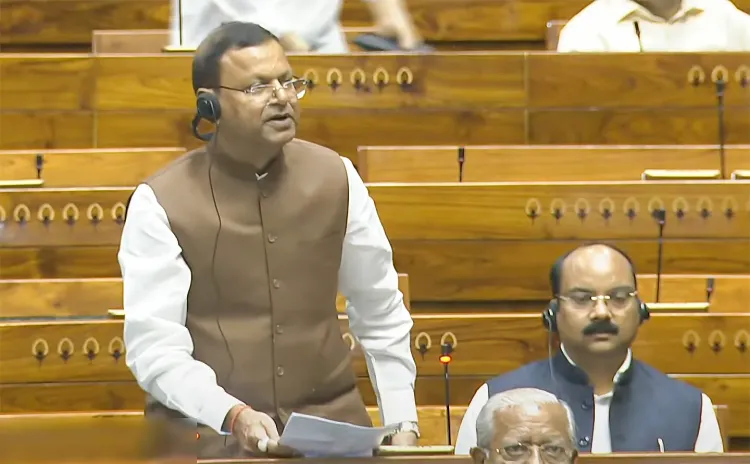
Additionally, gross domestic savings have also seen a substantial growth, escalating from Rs 59.4 lakh crore in 2019-20 to Rs 92.6 lakh crore in 2023-24, according to Minister of State for Finance, Pankaj Chaudhary, in a written response to a question raised in the Rajya Sabha.
“In terms of percentage, these savings have largely remained stable at approximately 30 percent of GDP, indicating sustained domestic resource mobilization to meet investment requirements,” the minister explained.
The data further indicates an increase in household financial liabilities, which have risen from 3.9 percent of GDP in 2019-20 to 6.2 percent in 2023-24.
“Concurrently, total bank credit has shown consistent growth, increasing from Rs 103.7 lakh crore in 2019-20 to Rs 159.01 lakh crore in 2023-24,” the Minister of State noted.
Despite the global economic challenges, Pankaj Chaudhary affirmed that the gross fixed capital formation within the economy has remained strong at around 30 percent of GDP.
He also mentioned that private investment activities continue to thrive, backed by solid macroeconomic fundamentals, including robust GDP growth and fiscal as well as external stability.
In addition, the minister disclosed on Monday that the government is implementing various reforms aimed at simplifying business operations, attracting more investments, and fostering economic expansion.
These reforms encompass initiatives under the Ease of Doing Business program, including the Business Reform Action Plan (BRAP), Business-Ready assessment, the Jan Vishwas initiative, and measures to decrease compliance burdens for both businesses and citizens.
As per the recent Provisional Estimates provided by the Ministry of Statistics and Programme Implementation, India's GDP at constant prices has grown by 6.5 percent in 2024-25.
Point of View
It is evident that the rise in household savings is a positive indicator of India's economic resilience. The government's efforts in reforming business practices and stabilizing macroeconomic conditions play a crucial role in fostering a conducive environment for growth. This trend signifies not just a boost in savings but an optimistic outlook for future investments and economic stability.
NationPress
15 Sept 2026
Frequently Asked Questions
What are the current household savings in India?
As of FY24, India's household savings have reached Rs 54.6 lakh crore.
How do household savings compare to previous years?
Household savings increased from Rs 38.5 lakh crore in 2019-20 to Rs 54.6 lakh crore in FY24.
What is the percentage of GDP attributed to household savings?
Household savings have remained stable at around 30 percent of GDP.
What are the government's initiatives for economic growth?
The government has implemented reforms under the Ease of Doing Business program to attract investments and boost economic growth.
How has bank credit changed over the years?
Total bank credit has risen from Rs 103.7 lakh crore in 2019-20 to Rs 159.01 lakh crore in FY24.