Congress's Rejection of Amendment Stalls Women's Reservation
Synopsis
The Congress party's rejection of a critical amendment has sparked political controversy regarding women's reservation, delaying a potential reform. This significant setback has raised questions about the future of women's representation in politics.
Key Takeaways
Congress's opposition has delayed women's reservation reform.
The Constitution (131st Amendment) Bill failed to pass in the Lok Sabha.
Article 334A mandates a new Census before implementing reservations.
The amendment proposed by the government aimed for quicker implementation.
Critics argue constitutional claims by Congress are unfounded.
New Delhi, April 18 (NationPress) The Congress party's rejection of a vital enabling amendment has ignited a political uproar regarding women’s reservation. Analysts argue that this has postponed what could have been a swift reform into the far-off future.
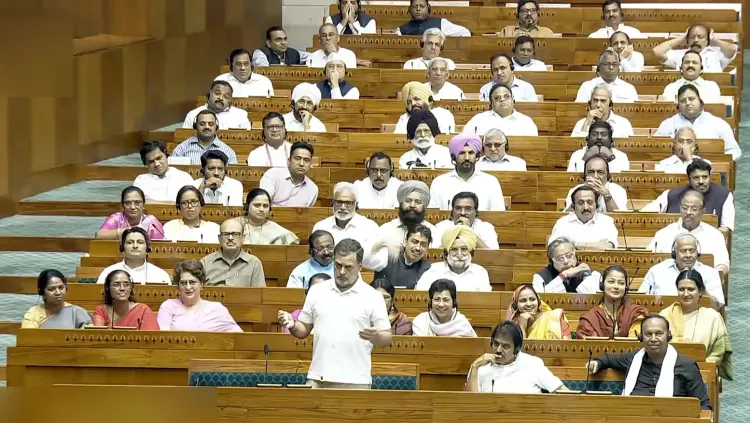
The situation escalated after a significant constitutional amendment did not pass in the Lok Sabha. Various political analysts have criticized the opposition, particularly Congress, for allegedly obstructing the chance for immediate action.
Experts have highlighted a rising tide of misinformation permeating public discussions, asserting that both media outlets and political figures have contributed to this confusion.
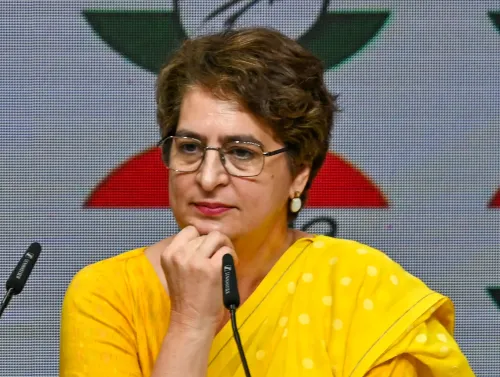
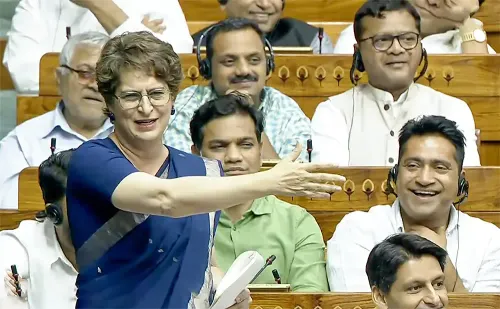
Congress MP Priyanka Gandhi has been accused of reiterating claims that are inconsistent with constitutional stipulations.
The crux of the debate is centered around the failure of the Constitution (131st Amendment) Bill, which sought to allocate 33 percent of seats for women in the Lok Sabha and state assemblies.
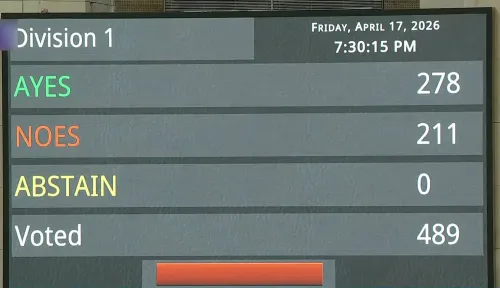
The Bill, which witnessed a passionate debate that extended into the early hours of Friday, failed to garner the necessary two-thirds majority, recording 298 votes in favor and 230 against. Many observers view this outcome as a significant setback, further delaying the implementation of women’s reservation.
This dispute has also revived discussions on the legal framework governing such reservations. Under Article 334A, reservations can only be executed following a new Census and a delimitation exercise to redraw constituency boundaries.
Without these prerequisites, immediate implementation in the current 543-seat Lok Sabha is not feasible, rendering any quick rollout improbable.
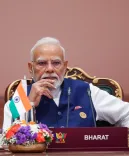
Notably, the contentious issue revolved around a government-proposed amendment under Prime Minister Narendra Modi’s leadership, which aimed to eliminate the necessity for a post-notification Census, thereby facilitating an earlier implementation of reservations. However, this proposal faced opposition from Congress and its allies.
While the opposition defends its actions as upholding constitutional integrity, critics argue that this has merely postponed the benefits of reservation. They dismiss claims that this opposition was about resisting delimitation, pointing out that the Delimitation Commission of India operates independently, typically led by a Supreme Court judge, ensuring fair processes.
Analysts contend that Congress's claim of preserving ‘constitutional safeguards’ is unfounded. They assert that a genuine opportunity to enact women’s reservation promptly has been squandered, pushing the reform further into the future rather than making it an immediate reality.
Point of View
The recent developments surrounding women’s reservation highlight the complexities of legislative processes and the impact of political maneuvering. The delay in implementing such a crucial reform raises concerns over the representation of women in governance, essential for a balanced democratic framework.
NationPress
17 Sept 2026
Frequently Asked Questions
What was the purpose of the Constitution (131st Amendment) Bill?
The Constitution (131st Amendment) Bill aimed to reserve 33 percent of seats for women in the Lok Sabha and state assemblies.
Why did the Bill fail in the Lok Sabha?
The Bill failed to secure the necessary two-thirds majority, receiving 298 votes in favor and 230 against.
What does Article 334A stipulate regarding reservation?
Article 334A states that reservations can only be implemented after a new Census and a delimitation exercise.
What was Congress's stance on the proposed amendment?
Congress opposed the amendment that sought to remove the need for a post-notification Census, arguing for adherence to constitutional procedures.
How does the Delimitation Commission operate?
The Delimitation Commission of India operates independently and is typically headed by a Supreme Court judge, ensuring fair and impartial processes in redrawing constituency boundaries.