Outrage in PoK Following Appointment of Junior Police Officer as IGP
Synopsis
The recent appointment of a junior officer as Inspector General of Police in Pakistan-occupied Kashmir has ignited protests from senior police officials, who argue it undermines institutional integrity and merit. This decision raises serious questions about the governance in the region and the future of civil rights.
Key Takeaways
Unrest in PoK: Senior police officers are protesting a junior officer's appointment as IGP.
Concerns of Merit: The decision raises questions about seniority and qualifications.
Political Implications: The move may reflect broader governance issues in the region.
Public Reaction: Community fears over civil rights and police authority persist.
Future of Policing: The impact on professional cohesion within the police force is uncertain.
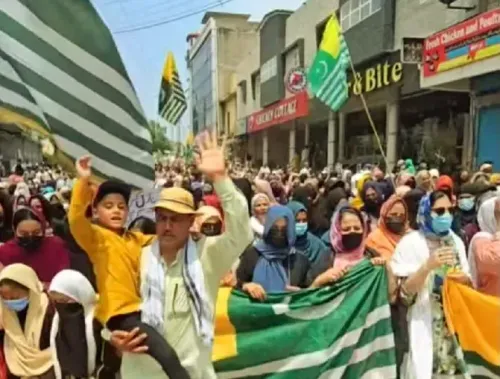
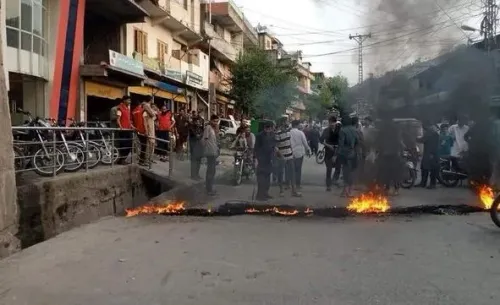
Colombo, March 6 (NationPress) The selection of a junior police officer from Punjab, Pakistan, for the role of Inspector General of Police (IGP) in Pakistan-occupied Kashmir (PoK) has sparked significant turmoil among local police personnel. Six senior officers have openly challenged this decision, citing issues of seniority, merit, and the overall morale of the institution, according to a report released on Friday.
As per the report, Liaqat Ali Malik, previously a Deputy Inspector General (DIG) Establishment in Punjab Police, was promoted to the position of IGP in PoK, which is classified as a Basic Pay Scale (BPS) 22 role, despite being a BPS 20 officer.
Leading Sri Lankan media outlet 'Daily Mirror' reported that Malik's appointment took place even though there were several BPS-21 officers actively serving in the PoK police, including an additional IGP.
This perceived marginalization has led to strong discontent among local police officials.
The report indicates that in the wake of Malik's appointment, disgruntled senior police officers from PoK reached out to Faisal Mumtaz Rathore, the regional administration head, expressing that they felt overlooked by the Islamabad government, despite having “longer service records, superior academic qualifications, and wider national and international exposure.” Islamabad has utilized the 1949 Karachi Agreement to impose Malik's appointment, which undermines the region’s governance and autonomy.
In their letter, the officers raised concerns about Malik's elevation, especially given the presence of several BPS-21 officers in the area. They pointed out that “the promotion of a relatively junior officer to such a high position deviates from established service norms and has led to discomfort among senior officers” within the PoK Police, which could disrupt “command dynamics and professional unity within the force.”
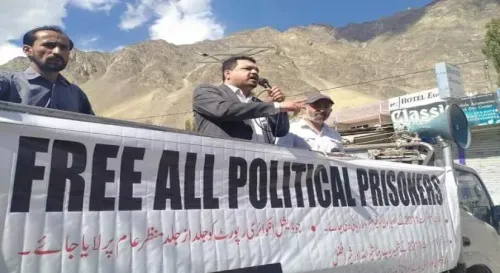
The Jammu Kashmir Joint Awami Action Committee pressed Rathore for clarity on why a junior officer was chosen when the region possessed qualified and capable candidates for the IGP role.
“If senior Kashmiri officers are available, why are they not considered for the top position? This is a breach of merit and an injustice. Many Kashmiris worry that Malik’s leadership could lead to further oppression of those seeking autonomy and civil rights,” quoted Shaukat Nawaz Mir, a committee member, in 'Daily Mirror'.
The report also highlighted differing opinions on Malik, with one Pakistani describing him as “an exceptionally unstable personality” unfit for the IGP position, while another implicated him in acts of brutality in PoK.
Numerous Kashmiris referenced Malik’s prior connections with the Pakistani Army as a potential reason for his controversial appointment, raising questions about his suitability.
“This individual is a complete embarrassment to the police service due to his military background,” quoted another Pakistani national, Shahid, in the Lankan daily.
Point of View
It is crucial to monitor how it affects both local law enforcement dynamics and civil rights in the region.
NationPress
30 Sept 2026
Frequently Asked Questions
Why has the appointment of the new IGP caused unrest?
The appointment of a junior officer as IGP has led to discontent among senior police officials, who believe it undermines seniority and merit, affecting morale within the police force.
What are the qualifications of the newly appointed IGP?
Liaqat Ali Malik was previously a Deputy Inspector General (DIG) in Punjab and was promoted from a Basic Pay Scale (BPS) 20 position to the IGP role, which is BPS 22.
What concerns have been raised about this appointment?
Senior officers have expressed worries about a lack of consideration for more qualified BPS-21 officers in the region and how Malik's appointment could disrupt command dynamics.
What is the Karachi Agreement and its relevance?
The 1949 Karachi Agreement has been cited as a means for the Islamabad government to impose appointments in PoK, undermining the region’s governance and autonomy.
How do local political groups view Malik's appointment?
Local political groups like the Jammu Kashmir Joint Awami Action Committee have criticized the appointment, calling it a violation of merit and an injustice to senior Kashmiri officers.