Is the Crisis in PoK and PoGB a Governance Failure?
Synopsis
The ongoing governance crisis in Pakistan-occupied Kashmir and Gilgit-Baltistan continues to escalate, with local grievances unresolved and political structures failing to respond adequately. As protests mount and tensions rise, the legitimacy of both regions remains in jeopardy.
Key Takeaways
Political legitimacy in PoK and PoGB is severely lacking.
Protests have highlighted the public's grievances.
Governance structures are ineffective in addressing local needs.
Economic relationships are heavily imbalanced.
Local communities are not adequately compensated for resource exploitation.
Islamabad, Dec 29 (NationPress) The political landscape in Pakistan-occupied Kashmir (PoK) and Pakistan-occupied Gilgit-Baltistan (PoGB) remains entrenched in a legitimacy crisis. In PoK, long-standing political frameworks are failing to effectively address public discontent, exacerbating the legitimacy gap. Meanwhile, PoGB is grappling with constitutional uncertainties that hinder democratic progress and leave essential governance issues unresolved, as highlighted in a recent report.
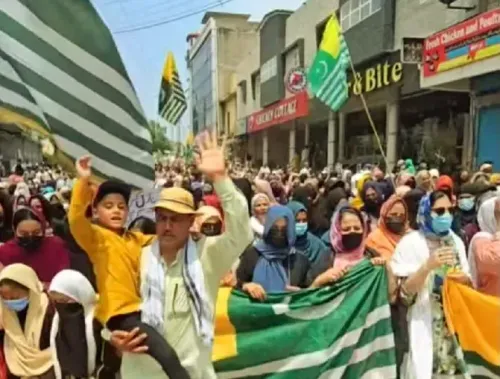
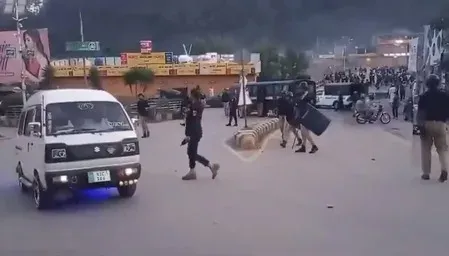
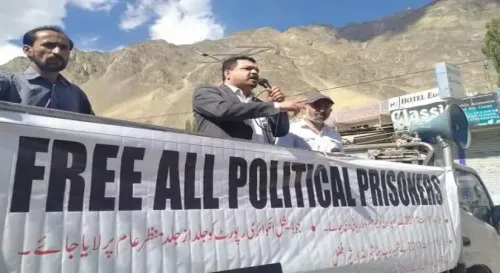
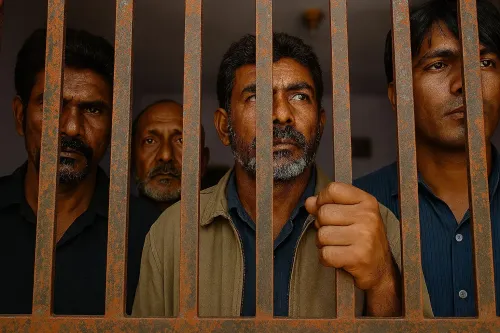
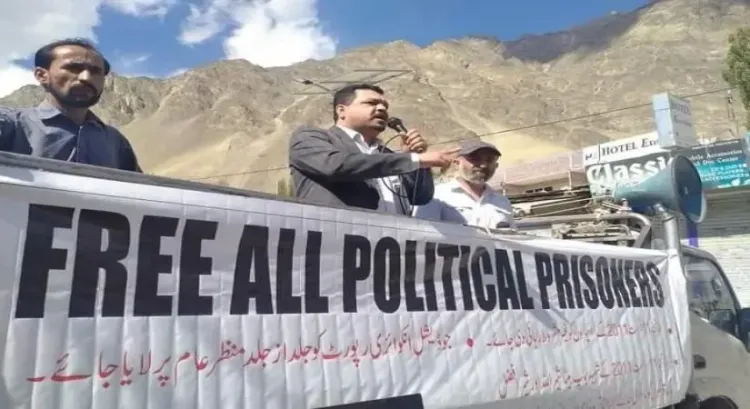
As noted in the report from the International Centre for Peace Studies, “while 2025 witnessed extensive protests against governance and economic difficulties” across both regions, followed by a violent government crackdown resulting in at least 10 fatalities, the political climate remains fraught as 2026 begins. The grievances that prompted the citizens of PoK to protest still linger without resolution.
The report states, “Despite efforts by the government in Islamabad, along with local administrations, which primarily operate under its directive, to reach an understanding with the Awami Action Committees (AAC) of both PoK and PoGB, the fundamental issues of political disenfranchisement and economic marginalization continue to prevail, keeping tensions high” in these areas.
It further points out that economic interactions between these regions and the Pakistani federation are significantly skewed, mainly focusing on resource extraction, with minimal benefits returned to the local populace.
Notably, PoK possesses considerable hydropower potential, with projects like the Mangla Hydropower Project and Neelum Jhelum Hydropower Project supplying electricity primarily to Pakistan’s national grid.
The report emphasized that PoK receives a mere 1.10 per unit royalty for electricity generated by the Neelum Jhelum project under a December 2025 agreement, “a figure that activists assert fails to adequately compensate for the environmental and social repercussions experienced by local communities.”
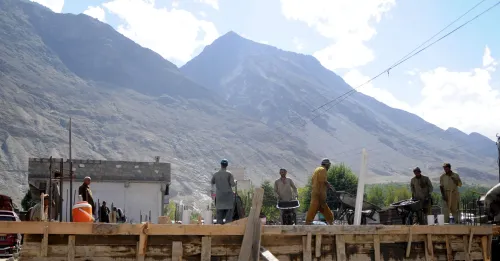
In PoGB, despite significant strategic initiatives— such as the Diamer-Basha Dam and the China–Pakistan Economic Corridor (CPEC), touted as a “guarantor of national prosperity”— local residents face critical energy shortages, with some regions enduring up to 22 hours of daily power outages.
“The development approach in both regions prioritizes federally-directed mega-projects over local requirements,” the report concluded.
Reflecting on the federal government's heavy-handed approach to unrest in PoK and PoGB, the report noted, “The deployment of paramilitary forces from ‘mainland Pakistan’— a decision criticized by protest leaders as unnecessary given that local police could have managed the situation— has further cemented the perception of these territories as occupied rather than autonomous regions.”
Point of View
It's crucial to highlight that the ongoing crises in Pakistan-occupied Kashmir and Gilgit-Baltistan represent a significant governance failure. The fundamental issues of political disenfranchisement and economic marginalization must be addressed to foster stability and improve the lives of the local populace. The need for an inclusive approach is paramount to restoring trust and legitimacy in these regions.
NationPress
6 Oct 2026
Frequently Asked Questions
What is causing the crisis in PoK and PoGB?
The crisis is primarily due to a lack of effective governance, political disenfranchisement, and economic marginalization of local communities.
How have protests in these regions been handled?
Protests have been met with a violent state response, including the deployment of paramilitary forces from mainland Pakistan, which has intensified local unrest.
What economic issues are faced by the residents?
Residents face severe energy shortages and receive little compensation for the resources extracted from their regions, leading to growing discontent.
What role do local governments play?
Local governments largely operate under the directive of the federal government, often failing to address the pressing needs of their constituents.
Are there any efforts for dialogue with local political groups?
While there have been attempts to engage with local groups like the Awami Action Committees, many underlying issues remain unresolved.