Are People in Pakistan-occupied Kashmir Facing Political Subjugation and Infrastructural Decay?

Synopsis
A recent report reveals the stark developmental divide along the Line of Control, highlighting the contrasting fortunes of Jammu and Kashmir versus Pakistan-occupied regions. The evidence of political oppression and infrastructural decline in PoJK raises critical questions about governance and human development in the region.
Key Takeaways
Line of Control has become a developmental fault line.
PoJK is trapped in political oppression and underdeveloped infrastructure.
Jammu and Kashmir and Ladakh are witnessing growth and reforms.
The District Development Council elections aim to restore governance.
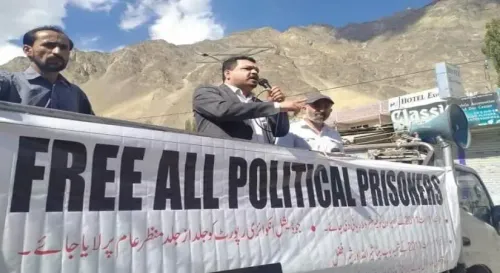
Public protests in PoGB highlight systemic issues.
New Delhi, Feb 4 (NationPress) The Line of Control (LoC), which demarcates Jammu and Kashmir from Pakistan-occupied Jammu and Kashmir (PoJK), has transitioned from a mere military boundary to a significant developmental divide. While Jammu and Kashmir alongside Ladakh have undergone extensive structural changes and economic rejuvenation, PoJK and Pakistan-occupied Gilgit Baltistan (PoGB) remain ensnared in a web of political oppression and deteriorating infrastructure, as highlighted in a recent report.
Historically, the narrative surrounding this area has been overshadowed by conflict. However, a thorough examination during this 'Age of Development' reveals a starkly different picture, according to insights from India Narrative. Since the partition in 1947, two divergent governance paths have emerged: one under India's democratic umbrella, focusing on inclusion and effective service delivery, while the other languishes under Pakistan's control, characterized by resource extraction and stagnation.
As we approach 2026, data unequivocally indicates that while Jammu and Kashmir and Ladakh are experiencing significant structural and economic growth, PoJK and PoGB remain trapped in a cycle of political oppression and crumbling infrastructure, as noted in a commentary by India Narrative.
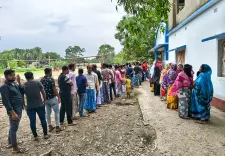
Following the repeal of Article 370 in 2019, India has heralded the reorganization of Ladakh and Jammu and Kashmir as a means to enhance governance. The District Development Council elections in 2020 and the upcoming legislative elections in 2024 are pivotal milestones towards reinstating representative governance in the region, with welfare initiatives like Ayushman Bharat and PM Kisan being rolled out across all districts.
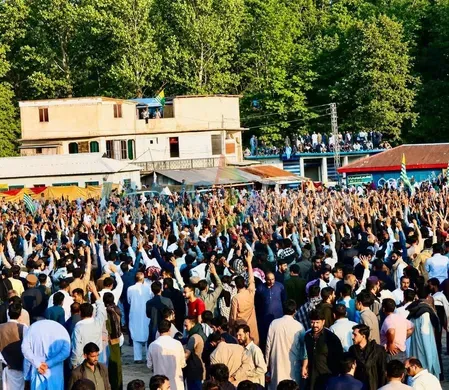
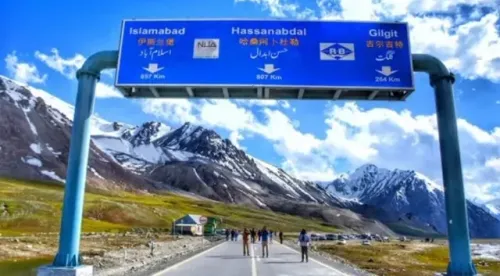
In stark contrast, PoJK continues to operate under the Interim Constitution of 1974, which affords only limited self-governance, while Pakistan maintains full control over crucial sectors such as defense and foreign affairs. The situation is even more dire in PoGB, where, despite the 2009 Empowerment and Self Governance Order, the region has yet to attain constitutional recognition in Pakistan. This ongoing exclusion has ignited public protests over rising wheat prices, electricity tariffs, and the exploitation of local resources.
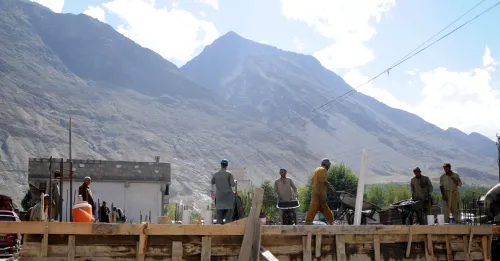
The disparity in infrastructure development between PoJK, PoGB, and Jammu and Kashmir is stark. Initiatives like the Chenab Railway Bridge now connect the Kashmir Valley to India’s national railway network. Additionally, the Zojila Tunnel, positioned at an altitude of around 11,500 feet, ensures year-round connectivity between the Kashmir Valley and Ladakh. Conversely, PoGB and PoJK lack any developed railway linkages. Moreover, significant infrastructure projects such as large dams like the Diamer Bhasha remain under Pakistan's jurisdiction, with PoGB receiving minimal financial return from the hydropower generated.
Tourism in Jammu and Kashmir has seen a remarkable resurgence, with official statistics indicating approximately 2.12 crore visitors in 2023, projected to rise to 2.36 crore in 2024, including over 65,000 foreign tourists. Projects worth Rupees 307 crore supporting horticulture have been sanctioned under centrally sponsored schemes for the fiscal year 2025-26.
Meanwhile, the unemployment rate in Pakistan stands at 7.8%, with local conditions in PoJK exacerbating the issues. The China-Pakistan Economic Corridor (CPEC) has further entrenched Pakistan's dominance over the local resources of PoGB, allowing external corporations to manage construction and mining operations while local communities endure the environmental consequences, as per the opinion piece in India Narrative.
The gap in human development is equally pronounced. J&K boasts a literacy rate of 77.3% (2025 estimates) and a solid educational framework that includes six institutes of national importance, such as IIT Jammu, IIM Jammu, and two AIIMS. The region is home to a total of 11 universities, ensuring access to quality education.
Authorities in PoJK assert that the region has a literacy rate of 74%, yet the reality depicted by the infrastructure suggests otherwise. There is no comprehensive data available for PoJK, and independent evaluations point to a decline in public infrastructure in remote areas like Kotli and Bhimber.
Point of View
It is crucial to acknowledge the disparities faced by the people of Pakistan-occupied Kashmir and Gilgit Baltistan. As India strides towards development and governance reforms, the plight of those under political subjugation must not be overlooked. A balanced approach is necessary to advocate for human rights and equitable development across all regions.
NationPress
19 Sept 2026
Frequently Asked Questions
What is the current situation in Pakistan-occupied Kashmir?
Pakistan-occupied Kashmir faces significant political oppression and infrastructural decline, as contrasted with the developmental progress in Jammu and Kashmir.
What governance structure exists in PoJK?
PoJK operates under the Interim Constitution of 1974, which limits self-governance while Pakistan retains control over key areas like defense and foreign affairs.
How does the literacy rate in J&K compare to PoJK?
Jammu and Kashmir boasts a literacy rate of 77.3%, while authorities in PoJK claim a rate of 74%, though independent evaluations suggest significant infrastructural decay.
What are the main challenges faced by residents of PoGB?
Residents of PoGB face challenges such as exploitation of resources, lack of constitutional recognition, and public protests over rising costs and environmental degradation.
What is the impact of CPEC on local resources in PoGB?
CPEC has intensified Pakistan's control over local resources in PoGB, allowing external corporations to dominate construction and mining projects, adversely affecting local communities.