What Unrest in Pakistan-occupied Kashmir Reveals About Structural Grievances?

Synopsis
Political tensions in Pakistan-occupied Kashmir are escalating, revealing significant structural grievances. A grassroots movement is challenging entrenched political systems amid economic hardships. Protests have erupted, exposing the struggle for autonomy against a backdrop of federal control, while contrasting developments in India's Jammu and Kashmir highlight differing governance approaches.
Key Takeaways
Political instability in Pakistan-occupied regions due to shifting alliances.
Grassroots movements challenging entrenched systems since 2023.
Economic grievances are tied to political marginalization .
Contrasting governance approaches in Jammu and Kashmir highlight different outcomes.
Calls for reform and self-governance persist in PoK.
Colombo, Feb 3 (NationPress) The political climate in Pakistan-occupied Kashmir (PoK) and Pakistan-occupied Gilgit-Baltistan (PoGB) has become increasingly unstable due to political uncertainties, shifting alliances, and legislative defections, as outlined in a recent report.
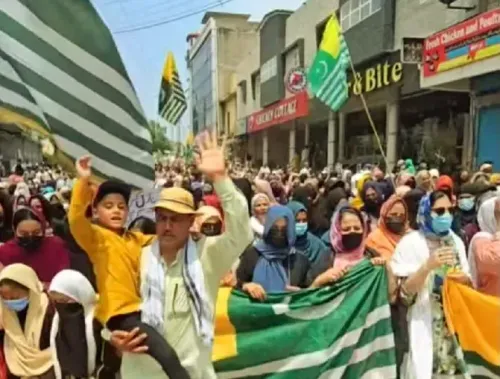
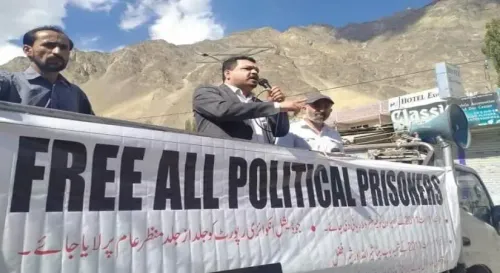
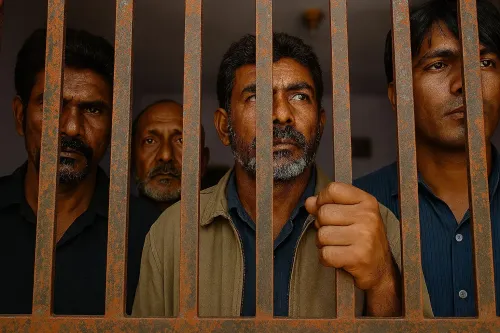
Pakistan-occupied Kashmir has been in turmoil for several years, with a significant grassroots movement emerging to confront both economic struggles and longstanding political frameworks. The Jammu Kashmir Joint Awami Action Committee (JAAC), a coalition representing traders, activists, and civil society, has led protests since 2023, transforming economic issues into a wider political challenge. This unrest has unveiled profound structural grievances, according to a report from Sri Lanka's esteemed Daily Mirror.
Local factions argue that Pakistan's stringent administrative grip limits self-governance, fostering a feeling of political exclusion. Their calls for substantial reforms, including fiscal autonomy and constitutional clarity, reflect a persistent belief that regional political institutions function primarily as extensions of federal authority rather than as true representatives of local interests.
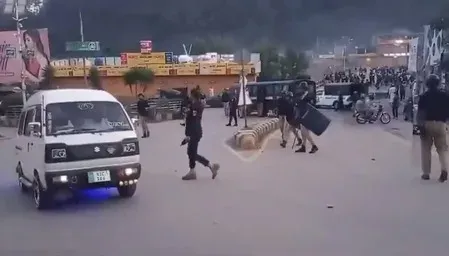
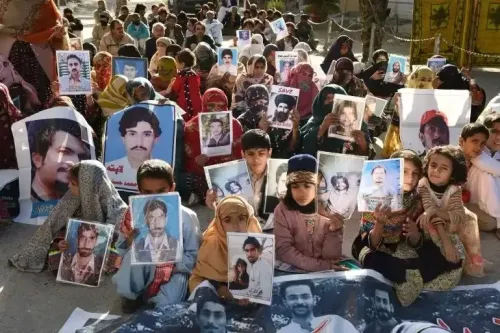
Despite being granted autonomy in principle, Pakistan-occupied Kashmir has been under Pakistan's governance since the partition. The federal government has often overridden local rights, including control over regional resources. Tensions surged in 2025, driven by public dissatisfaction with governance failures, escalating utility costs, and limited autonomy, leading to one of the most significant protests in years. These demonstrations swiftly turned violent, resulting in casualties, injuries, and widespread disruptions.
In Pakistan-occupied Jammu and Kashmir, ongoing economic stagnation and increasing living expenses have severely impacted households. The region's strategic significance has not translated into considerable investments in infrastructure or long-term economic strategies. Key areas like roads, power grids, and public services remain underdeveloped, forcing many to rely on outdated or temporary solutions. This stagnation is closely linked to the ambiguous constitutional status of the territory, which hampers local decision-making and ties major development priorities to Islamabad’s political interests rather than regional necessities, as noted by the Daily Mirror.
Pakistan-occupied Jammu and Kashmir faces a limited and vulnerable economic base. With minimal industrial activity and scant employment opportunities, the region heavily relies on federal subsidies. The rising costs of living, especially for electricity and essential items, have exacerbated the burden on families. Resource extraction has further contributed to local frustrations.
Residents of Pakistan-occupied Jammu and Kashmir frequently accuse Islamabad and outside entities of exploiting the region's rich hydropower, forests, and minerals without reinvesting proceeds into local development. Major hydropower projects are designed to supply electricity to Pakistan’s national grid while local communities endure high tariffs and unreliable service.
These tensions sparked protests in PoK in 2025, with state responses involving tear gas, live ammunition, and aggressive dispersal tactics, resulting in numerous fatalities and reinforcing the belief that economic hardships are intricately linked to political disenfranchisement. Activists argue that without meaningful autonomy and structural reforms, economic distress will continue to fuel discontent among the region's populace.
The report also highlights developments in India's Jammu and Kashmir. Following the 2019 administrative restructuring, the region has seen a shift towards more organized and participatory governance. The legislative elections held post-2019 marked a pivotal step in re-establishing representative politics, suggesting a move towards restoring local governance.
Since the 2019 reforms, Jammu and Kashmir has experienced a surge in economic activity, spurred by both public and private investments, streamlined regulations, new land use policies, and targeted industry incentives. The region has attracted significant commitments across various sectors, including manufacturing, renewable energy, tourism, pharmaceuticals, and information technology, as reported by the Daily Mirror.
Tourism in Jammu and Kashmir has flourished, benefiting from enhanced infrastructure and marketing efforts, leading to record visitor numbers in recent years. Investments in roads, power initiatives, tourism amenities, and industrial zones have propelled the region towards greater self-sufficiency. Efforts in sports, education, entrepreneurship, and public services have expanded opportunities for local residents.
--IANs
akl/as
Point of View
It is essential to acknowledge the complexities surrounding the unrest in Pakistan-occupied Kashmir. The ongoing struggles of the local populace for autonomy and self-governance reflect deep-rooted issues that require careful consideration. As we observe developments in both Pakistan-occupied and Indian-administered regions, it is vital to remain engaged and informed, prioritizing the voices of the affected communities.
NationPress
19 Sept 2026
Frequently Asked Questions
What are the main causes of unrest in Pakistan-occupied Kashmir?
The unrest stems from political uncertainty, economic hardships, and a lack of self-governance, leading to widespread protests against entrenched political structures.
How has the local governance in Jammu and Kashmir changed since 2019?
Since the 2019 administrative reorganization, Jammu and Kashmir has seen a shift towards more structured governance, with reintroduced representative politics and increased local decision-making.
What impact has the federal control had on Pakistan-occupied Kashmir?
Federal control has limited self-governance and led to local grievances regarding resource management, economic stagnation, and rising living costs.
What is the role of local groups in the protests?
Local groups, such as the Jammu Kashmir Joint Awami Action Committee, have played a crucial role in organizing protests and advocating for reforms to address economic and political grievances.
How does the economic situation in Jammu and Kashmir compare to Pakistan-occupied Kashmir?
Jammu and Kashmir has experienced increased economic activity and investment since 2019, unlike the stagnation and lack of development observed in Pakistan-occupied Kashmir.