Why did expelled CPI-M leader Kunjikrishnan release a book amid heavy security?
Synopsis
In a bold move, expelled CPI-M leader V. Kunjikrishnan unveiled his book in a politically charged atmosphere, accusing party leaders of financial misconduct. This event, held in Payyannur under stringent security, raises questions about the integrity of the CPI-M as it grapples with internal dissent and accountability issues. What does this mean for the party's future?
Key Takeaways
Kunjikrishnan's book highlights alleged financial misconduct.
Event held under police protection due to controversy.
Calls for accountability within the CPI-M are growing.
Significance of dissent and its treatment within the party.
Historical context of leadership challenges in the CPI-M.
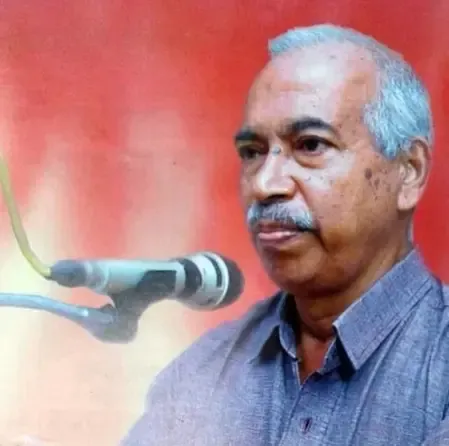
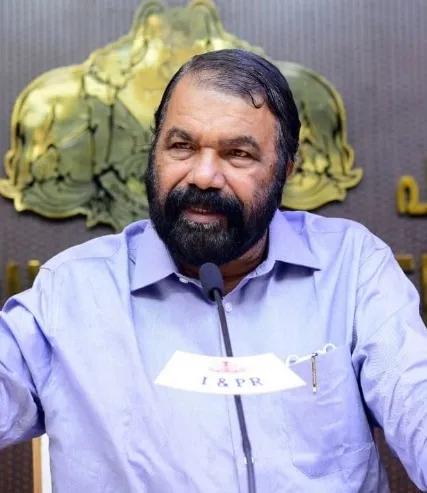
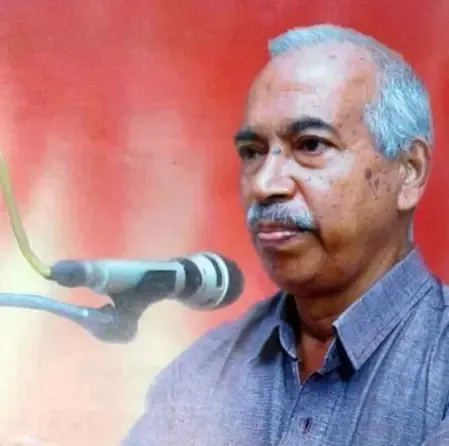
Kannur (Kerala), Feb 4 (NationPress) Expelled CPI-M stalwart V. Kunjikrishnan intensified his criticism of the party leadership by unveiling his book, which accuses the Kerala unit of engaging in financial misconduct, in Payyannur, a town regarded as a stronghold of the Left ideology in Kannur district.
The launch, which attracted a significant audience, took place under stringent police protection following a court order from the Kerala High Court issued last week.
Kunjikrishnan's expulsion from the CPI-M occurred after he publicly reiterated claims regarding financial malfeasance associated with the Dhanaraj Martyrs’ Fund, sparking a substantial controversy within the party’s Kannur district.
The party leadership has asserted that his public remarks constituted indiscipline.
During the release of his book titled Nethruthvathe Anikal Thiruthanam (The Cadre Must Correct the Leadership), Kunjikrishnan emphasized that his intentions were to correct rather than undermine the party.
He argued that the CPI-M's future hinged on its core principle of criticism and self-criticism, contending that dissent is now often perceived as hostility.
Kunjikrishnan accused the leadership of allowing accountability to decline to the point where even a martyrs’ fund is subject to abuse, alleging that those responsible are being protected.
He cautioned party members to consider the CPI-M's deterioration in West Bengal, where it held power for over three decades, and urged grassroots supporters to rise and rectify the leadership before a similar political decline transpires in Kerala.
Additionally, he mentioned enduring continuous attacks and humiliation on social media since he raised these concerns.
Joseph C. Mathew, who served as the chief guest, characterized the book as a narrative of facts and called on party members and the public to uphold the truth.
He stated that silencing Kunjikrishnan was unfair and motivated by fear, drawing comparisons to former Chief Minister V.S. Achuthanandan, to whom the book is dedicated.
Mathew, who was the former IT secretary of Achuthanandan, highlighted that leaders who challenge wrongdoing have historically faced isolation within the party.
Referring to the significance of Payyannur, Mathew expressed that the town has a duty to demand transparent answers regarding the raised issues.
Despite a tense atmosphere, the heavy police presence ensured the event proceeded without any incidents, even as the controversy continued to ripple through the CPI-M's stronghold in Kannur.
Point of View
The unfolding events surrounding Kunjikrishnan's book release highlight a crucial moment for the CPI-M, as internal dissent raises questions about leadership accountability and the party's foundational principles. It is vital for the party to address these concerns promptly to maintain its relevance and support in the evolving political landscape.
NationPress
2 Oct 2026
Frequently Asked Questions
What are the main allegations in Kunjikrishnan's book?
Kunjikrishnan's book alleges financial irregularities within the CPI-M's Kerala unit, particularly concerning the Dhanaraj Martyrs' Fund.
Why was Kunjikrishnan expelled from the CPI-M?
He was expelled for publicly reiterating allegations of financial misconduct and for what the party leadership termed as indiscipline.
What does Kunjikrishnan hope to achieve with his book?
Kunjikrishnan aims to correct the leadership and revive the party's foundational principles of criticism and self-criticism.
What role does Payyannur play in this situation?
Payyannur is viewed as a significant ideological stronghold for the Left, and the book launch's location adds weight to the issues being discussed.
How has the public reacted to Kunjikrishnan's allegations?
The public response has been mixed, with a substantial crowd attending the book launch, indicating a level of support for Kunjikrishnan's concerns.