Will the LDF Recover from its Local Poll Setback in Kerala?
Synopsis
The CPI(M) is gearing up for a strategic recovery after the unexpected local election setback, with plans to leverage positive public sentiment and strengthen organizational efforts for upcoming Assembly elections. This move reflects the party's determination to reclaim its position and address local issues effectively.
Key Takeaways
The CPI(M) is assessing its local election setbacks strategically.
Public perception of the state government is mostly positive.
The LDF aims to increase its vote share in future elections.
Local issues and misinformation impacted election results.
Employment guarantee assemblies are scheduled to mobilize support.
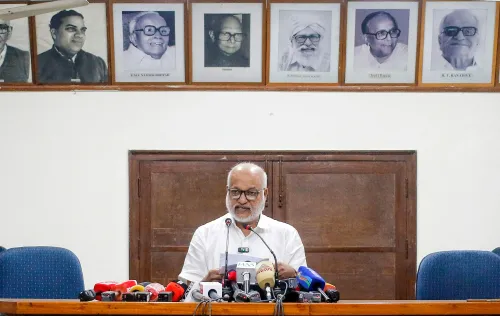
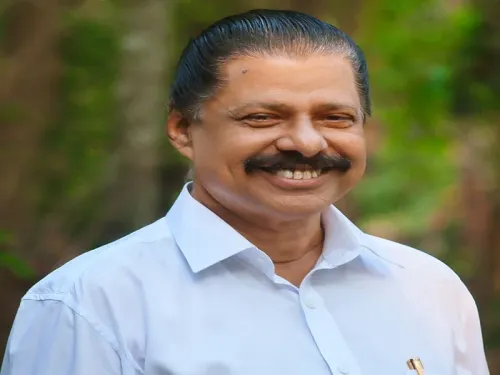
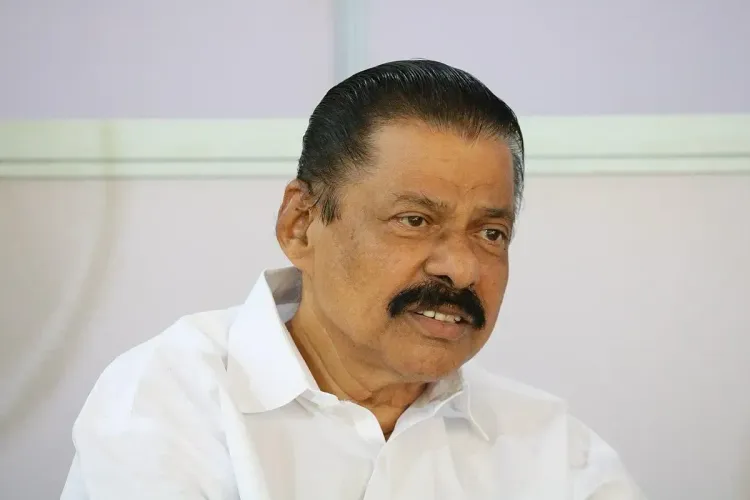
Thiruvananthapuram, Dec 29 (NationPress) The CPI(M) plans to conduct a thorough and focused assessment of the surprising setback faced by the Left Democratic Front (LDF) in Kerala’s local body elections, aiming to transform it into a significant lead in the upcoming Assembly elections, stated party State Secretary M.V. Govindan on Monday.
Govindan made these remarks following a three-day party meeting that concluded on Monday.
He emphasized that the public's view of the state government remains predominantly positive and expressed confidence that the LDF would secure a comfortable majority to continue in power.
Govindan remarked that the Sabarimala issue did not significantly impact the local elections.
Referring to voting statistics, he indicated that the Left's vote share has notably increased compared to the previous Lok Sabha elections.
The LDF saw its vote share rise from 33.60% in the parliamentary elections to 39.73% in the local body elections, with an overall increase of over 17.35 lakh votes, from 66.65 lakh to 84.10 lakh.
In contrast, both the UDF and the BJP experienced a decline in their respective vote shares, he noted.
Analyzing the local election results by Assembly constituencies showed that the LDF led in nearly 60 segments and closely trailed in several others.
Govindan attributed many of these setbacks to local issues, misinformation propagated by the opposition, communal polarization, and what he termed a persistent anti-Left campaign by certain media outlets.
He asserted that with appropriate political messaging and organizational reinforcement, these issues could be effectively addressed.
The CPI(M) leader also suggested a covert collaboration between the UDF and the BJP, alleging that votes were exchanged based on the nature of the contests.
In Thiruvananthapuram Corporation, he highlighted that the UDF fell to third place in 41 of the 50 wards won by the BJP, reflecting a similar trend statewide.
Outlining the party's forthcoming actions, Govindan announced that employment guarantee protection assemblies are set to take place in all 23,000 wards on January 5.
Door-to-door campaigns will follow from January 15 to 22 to inform citizens of the state government's achievements and emphasize what he described as the Centre's neglect of Kerala.
The campaign will culminate in protests and a vehicle rally in February, he concluded.
Point of View
The CPI(M)'s response to its local election setback is crucial. The party's focus on public sentiment and strategic campaigning could redefine its future. Balancing local issues with broader political narratives will be key for the LDF in maintaining its influence and addressing voter concerns. This situation calls for keen observation as the upcoming Assembly elections approach.
NationPress
30 Sept 2026
Frequently Asked Questions
What was the outcome of the local body elections in Kerala?
The Left Democratic Front (LDF) faced an unexpected setback, despite an increase in vote share compared to previous elections.
How does the CPI(M) plan to address the electoral setback?
The CPI(M) intends to conduct a thorough evaluation of the results and implement strategic campaigns to regain voter support.
What factors contributed to the LDF's electoral performance?
Factors include local issues, misinformation from the opposition, communal polarization, and an anti-Left media campaign.