CPJ urges Bangladesh to drop charges against 6 Agrajatra Pratidin journalists
Synopsis
Six journalists at Bangladeshi daily Agrajatra Pratidin face charges under the Cyber Security Act 2026 for reporting on a minister's alleged corruption — and the CPJ says it is a textbook case of weaponising the law against the press. With dozens of journalists targeted since August 2024 and Prime Minister Tarique Rahman's 100-day honeymoon over, international scrutiny of Bangladesh's media environment is intensifying.
Key Takeaways
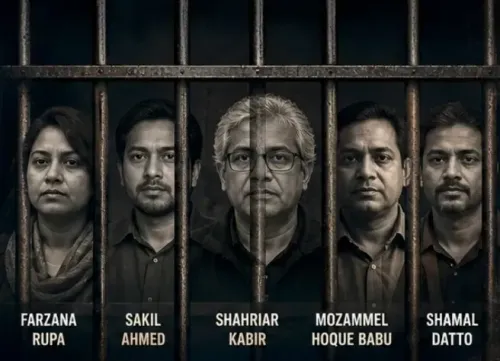
The Committee to Protect Journalists (CPJ) on 22 June demanded Bangladesh drop all charges against six Agrajatra Pratidin journalists .
Charges were filed under Bangladesh's Cyber Security Act 2026 , along with criminal defamation, extortion, and intimidation allegations.
The complaint was lodged by Bogura Press Club Treasurer Tanvir Alam Rimon over reporting on State Minister Mir Shahe Alam .
Journalist Rezanur Islam was detained; five colleagues face formal charges.
Dozens of journalists have reportedly been detained or charged since August 2024 , many linked to coverage perceived as favourable to former PM Sheikh Hasina .
The CPJ has called on PM Tarique Rahman to fulfil his electoral promise on media freedom after 100 days of limited progress.
The Committee to Protect Journalists (CPJ) on Monday, 22 June called on Bangladeshi authorities to withdraw all charges against six journalists from the daily Agrajatra Pratidin, asserting that the reporters had been criminalised for public-interest coverage of political corruption. The New York-based press freedom organisation expressed grave concern over the use of Bangladesh's Cyber Security Act 2026, alongside allegations of criminal defamation, extortion, and criminal intimidation, to silence the press.
The Case Against the Journalists
The criminal complaint was filed by Bogura Press Club Treasurer Tanvir Alam Rimon and stems from the newspaper's reporting on alleged corruption involving Bangladesh's State Minister for Local Government Mir Shahe Alam. Among those targeted, journalist Rezanur Islam was detained, while five colleagues face formal charges. The CPJ characterised the action as a direct attempt to punish reporters for holding a government official to account.
'The detention of Rezanur Islam and charges against five other Agrajatra Pratidin journalists for their reporting on allegations of corruption against a government minister are a blatant act of intimidation,' said Kunal Majumder, CPJ's Asia-Pacific programme coordinator. 'Authorities must drop these charges and stop weaponising cyber and criminal defamation laws against the press,' he added.
Broader Pattern of Press Suppression
The CPJ noted that the case is not an isolated incident. According to the organisation, a documented rise in physical attacks on media outlets, threats, and harassment linked to political polarisation has been recorded across Bangladesh in recent years. Dozens of journalists whose coverage was perceived as sympathetic to former Prime Minister Sheikh Hasina have reportedly been detained or charged since August 2024.
This comes amid a wider pattern that the CPJ has described as successive governments turning the law against journalists associated with the preceding administration — a cycle the organisation says has yet to be broken under the current dispensation.
CPJ's Appeal to Prime Minister Tarique Rahman
Earlier this month, the CPJ had already urged Bangladesh Prime Minister Tarique Rahman to honour his electoral pledge to protect media freedom, following his government's first 100 days in office. The appeal came after Bangladesh's The Daily Star reported that police were conducting background checks and profiling journalists across the country.
'Press freedom in Bangladesh has too often been treated as an opportunity for each new government to turn the law against journalists allegedly aligned with the previous administration. Prime Minister Tarique Rahman's government pledged to be different — but 100 days in, meaningful progress remains limited,' said Majumder.
What the CPJ Is Demanding
The CPJ has outlined a concrete set of actions it expects from the Dhaka government: releasing imprisoned journalists, dropping politically motivated cases, ending political vendettas against the press, protecting reporters from mob violence, halting smear campaigns, and reforming laws that enable such actions. 'These steps would ensure the same standard is applied to every journalist, regardless of who they are perceived to support. That is what breaking the cycle looks like,' Majumder said. Whether the Rahman administration responds meaningfully will be closely watched by international press freedom monitors in the weeks ahead.
Point of View
Combined with police profiling of journalists, signals institutional entrenchment rather than isolated abuse. International pressure alone has rarely forced structural reform in Bangladesh's media environment; the real test is whether Rahman's government will act before the pattern calcifies further under his watch.
NationPress
21 Sept 2026
Frequently Asked Questions
Why has the CPJ called for charges against Agrajatra Pratidin journalists to be dropped?
The CPJ says the six journalists were charged under Bangladesh's Cyber Security Act 2026 and criminal defamation laws in retaliation for reporting on alleged corruption by State Minister Mir Shahe Alam, which it describes as a blatant act of intimidation against public-interest journalism.
Who filed the complaint against the journalists?
The criminal complaint was filed by Bogura Press Club Treasurer Tanvir Alam Rimon. It followed the newspaper's coverage of alleged corruption involving Bangladesh's State Minister for Local Government Mir Shahe Alam.
What happened to journalist Rezanur Islam?
Rezanur Islam was detained by Bangladeshi authorities. Five of his colleagues at Agrajatra Pratidin face formal charges under the Cyber Security Act 2026 and related criminal statutes.
How many journalists have been targeted in Bangladesh since August 2024?
According to the CPJ, dozens of journalists whose coverage was perceived as supportive of former Prime Minister Sheikh Hasina have been detained or charged since August 2024, reflecting a broader crackdown on the press.
What has the CPJ asked Prime Minister Tarique Rahman to do?
The CPJ has urged Rahman to release imprisoned journalists, drop politically motivated cases, protect reporters from mob violence, end smear campaigns, and reform laws enabling press suppression — steps it says are needed to fulfil his electoral pledge on media freedom after 100 days of limited progress.