CPJ urges Bangladesh PM Tarique Rahman to end partisan press crackdown
Synopsis
100 days into Tarique Rahman's government, Bangladesh's press freedom promise is looking hollow. The CPJ says 282 journalists face politically motivated cases, 25 are under war-crimes tribunal probes, and senior editors from Ekattor TV and Bhorer Kagoj remain jailed — a cycle of partisan persecution that, critics argue, simply changed targets after Hasina's exit.
Key Takeaways
The CPJ urged Bangladesh PM Tarique Rahman to end the partisan persecution of journalists after his government's first 100 days .
An Editors' Council delegation submitted a list of 282 journalists facing politically motivated cases on 28 May 2025 .
At least 25 journalists are under International Crimes Tribunal investigation, some on genocide charges.
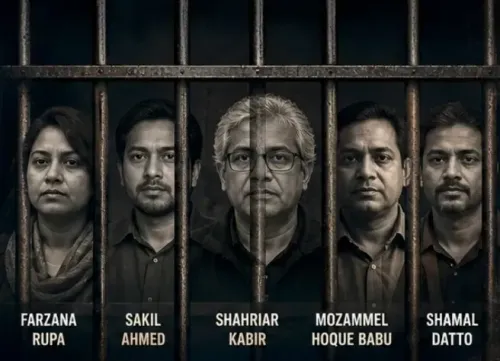
Farzana Rupa , Shakil Ahmed , Mozammel Babu (Ekattor TV) and Shyamal Dutta (Bhorer Kagoj) have been detained since August–September 2024.
The High Court granted Rupa and Ahmed bail in most cases on 11 May 2025 , but they remain in custody on other charges.
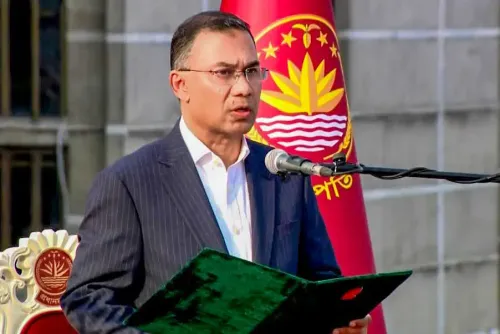
A leading international press freedom watchdog on Tuesday urged Bangladesh Prime Minister Tarique Rahman to deliver on his electoral pledge to safeguard media freedom, calling for an immediate end to the “partisan persecution of journalists” as his government completed its first 100 days in office. The Committee to Protect Journalists (CPJ), headquartered in New York, said meaningful reform had been limited despite repeated assurances from the new administration.
Key Concerns Raised
The CPJ cited a report by Bangladesh's The Daily Star which alleged that police were conducting background checks and profiling journalists across the country. The watchdog said press freedom in Bangladesh has historically been weaponised by each successive government against reporters perceived as aligned with the previous regime.
“Press freedom in Bangladesh has too often been treated as an opportunity for each new government to turn the law against journalists allegedly aligned with the previous administration. Prime Minister Tarique Rahman's government pledged to be different—but 100 days in, meaningful progress remains limited,” said Kunal Majumder, CPJ Asia-Pacific Program Coordinator.
What the CPJ Wants
Majumder urged the government to release imprisoned journalists, drop politically motivated cases, halt smear campaigns, protect reporters from mob violence and reform enabling laws. “These steps would ensure the same standard is applied to every journalist, regardless of who they are perceived to support. That is what breaking the cycle looks like,” he added.
According to the CPJ, dozens of journalists whose coverage was perceived as sympathetic to former Prime Minister Sheikh Hasina have been detained or charged since August 2024. Authorities, it noted, frequently rely on First Information Reports that name hundreds of accused or unidentified suspects, with multiple parallel cases against single journalists complicating bail.
High-Profile Detentions
The watchdog highlighted the cases of Farzana Rupa, Shakil Ahmed and Mozammel Babu of Bengali broadcaster Ekattor TV, and Shyamal Dutta of the daily Bhorer Kagoj — all detained since August or September 2024. On 11 May 2025, the High Court Division of the Supreme Court of Bangladesh granted bail to Rupa and Ahmed in most cases, but both reportedly remain in custody on other charges.
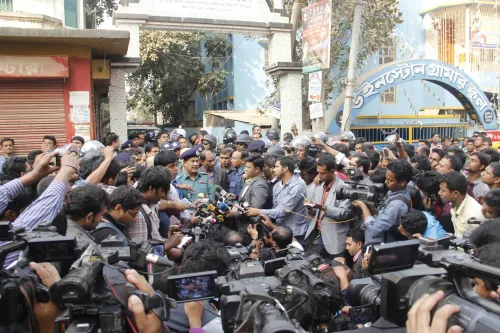
On 28 May, the day Rahman marked his 100th day in office, an Editors' Council delegation submitted a list of 282 journalists facing politically motivated cases, the CPJ said.
Misuse of War Crimes Tribunal
The organisation also flagged what it described as the increasing deployment of the Bangladesh International Crimes Tribunal (ICT) — established in 2010 to prosecute crimes from the 1971 Liberation War — against working journalists. “At least 25 journalists are under ICT investigation, in many cases for genocide or crimes against humanity tied to their alleged support for the Hasina government,” the CPJ stated.
The Road Ahead
The CPJ called on Dhaka to affirm that “independent journalism is a constitutional right and a democratic necessity” and to ensure accountability for those inciting violence against the press. The next 100 days, observers say, will test whether the Rahman administration treats the watchdog's roadmap as a reform template or as criticism to be deflected.
Point of View
And the criminal code is the weapon. The Rahman government's first 100 days suggest continuity, not rupture: 282 cases, 25 ICT probes and a war-crimes court repurposed for editorial work. The deeper rot is structural — laws like the Digital Security Act framework and FIRs naming hundreds of anonymous accused make persecution frictionless. Until those tools are dismantled, every new prime minister inherits a press-freedom crisis they will eventually be tempted to use.
NationPress
15 Sept 2026
Frequently Asked Questions
What has the CPJ said about press freedom in Bangladesh?
The Committee to Protect Journalists has urged Prime Minister Tarique Rahman to end the partisan persecution of journalists after his government's first 100 days in office. It called for the release of imprisoned reporters, withdrawal of politically motivated cases and reform of laws enabling such prosecutions.
How many journalists face politically motivated cases in Bangladesh?
An Editors' Council delegation submitted a list of 282 journalists facing politically motivated cases to the government on 28 May 2025. The CPJ says dozens have been detained since August 2024, with many cases involving FIRs naming hundreds of accused.
Why is the International Crimes Tribunal being used against journalists?
The ICT, set up in 2010 to prosecute crimes from the 1971 Liberation War, is increasingly being deployed against journalists for their editorial work, according to the CPJ. At least 25 journalists are under ICT investigation, in some cases on genocide or crimes-against-humanity charges linked to alleged support for the Hasina government.
Who are the most prominent detained journalists in Bangladesh?
Farzana Rupa, Shakil Ahmed and Mozammel Babu of Ekattor TV and Shyamal Dutta of Bhorer Kagoj have been in detention since August or September 2024. Rupa and Ahmed were granted bail in most cases by the High Court on 11 May 2025 but remain in custody on other pending charges.