Heightened Efforts Against Illegal Immigration Drive Terror Operatives Deeper Underground
Synopsis
The Indian government’s intensified crackdown on illegal immigration from Bangladesh and Myanmar has led to many terror operatives going underground. This article delves into the implications of these actions on national security and the ongoing challenges posed by these clandestine networks.
Key Takeaways
Government's Directive: All states must identify and deport illegal immigrants.
Underground Operations: Many illegal immigrants linked to terror groups have gone underground.
Reconnaissance Activities: These individuals gather intelligence on sensitive locations.
Special Task Forces: Established in districts to combat illegal immigration.
Security Implications: Experts warn of a potential security crisis.
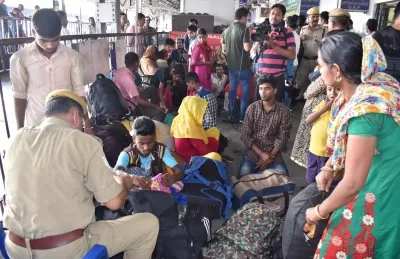
New Delhi, April 18 (NationPress) India has grappled with the issue of illegal immigration for an extended period. Individuals entering the country unlawfully from Bangladesh and Myanmar have established residences in various regions, prompting the government to implement a new directive mandating all states to identify and expel such individuals.
Intelligence agencies report that due to these operations, numerous illegal immigrants associated with terrorist organizations have been compelled to go underground. These individuals were specifically sent to India to engage in terrorist activities and have been instructed to remain hidden until they receive further directives.
Those who have been advised to avoid detection are often integrated into the migrant community, posing as ordinary laborers. Their mission involves scouting locations and gathering intelligence about sensitive sites they have been briefed on.
They specifically target public areas such as bus terminals, train stations, and bustling marketplaces, rather than military or government facilities. The individuals now under scrutiny by the authorities are affiliated with either Harkat-ul-Jihadi Islami (HuJI) or Jamaat-ul-Mujahideen Bangladesh (JMB). Both groups operate under the guidance of the ISI and are responsible for orchestrating operations in West Bengal, the northeastern states, and certain regions of South India.
An official noted that it is particularly noteworthy that these illegal immigrants, assigned to execute attacks, are typically sheltered in Kerala or Tamil Nadu. There are numerous camps housing Bengali-speaking migrants, allowing them to blend in seamlessly.
Another official indicated that these individuals maintain a low profile and conduct their reconnaissance sporadically, usually once a week or every two weeks, making it challenging for intelligence agencies to detect their activities. Typically, they operate in groups that include legally residing individuals, which minimizes the risk of detection.
Officials clarify that these operatives tasked with information gathering are not responsible for executing attacks. For such operations, HuJI and JMB have a separate cadre of trained operatives yet to infiltrate the country. Once sufficient intelligence is collected, a plan is crafted, after which these trained operatives are deployed, the official explained.
Agencies have recently observed a trend of many operatives going underground under the instructions of their handlers. The JMB had aimed to execute an operation during the West Bengal elections, but increased scrutiny and ongoing drives to identify illegal immigrants have thwarted their plans.
Officials believe they are merely biding their time until the situation stabilizes before resuming their operations. Counterterrorism experts warn that this situation represents not just a challenge but a potential ticking time bomb that could escalate into India’s most significant security concern if left unaddressed.
In light of the new deportation policy, the Ministry of Home Affairs has instructed all states to establish a Special Task Force in every district to identify and expel illegal migrants from Bangladesh and Myanmar. A nationwide verification initiative aimed at border states is also in progress to identify and deport illegal immigrants, with over 4,000 individuals already identified and expelled as part of this effort.
Point of View
It is imperative to recognize the multifaceted challenges posed by illegal immigration and its potential intertwining with terrorism. The government's proactive stance is necessary for safeguarding national security, yet it must be balanced with humanitarian considerations for those fleeing conflict.
NationPress
19 Sept 2026
Frequently Asked Questions
What are the main countries involved in illegal immigration to India?
The primary countries from which individuals are illegally immigrating to India are Bangladesh and Myanmar.
Which terror groups are associated with illegal immigrants in India?
The illegal immigrants are often linked to terrorist organizations such as Harkat-ul-Jihadi Islami (HuJI) and Jamaat-ul-Mujahideen Bangladesh (JMB).
What steps is the Indian government taking to address illegal immigration?
The Indian government has implemented a new policy requiring all states to establish Special Task Forces to identify and deport illegal migrants.
How are illegal immigrants evading detection?
Many illegal immigrants blend into the migrant population and operate as ordinary laborers, conducting reconnaissance activities discreetly to avoid detection.
What is the potential impact of this situation on India's security?
Counterterrorism experts warn that the current situation could escalate into a significant security threat if not effectively managed.