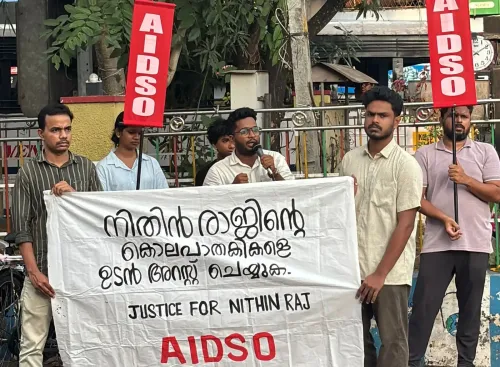
Kerala Crime Branch probes BDS student Nithin Raj's death at Kannur Dental College

Synopsis
A Kerala dental student's death has grown into a multi-agency investigation — combining alleged faculty harassment, a dismissed department head on the run, and three arrests linked to predatory digital loan apps. The Crime Branch takeover signals the state is treating this as far more than a routine suicide case.
Key Takeaways
Kerala Police Chief Ravada A.
Chandrasekhar transferred the probe into Nithin Raj's death to the State Crime Branch on 29 April .
Nithin Raj , a BDS student at Kannur Dental College, Ancharakandi , died by suicide on 10 April after reportedly jumping from the college building.
Faculty members M.K.
Ram and Sangeetha Nambiar are named accused; Ram is absconding after being denied anticipatory bail.
Cyber police arrested three individuals — Rishikesh Tiwari , Prashant Kheval , and Prakash Jay — linked to illegal loan app threats against the student.
Investigators will examine internal communications, academic records, and the nexus between academic pressure and digital financial threats.
Kerala Police Chief Ravada A. Chandrasekhar on Wednesday, 29 April handed over the investigation into the death of BDS student Nithin Raj at Kannur Dental College, Ancharakandi, to the State Crime Branch, significantly widening the scope of the probe. The transfer follows a recommendation by Kannur City Police Commissioner Nidhinraj P, amid mounting concerns over allegations of academic harassment and threats linked to illegal digital loan applications.
How Nithin Raj Died
Nithin Raj, a student of Kannur Dental College, died by suicide on 10 April after reportedly jumping from the college building. His death triggered widespread outrage across Kerala and intensified demands for an impartial, thorough investigation into the circumstances that led to it.
Allegations Against Faculty Members
The deceased student's family has alleged that Nithin Raj was subjected to sustained mental harassment by the Head of the Department, identified as M.K. Ram — claims that have now become central to the Crime Branch inquiry. Two faculty members, M.K. Ram and Sangeetha Nambiar, have been named as accused in the case. Both were initially suspended by the college management, with Ram subsequently dismissed as the controversy escalated. While Ram has been absconding after a local court refused him anticipatory bail, Nambiar secured bail and appeared before the investigating police team.
The Digital Loan App Angle
Adding a complex digital dimension to the case, the cyber police have already arrested three individuals linked to illegal loan app operations accused of threatening both the student and a faculty member. The arrested have been identified as Rishikesh Tiwari from Ghaziabad, Uttar Pradesh; Prashant Kheval from Uttar Pradesh; and Prakash Jay from Faridabad. Investigators are now expected to probe the possible link between academic pressure and external financial threats, as well as broader regulatory gaps surrounding predatory loan applications.
What the Crime Branch Will Examine
Authorities are expected to scrutinise internal communications, academic records, and testimonies to establish whether there was institutional failure or coercion involved in the lead-up to Nithin Raj's death. The case has raised serious questions about student safety, institutional accountability, and the growing menace of digital harassment in Kerala's higher education sector. This comes amid a wider national conversation about the mental health of students facing combined pressures of academic stress and predatory financial schemes.
What Happens Next
With the State Crime Branch now at the helm, the investigation is expected to move faster and with greater resources than the earlier local police inquiry. The case is being closely watched by student groups, civil society organisations, and education regulators. A credible outcome could set a precedent for how Kerala — and potentially other states — handle cases of alleged institutional harassment intersecting with digital financial crime.
Point of View
Two threats that rarely converge so visibly in a single student's story. The absconding of a dismissed department head after a bail rejection is a red flag that demands urgent action. More broadly, this case exposes a regulatory vacuum: neither the Medical Council's oversight of dental colleges nor the RBI's crackdown on predatory lending apps has been sufficient to protect vulnerable students caught between these two systems.
NationPress
19 Sept 2026
Frequently Asked Questions
Who was Nithin Raj and how did he die?
Nithin Raj was a BDS student at Kannur Dental College in Ancharakandi, Kerala. He died by suicide on 10 April after reportedly jumping from the college building, triggering widespread outrage and demands for an independent investigation.
Why has the Kerala Crime Branch taken over the investigation?
Kerala Police Chief Ravada A. Chandrasekhar transferred the case to the State Crime Branch on 29 April, following a recommendation by Kannur City Police Commissioner Nidhinraj P. The move was prompted by mounting concerns over allegations of academic harassment and the involvement of illegal digital loan apps, which required a broader investigative scope.
Who are the accused faculty members in the case?
Two faculty members — M.K. Ram, the Head of the Department, and Sangeetha Nambiar — have been named as accused. Ram was initially suspended and later dismissed; he is currently absconding after a local court denied him anticipatory bail. Nambiar secured bail and appeared before the police.
What is the digital loan app angle in the case?
Cyber police have arrested three individuals — Rishikesh Tiwari from Ghaziabad, Prashant Kheval from Uttar Pradesh, and Prakash Jay from Faridabad — linked to illegal loan app operations that allegedly threatened both the student and a faculty member. Investigators are probing whether this financial pressure compounded the academic harassment Nithin Raj reportedly faced.
What will the Crime Branch investigate?
The Crime Branch is expected to examine internal communications, academic records, and witness testimonies to determine whether there was institutional failure or coercion. It will also probe the link between academic pressure and external financial threats from predatory loan apps.