Why is HM Shah's Thiruvananthapuram Visit Crucial for BJP's Kerala Unit?
Synopsis
Union Home Minister Amit Shah's visit to Thiruvananthapuram is pivotal for the BJP as it evaluates its recent civic victory against unmet electoral goals. This visit marks a strategic turning point for the party in Kerala, where it seeks to convert urban success into broader political gains.
Key Takeaways
HM Shah's visit comes at a critical time for the BJP in Kerala.
The BJP achieved its first-ever success in the Thiruvananthapuram Corporation.
Party leaders are focusing on strategy and organizational consolidation.
A campaign centered on PM Modi is considered key for future gains.
Critics argue that sustained growth is more important than isolated victories.
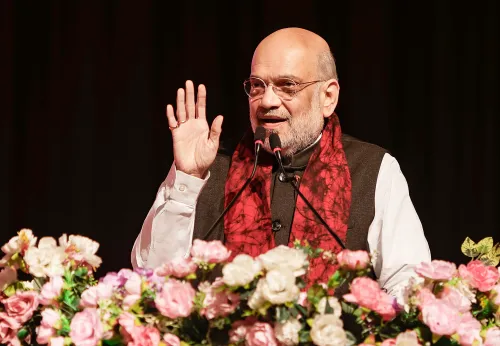
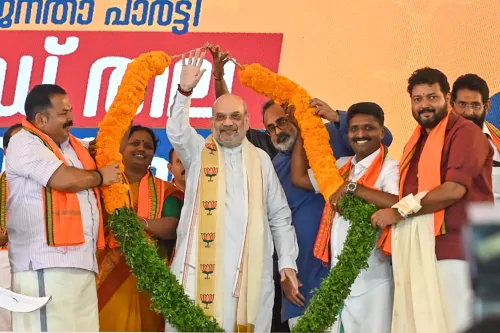
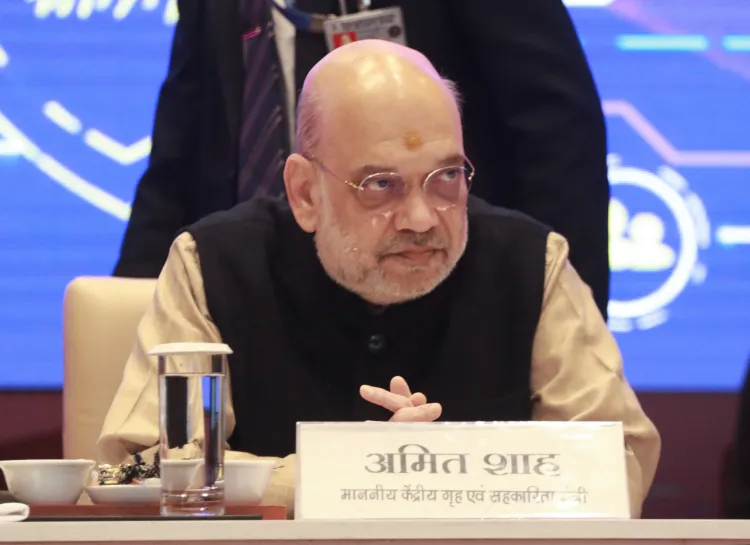
Thiruvananthapuram, Jan 9 (NationPress) Union Home Minister Amit Shah's presence in Thiruvananthapuram on Sunday arrives at a politically sensitive time for the Bharatiya Janata Party (BJP) in Kerala, as the leadership evaluates a significant civic achievement against unmet electoral expectations.
HM Shah will participate in the BJP's state core committee meeting and engage in discussions with councillors who achieved the party's first-ever success in the Thiruvananthapuram Corporation.
BJP state president Rajeev Chandrasekhar, former Union Minister V. Muraleedharan, ex-state president K. Surendran, Shobha Surendran, and other senior leaders are anticipated to be part of the discussions, which are expected to focus on strategy, messaging, and organizational strengthening.
This visit follows the December local body elections, during which the BJP did not meet HM Shah's earlier directive of achieving a 25 percent vote share statewide.
That shortfall has been somewhat mitigated by the breakthrough in the state capital, a result that the party has showcased as proof of its expanding urban appeal and organizational maturity.
Party insiders indicate that Union Minister Shah is likely to emphasize a campaign strategy centered around Prime Minister Narendra Modi, with the state unit believing that highlighting PM Modi as the political figurehead can aid the BJP in transforming marginal gains into a stronger presence in Kerala.
The leadership is convinced that a PM Modi-focused narrative provides the party with its best opportunity to convert visibility into seats rather than merely achieving symbolic electoral successes.
However, it remains uncertain whether the symbolic significance of winning the Thiruvananthapuram Corporation will ultimately outweigh the failure to reach the desired vote share.
While the victory in the corporation has granted a psychological uplift and a notable first, critics within and outside the BJP argue that lasting electoral growth will be assessed more by statewide vote consolidation than by isolated victories.
HM Shah's interactions with the state leadership are, therefore, regarded as both a review and a strategic adjustment.
The discussions are likely to explore whether the party should prioritize striking victories in key urban areas or shift focus back to the long-term goal of establishing a consistent voter base across regions.
As the BJP works to recalibrate its Kerala strategy, HM Shah's visit highlights the party's commitment to converting a momentous civic achievement into a broader political influence, while grappling with the challenging vote share dynamics that continue to shape its aspirations in the state, where it currently holds no seats in the 140-member Kerala Assembly.
Point of View
It is crucial to observe that HM Shah's visit to Thiruvananthapuram represents both an introspective and corrective measure for the BJP in Kerala. While victories in urban centers like the Thiruvananthapuram Corporation are noteworthy, the party's ability to consolidate its voter base across the state will ultimately determine its political viability, making this visit a critical moment in its electoral strategy.
NationPress
24 Sept 2026
Frequently Asked Questions
What is the significance of Amit Shah's visit to Thiruvananthapuram?
Amit Shah's visit is significant as it comes at a time when the BJP is assessing its recent civic victory and strategizing for future electoral success in Kerala.
Who will participate in the BJP's core committee meeting?
Key participants include BJP state president Rajeev Chandrasekhar, former Union Minister V. Muraleedharan, and other senior party leaders.
What was the outcome of the December local body elections for the BJP?
The BJP did not meet its target of achieving a 25 percent vote share across the state during the December local body elections.
How is the BJP planning to enhance its political presence in Kerala?
The BJP is focusing on a campaign strategy centered around Prime Minister Narendra Modi to strengthen its political presence in Kerala.
What challenges does the BJP face in Kerala?
The BJP faces the challenge of converting isolated victories into a consistent voter base across the state, as it currently holds no seats in the Kerala Assembly.