Dabur Nepal manufacturing units unaffected by floods; 300+ dead

Synopsis
While Nepal's flash floods have killed over 300 people and left 800 missing, Dabur India says its Kathmandu and Birganj factories are running normally — with only three distributors expected to be affected. The company's swift stock-exchange disclosure, paired with a 15% profit jump last quarter, underlines how quickly large FMCG players now move to ringfence investor sentiment during regional disasters.
Key Takeaways
Dabur India confirmed on 27 August that its manufacturing units in Kathmandu and Birganj , Nepal, are operating normally despite severe flooding.
Only three distributors are expected to be affected; the overall business impact is deemed negligible .
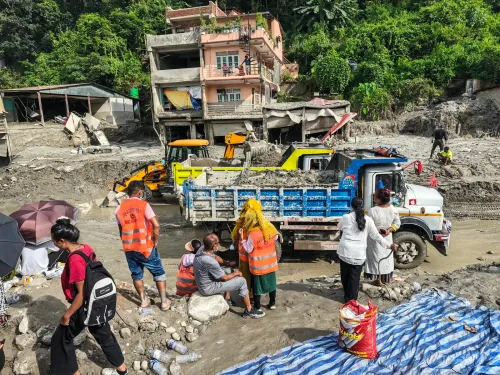
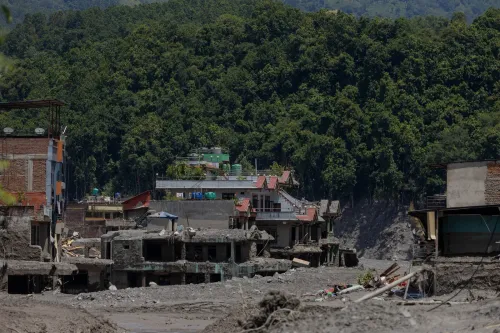
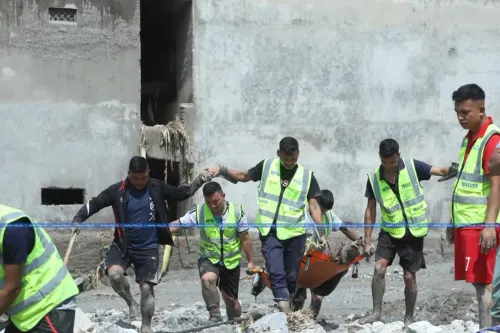
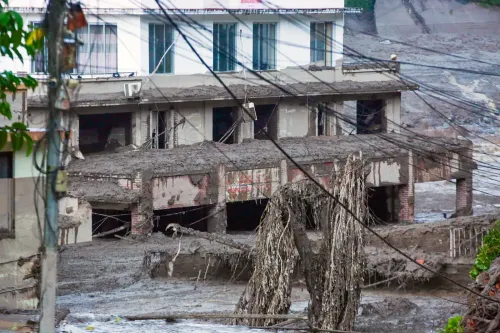
Nepal's flash floods, triggered by glacier collapse per the US Geological Survey , have killed more than 300 people and left up to 800 missing .
At least 300 Indian nationals , mostly Manasarovar pilgrims, remain missing, according to Foreign Minister Shisir Khanal .
Dabur shares closed 1.53% higher at ₹386.20 on Thursday; Q1 net profit rose 15% to ₹591 crore .
Dabur India confirmed on Thursday, 27 August that its core manufacturing operations in Nepal remain fully functional despite the devastating flash floods that have killed more than 300 people and left up to 800 missing across the Himalayan nation. The company issued a regulatory filing with the stock exchanges to reassure investors and stakeholders of business continuity.
Operations Continue Normally
According to the regulatory disclosure, Dabur's manufacturing facilities in Kathmandu and Birganj — two of its key operational hubs in Nepal — continue to function without disruption. The company stated that adverse weather conditions have not adversely affected its core production lines at either location.
Some disruption is expected at the distributor level, though Dabur characterised the impact as limited. The company indicated that only three distributors are expected to be affected by the floods, and it therefore expects the overall impact on its Nepal business to be negligible.
Scale of the Nepal Disaster
The floods, which struck Nepal on Wednesday, rank among the country's most destructive weather events in recent memory. According to the US Geological Survey (USGS), the disaster was triggered by glacier collapse and debris flow — a pattern increasingly linked to accelerating glacial melt in the Himalayas.
Nepal's Foreign Minister Shisir Khanal said on Thursday that at least 300 Indian nationals, mostly Manasarovar pilgrims, remained missing. Businesses across the region are continuing to assess the impact on supply chains, distribution networks, and local operations.
Dabur's Financial Position
Dabur shares closed 1.53% higher at ₹386.20 on Thursday, suggesting markets absorbed the Nepal flood disclosure without significant concern. The company's recent financial results provide additional context: for the quarter ended 30 June, Dabur reported a 15% rise in consolidated net profit to ₹591 crore, up from ₹514 crore in the same period of the preceding financial year.
Revenue for the quarter grew 10.5% to ₹3,764 crore compared to ₹3,405 crore in the year-ago period. EBITDA rose 10.9% to ₹741 crore from ₹668 crore, though the EBITDA margin edged up marginally to 19.7% from 19.6%.
Broader Business Context
This comes amid a wider corporate scramble to map exposure to the Nepal floods, with FMCG, logistics, and infrastructure firms all assessing downstream risks. For Dabur, Nepal represents a meaningful international market given the company's deep Ayurvedic and healthcare product presence in the region. The swift regulatory disclosure signals the company's intent to stay ahead of investor concern rather than wait for formal quarterly guidance. All eyes will now be on whether distributor-level disruptions remain contained as flood waters recede.
Point of View
Not just a supply-chain footnote. For FMCG companies with deep Nepal exposure, the distributor-level disruption Dabur acknowledges — however limited — is a preview of a structural vulnerability that will only grow as glacial events intensify. The question mainstream coverage is not asking: how many smaller Indian consumer-goods firms lack the monitoring infrastructure to even know their Nepal networks are disrupted?
NationPress
11 Oct 2026
Frequently Asked Questions
Are Dabur's Nepal manufacturing facilities affected by the floods?
No. Dabur confirmed in a regulatory filing on 27 August that its manufacturing units in Kathmandu and Birganj continue to operate normally. Only three distributors are expected to face disruption, and the company considers the overall business impact negligible.
What caused the Nepal floods in August 2025?
According to the US Geological Survey, the flash floods were caused by glacier collapse and debris flow. The disaster struck Nepal on Wednesday, killing more than 300 people and leaving up to 800 missing.
How many Indian nationals are missing due to the Nepal floods?
Nepal's Foreign Minister Shisir Khanal stated on Thursday that at least 300 Indian nationals, mostly Manasarovar pilgrims, remained missing as of that date.
How did Dabur's stock react to the Nepal flood news?
Dabur shares closed 1.53% higher at ₹386.20 on Thursday, suggesting the market viewed the company's regulatory disclosure — which confirmed minimal operational impact — as reassuring rather than alarming.
What were Dabur's latest financial results?
For the quarter ended 30 June, Dabur reported a 15% rise in consolidated net profit to ₹591 crore, with revenue up 10.5% to ₹3,764 crore and EBITDA up 10.9% to ₹741 crore compared to the same period in the previous financial year.