Why Did a Delhi Court Decline to Acknowledge the ED's Complaint Against Sonia and Rahul Gandhi in the National Herald Case?
Synopsis
A recent ruling from a Delhi court brings relief to Congress leaders Sonia and Rahul Gandhi, as it declines to recognize the Enforcement Directorate's complaint in a high-profile money laundering case involving the National Herald. The court's decision underscores ongoing tensions in Indian politics and the ramifications for the Gandhi family.
Key Takeaways
The Delhi court rejected the ED's complaint against Sonia and Rahul Gandhi.
The case involves serious allegations of financial misconduct.
ED can still continue its investigation despite the ruling.
Congress leaders have denied all allegations of wrongdoing.
The case has significant political implications for the Gandhi family.
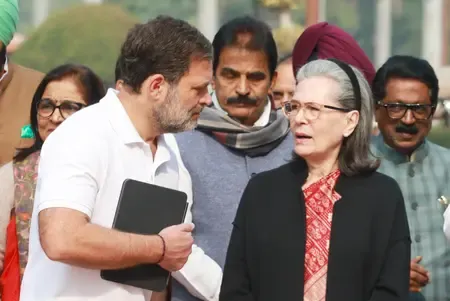
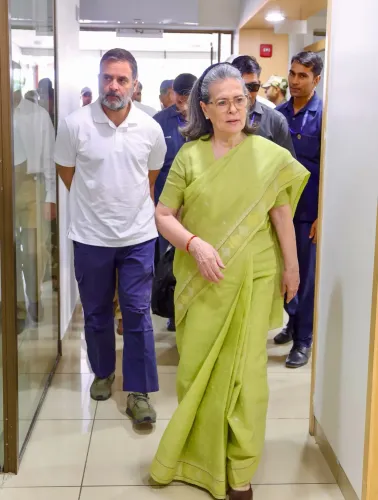
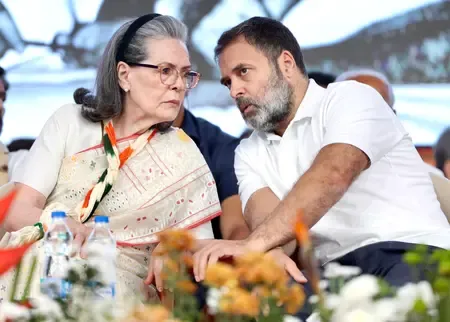
New Delhi, Dec 16 (NationPress) In a significant relief for Congress Parliamentary Party Chairperson Sonia Gandhi and Lok Sabha Leader of Opposition (LoP) Rahul Gandhi, a Delhi court on Tuesday opted not to recognize the Enforcement Directorate’s (ED) prosecution complaint linked to the alleged National Herald money laundering case.
Special Judge (PC Act) Vishal Gogne from the Rouse Avenue Court stated that the complaint submitted by the ED under the Prevention of Money Laundering Act (PMLA) was deemed inadmissible.
Alongside Sonia and Rahul Gandhi, the federal anti-money laundering agency had listed Congress Overseas chief Sam Pitroda, Suman Dubey, Sunil Bhandari, Young Indian, and Dotex Merchandise Private Limited as potential defendants in the case.
In rejecting the prosecution complaint, the court emphasized that the ED retains the right to pursue its investigation within legal bounds.
This high-profile case involves claims that senior Congress officials colluded to unlawfully seize control of assets worth over Rs 2,000 crore belonging to Associated Journals Ltd (AJL), the original publisher of the National Herald newspaper, by remitting a minimal sum of Rs 50 lakh via Young Indian—a firm where Sonia and Rahul Gandhi hold a majority stake.
Previously, on November 29, the Rouse Avenue Court had postponed its ruling after reserving orders on November 7, asserting that more examination of transaction documents, purported rent receipts, and fund flow patterns was necessary to determine if the prosecution complaint met the legal criteria for acknowledgment under the PMLA.
The ED contended that the case involved a “serious economic offense” and alleged that a conspiracy was formed to establish Young Indian to wrongfully acquire AJL’s properties for an insignificant amount, primarily benefiting top Congress leadership.
Moreover, it claimed that various senior Congress leaders were implicated in “fake transactions,” including fraudulent advance rent payments backed by forged rent receipts.
The Congress leadership has steadfastly refuted these allegations, deeming the money laundering case as “truly bizarre” and “unprecedented.”
The dispute surrounding the National Herald assets gained traction in 2012 when BJP leader Subramanian Swamy lodged a complaint in a trial court, asserting that Congress leaders engaged in deceit and breach of trust while acquiring AJL.
Point of View
It's evident that the ruling of the Delhi court over the ED's complaint against prominent Congress figures Sonia and Rahul Gandhi marks a critical juncture in the ongoing political narrative. This development suggests a potential shift in the legal landscape surrounding high-profile individuals and raises essential questions about accountability and transparency within political circles in India.
NationPress
21 Sept 2026
Frequently Asked Questions
What was the recent decision made by the Delhi court regarding the ED's complaint?
The Delhi court refused to take cognizance of the Enforcement Directorate's prosecution complaint against Sonia Gandhi and Rahul Gandhi in the National Herald case, deeming it inadmissible.
What is the National Herald case about?
The case centers on allegations that top Congress leaders conspired to unlawfully acquire control of assets worth over Rs 2,000 crore belonging to Associated Journals Ltd by paying a nominal amount through Young Indian.
Who else is implicated in the National Herald case?
Along with Sonia and Rahul Gandhi, the ED has named Sam Pitroda, Suman Dubey, Sunil Bhandari, Young Indian, and Dotex Merchandise Private Limited as proposed accused.
What does the court's ruling mean for the ED?
While the court declined to acknowledge the complaint, it clarified that the ED is still permitted to continue its investigation in accordance with the law.
How has the Congress party responded to the allegations?
The Congress leadership has consistently denied the allegations, describing the money laundering case as 'strange' and 'unprecedented.'