Late April Heatwave in Delhi: May-June Temperatures Arrive Early Amid Poor Air Quality
Synopsis
The weather in Delhi has taken an unexpected turn as late April sees a heatwave more typical of summer months, alongside deteriorating air quality. Residents are advised to take precautions as temperatures soar and air quality declines.
Key Takeaways
Delhi is experiencing a heatwave similar to that of May and June.
The maximum temperature reached 41 degrees Celsius on April 21.
Air quality remains a major concern, with many areas in the 'poor' category.
Health experts recommend avoiding outdoor activities during peak heat.
A slight temperature drop may occur towards the end of April.
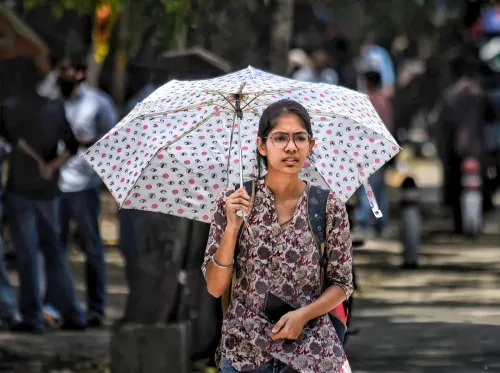
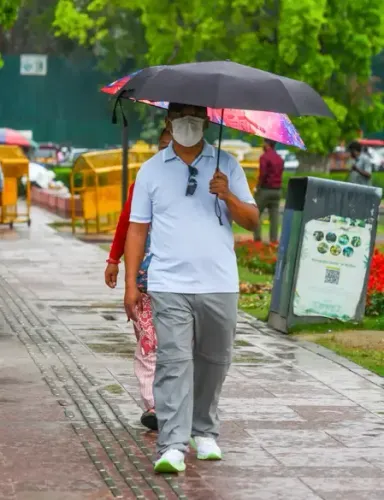
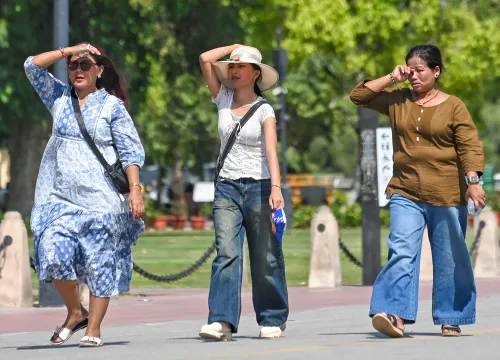
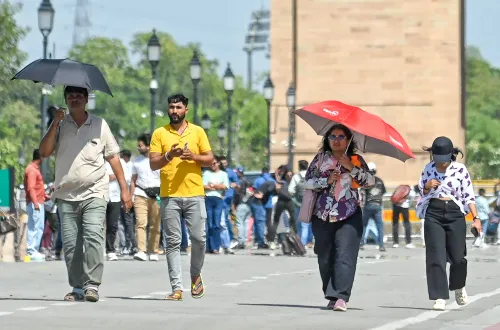
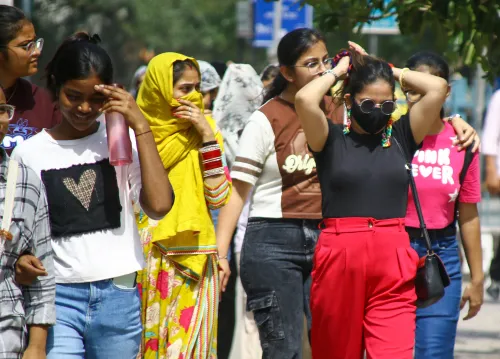
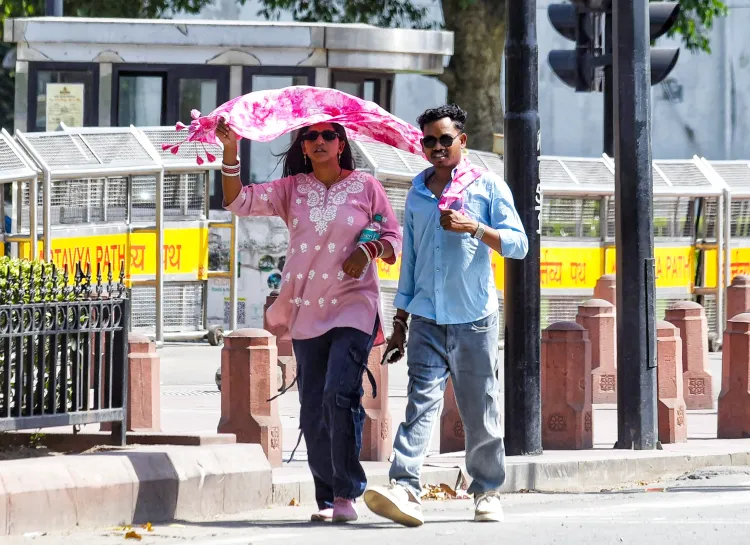
New Delhi, April 21 (NationPress) The climate in the National Capital Region (NCR) of Delhi has shifted dramatically, ushering in a heatwave reminiscent of the typical conditions seen in May and June, even as we approach the end of April. Following a period of relatively cool and pleasant weather in March, which echoed the lingering chill of February, residents now find themselves facing soaring temperatures and worsening air quality.
The India Meteorological Department (IMD) has issued a continuous heatwave alert from April 21 to April 24. On April 21, temperatures in Delhi peaked at a scorching 41 degrees Celsius, with a minimum temperature of 23 degrees. Forecasts indicate that conditions will deteriorate further in the coming days, with maximum temperatures expected to reach 43 degrees Celsius on April 22 and 23, and similar conditions anticipated on April 24, with minimum temperatures around 24 degrees.
Furthermore, the IMD has cautioned that heatwave conditions are likely to persist not only during the afternoon but will extend into the evening hours, underscoring the severity of the current weather scenario. However, a slight respite may occur towards the end of the week, with temperatures possibly dropping to around 41 degrees Celsius on April 25 and 26, while minimum temperatures could rise to 25 degrees. Expect partly cloudy skies during this time, although no specific weather warnings have been announced. Nevertheless, any relief from the heat is expected to be minimal.
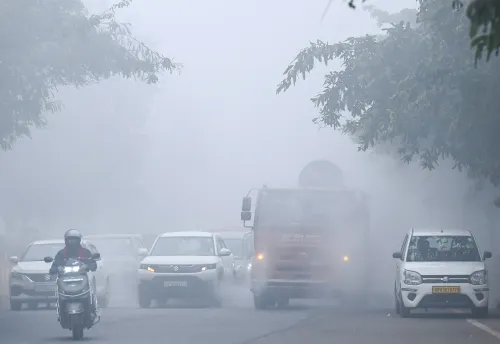
In addition to the rising temperatures, air quality in the NCR remains a significant issue. The Air Quality Index (AQI) in several parts of Delhi and its surrounding areas consistently falls within the 'poor' category.
In Delhi, Anand Vihar recorded an AQI of 224, while Ashok Vihar reported 173. Bawana and Chandni Chowk had AQI levels of 196 and 162, respectively. Meanwhile, in Noida, the air quality situation is similarly concerning, with AQI readings of 197 in Sector-1, 171 in Sector-125, 147 in Sector-62, and 160 in Sector-116.
Additionally, Ghaziabad's Loni area experienced an AQI of 301, categorizing it as 'very poor.' Other localities such as Vasundhara, Sanjay Nagar, and Indirapuram reported AQI levels of 195, 189, and 168, respectively.
This combination of extreme heat and poor air quality poses a significant challenge for residents, subjecting them to a double burden of weather-related stress. Health experts recommend avoiding outdoor activities during peak afternoon hours, staying well-hydrated, and wearing protective masks to reduce exposure to polluted air.
Point of View
It's crucial to note the alarming shift in weather patterns affecting Delhi. The unusual heatwave and concurrent air quality issues are pressing concerns for public health and safety. Our focus remains on delivering accurate information to help residents navigate these challenges effectively.
NationPress
19 Sept 2026
Frequently Asked Questions
What are the current temperatures in Delhi?
On April 21, the maximum temperature in Delhi reached 41 degrees Celsius, with forecasts predicting a rise to 43 degrees Celsius on April 22 and 23.
What is the air quality like in Delhi?
The Air Quality Index (AQI) is currently in the 'poor' category, with Anand Vihar recording an AQI of 224.
How long will the heatwave last?
The IMD has issued a heatwave alert from April 21 to April 24, with a slight possibility of temperatures dropping by the end of the week.
What precautions should residents take?
Residents are advised to avoid outdoor activities during peak afternoon hours, stay hydrated, and wear masks to minimize exposure to pollution.
What areas are most affected by poor air quality?
Areas like Anand Vihar, Ashok Vihar, and Ghaziabad's Loni area are among those experiencing significantly poor air quality.