Delhi HC issues notice on Sharjeel Imam's bail plea in 2020 riots case
Synopsis
The Delhi High Court has issued notice to Delhi Police on Sharjeel Imam's bail plea in the 2020 northeast Delhi riots conspiracy case — even as the Supreme Court's January 2026 order blocking fresh bail applications remains the central legal obstacle. With Imam in custody for nearly six years and the trial still at the charge-framing stage, the case is shaping up as a critical test of UAPA's bail bar.
Key Takeaways
The Delhi High Court issued notice to Delhi Police on 17 July on Sharjeel Imam's bail plea in the 2020 northeast Delhi riots conspiracy case.
A Division Bench of Justice Prathiba M.
Singh and Justice Vikas Mahajan posted the next hearing for 27 August .
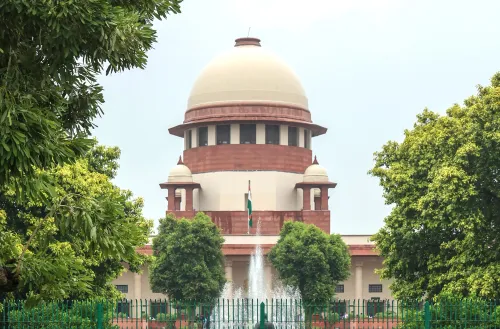
The trial court had earlier refused bail, citing the Supreme Court's 5 January 2026 order that barred fresh applications until protected witnesses are examined or one year lapses.
The Supreme Court granted bail to five co-accused but denied it to Imam and Umar Khalid , citing prima facie UAPA grounds under Section 43D(5) .
Imam has been in custody for nearly six years ; the trial remains at the charge-framing stage.
A Supreme Court referral to a larger Bench on whether prolonged incarceration justifies UAPA bail could reshape the legal landscape for Imam and others.
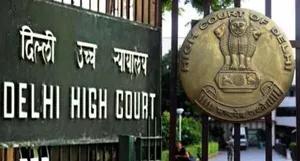
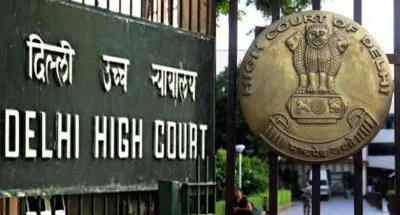
The Delhi High Court on Friday, 17 July issued notice to the Delhi Police on a bail plea filed by jailed student activist Sharjeel Imam in the 2020 northeast Delhi riots 'larger conspiracy' case, seeking the force's response. The matter is now listed for further hearing on 27 August.
What the High Court Has Done
A Division Bench comprising Justice Prathiba M. Singh and Justice Vikas Mahajan admitted the notice after Imam challenged an order by the Karkardooma Court that had refused him regular bail. The case is registered under the Unlawful Activities (Prevention) Act (UAPA) and other penal provisions.
What the Trial Court Said
Earlier this month, Additional Sessions Judge Sameer Bajpai dismissed the regular bail pleas of both Sharjeel Imam and co-accused Umar Khalid. The trial court held that it was bound by the Supreme Court's order of 5 January 2026, which had declined bail to both accused and specified that fresh applications would only be maintainable after the examination of protected witnesses relied upon by the prosecution, or on the expiry of one year from that order — whichever came earlier.
'The Court has no option but to follow the judgment dated January 5, 2026, as passed by the Supreme Court, whereby the petitions of both the applicants were dismissed,' the trial court observed.
Imam's Argument Before the Courts
Before the trial court, Imam contended that circumstances had materially changed since the Supreme Court's January 2026 order. He argued that despite more than six months having elapsed, the trial had seen no meaningful progress — with arguments on framing of charges still ongoing — while he had remained in custody for nearly six years.
The Broader UAPA Bail Landscape
Earlier this year, the Supreme Court dismissed bail pleas of both Imam and Khalid, holding that prosecution material disclosed prima facie grounds attracting the statutory embargo under Section 43D(5) of the UAPA. However, the apex court simultaneously granted bail to five co-accused — Gulfisha Fatima, Meeran Haider, Shifa Ur Rehman, Mohd Saleem Khan, and Shadab Ahmed.
More recently, the Supreme Court granted six months' interim bail to co-accused Tasleem Ahmed and Khalid Saifi, while simultaneously referring to a larger Bench the significant constitutional question of whether prolonged incarceration and trial delays can justify bail despite the restrictions under Section 43D(5) of the UAPA. That referral signals a potential shift in how courts may interpret the UAPA's stringent bail bar going forward.
Background: The 2020 Delhi Riots Case
The case pertains to the alleged larger conspiracy behind the communal violence that erupted in northeast Delhi in February 2020, leaving dozens dead and hundreds injured. Imam is among several individuals booked under the UAPA and allied penal provisions in connection with that violence. The trial, now in its fifth year, remains at the pre-charge-framing stage — a fact Imam's counsel has repeatedly cited as grounds for bail.
Point of View
But the legal context is anything but. Sharjeel Imam has now spent close to six years in custody without a trial conclusion — a timeline that sits uncomfortably with constitutional guarantees of speedy justice, even under the UAPA's stringent bail framework. The Supreme Court's simultaneous referral on whether prolonged incarceration can override Section 43D(5) is the more consequential development: if the larger Bench rules in favour of a delay-based exception, it could unlock bail not just for Imam but for a significant cohort of long-detained UAPA accused. What mainstream coverage underplays is that the trial's stagnation at the charge-framing stage — five years in — is itself a systemic failure that the courts have yet to directly address.
NationPress
15 Oct 2026
Frequently Asked Questions
Why did the Delhi High Court issue notice on Sharjeel Imam's bail plea?
The Delhi High Court issued notice to the Delhi Police to seek its response on Sharjeel Imam's bail plea in the 2020 northeast Delhi riots larger conspiracy case. Imam had challenged the Karkardooma Court's refusal to grant him regular bail under the UAPA.
Why did the trial court refuse Sharjeel Imam bail?
Additional Sessions Judge Sameer Bajpai dismissed Imam's bail plea because the Supreme Court's 5 January 2026 order had declined bail and barred fresh applications until protected witnesses are examined or one year from that order lapses, whichever is earlier. The trial court held it had no discretion to override that directive.
What is the 2020 northeast Delhi riots conspiracy case?
The case pertains to the alleged larger conspiracy behind the communal violence that broke out in northeast Delhi in February 2020. Several individuals, including Sharjeel Imam and Umar Khalid, were booked under the UAPA and other penal provisions for allegedly orchestrating the riots.
What did the Supreme Court decide on bail for the accused in this case?
The Supreme Court in January 2026 denied bail to Sharjeel Imam and Umar Khalid, citing prima facie UAPA grounds under Section 43D(5), while granting bail to five co-accused. It has since granted six months' interim bail to two others — Tasleem Ahmed and Khalid Saifi — and referred the broader question of UAPA bail and trial delay to a larger Bench.
How long has Sharjeel Imam been in custody?
Sharjeel Imam has been in custody for nearly six years as of July 2026. The trial remains at the pre-charge-framing stage, a fact his counsel has repeatedly cited as a changed circumstance warranting bail.