Delhi HC upholds NSE as 'public authority' under RTI Act
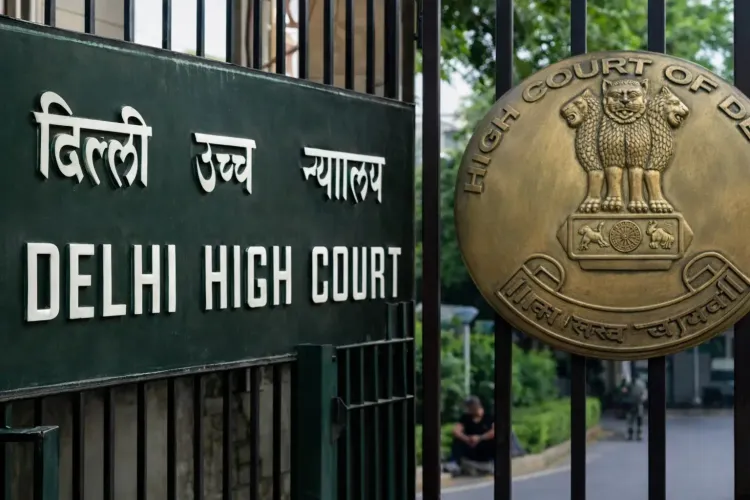
Synopsis
The Delhi High Court has ruled that the NSE — despite being a privately incorporated company — is a 'public authority' under the RTI Act, bound by transparency obligations. The verdict, upholding a 2010 single-judge order, rests on two independent legal grounds: SEBI's indispensable statutory recognition and the Centre's deep, pervasive control over the exchange.
Key Takeaways
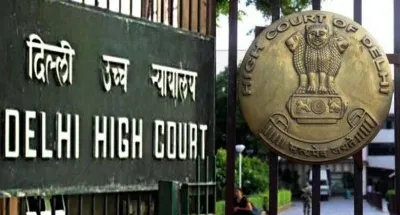
The Delhi High Court on 1 July upheld the declaration of the National Stock Exchange (NSE) as a 'public authority' under the RTI Act .
A Division Bench of Justice C.
Hari Shankar and Justice Om Prakash Shukla dismissed the NSE's appeal against a 2010 single-judge ruling.
The court held that SEBI and the Central government exercise deep and pervasive control over the NSE, bringing it within Section 2(h) of the RTI Act.
SEBI's recognition under Section 4(3) of the SCRA was treated as a government order, making NSE's very existence contingent on state sanction.
Citizens and investors can now file RTI applications directly with the NSE seeking disclosures on governance and compliance matters.
The Delhi High Court on Wednesday, 1 July upheld a landmark ruling declaring the National Stock Exchange (NSE) a 'public authority' under the Right to Information (RTI) Act, holding that the exchange is subject to deep and pervasive control of the Central government and the Securities and Exchange Board of India (SEBI) — and is therefore bound by the transparency law. The verdict closes a long-running legal challenge by the NSE against a 2010 single-judge order.
What the Court Ruled
A Division Bench of Justice C. Hari Shankar and Justice Om Prakash Shukla dismissed the NSE's appeal, affirming the earlier single-judge ruling that had declared the exchange a public authority under Section 2(h) of the RTI Act. 'We affirm and uphold the judgment of the learned Single Judge. The appeal is dismissed, with no orders as to costs,' the bench stated in its order.
The NSE had argued that, as a private company incorporated under the Companies Act, it fell outside the RTI Act's ambit. The court rejected that contention outright, holding that the degree of regulatory oversight exercised by SEBI and the Centre goes far beyond ordinary supervision.
The Legal Reasoning
The bench relied on an earlier judicial precedent — the K.C. Sharma v. Delhi Stock Exchange case — to hold that the question of deep and pervasive governmental control over the NSE was already settled. 'We agree with the learned Single Judge that the aspect of whether there is deep and pervasive government control over the NSEI stands concluded' by that earlier decision, the judgment noted.
Crucially, the court held that SEBI's recognition granted under Section 4(3) of the Securities Contracts (Regulation) Act (SCRA) must be treated as an order of the Central government, since SEBI exercises delegated statutory powers. Without that recognition, the NSE cannot legally function as a stock exchange. 'Section 4(3) requires governmental recognition for a stock exchange to function as such,' the bench observed, concluding that the NSE must be regarded as having been 'established' or at least 'constituted' by a government order.
Dual Grounds for RTI Coverage
Summarising its findings, the Delhi High Court held that the NSE qualifies as a public authority on two independent grounds: first, under the second part of Section 2(h) because of the government's deep and pervasive control; and second, under the first part because SEBI's statutory recognition is indispensable for the exchange to operate at all. Either ground alone, the court indicated, would have been sufficient.
What This Means Going Forward
The ruling means citizens and investors can now file RTI applications directly with the NSE, seeking disclosures on matters such as trading data, regulatory compliance, and internal governance — subject to permissible exemptions under the Act. Notably, this comes at a time when market transparency and the NSE's past governance controversies remain live public concerns. The verdict is likely to face scrutiny from other exchanges and regulated financial entities that have similarly resisted RTI coverage. Whether the NSE pursues a further appeal before a larger bench or the Supreme Court remains to be seen.
Point of View
A principle that could extend to other SEBI-regulated entities. The NSE has long operated in a reputational shadow following past governance controversies; mandatory RTI compliance will now add a layer of public accountability that internal oversight mechanisms have not always delivered. The real test is whether the NSE's exemption claims under the RTI Act — particularly around commercially sensitive trading data — are litigated narrowly or used to blunt the ruling's practical impact. Courts will need to draw that line carefully.
NationPress
30 Sept 2026
Frequently Asked Questions
What did the Delhi High Court rule about the NSE and the RTI Act?
The Delhi High Court ruled on 1 July that the National Stock Exchange (NSE) is a 'public authority' under Section 2(h) of the RTI Act, meaning it is legally bound to respond to RTI applications. The bench upheld a 2010 single-judge order and dismissed the NSE's appeal.
Why is the NSE considered a public authority despite being a private company?
The court held that the Central government and SEBI exercise deep and pervasive control over the NSE — going well beyond ordinary regulation. Additionally, SEBI's statutory recognition under the Securities Contracts (Regulation) Act is indispensable for the NSE to function, effectively making it a government-constituted entity in legal terms.
What was the NSE's argument and why did the court reject it?
The NSE argued that, as a company incorporated under the Companies Act, it was merely a regulated private entity outside the RTI Act's scope. The court rejected this, citing settled judicial precedent from the K.C. Sharma v. Delhi Stock Exchange case and holding that the degree of state control over the exchange is sufficient to attract the RTI Act.
What can citizens or investors now do following this ruling?
Citizens and investors can file RTI applications directly with the NSE seeking information on its governance, regulatory compliance, and operations, subject to permissible exemptions under the RTI Act. The ruling opens a new avenue for public accountability of one of India's largest financial market infrastructure entities.
Can the NSE challenge this ruling further?
The NSE can potentially appeal to a larger bench of the Delhi High Court or approach the Supreme Court. Whether it will pursue further legal remedies has not been confirmed following the 1 July judgment.