Delhi HC upholds Telegram ban before NEET UG 2026 re-exam, cites proportionality
Synopsis
The Delhi High Court has given the Centre a sweeping legal endorsement to block an entire messaging platform — not just specific channels — to protect exam integrity. The ruling expands the practical reach of Section 69A and signals that platform-wide shutdowns can survive judicial scrutiny when channel-level enforcement has demonstrably failed.
Key Takeaways
Delhi High Court on 19 June 2025 upheld the Centre's order temporarily suspending Telegram across India ahead of NEET (UG) 2026 .
Justice Tejas Karia dismissed Telegram FZ LLC's petition challenging the MeitY blocking order under Section 69A of the IT Act .
The court held that the platform suspension until 22 June and disabling of the message-editing feature until 30 June satisfied the Anuradha Bhasin proportionality test.
The court ruled that Section 69A empowers the government to block an entire platform — not just specific content — as apps constitute 'codes', 'computer programmes', and 'software'.
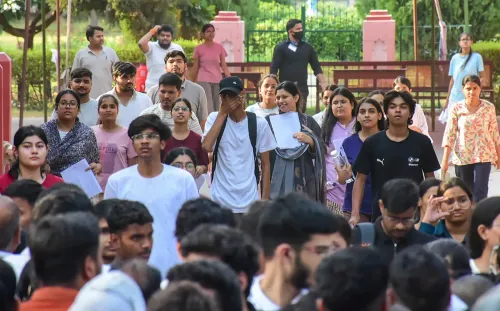
The NEET (UG) 2026 re-examination is scheduled for 21 June for over 22 lakh candidates , following alleged paper leaks in the original exam on 3 May .
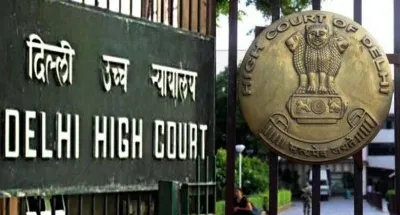
The Delhi High Court on Friday, 19 June 2025, upheld the Centre's decision to temporarily suspend Telegram's services across India ahead of the NEET (UG) 2026 re-examination, ruling that the government had strictly followed the procedure prescribed under law and that the restrictions satisfied the constitutional test of proportionality. The judgment comes days before the re-examination, scheduled for 21 June, for over 22 lakh candidates.
What the Court Ruled
A single-judge Bench of Justice Tejas Karia dismissed a petition filed by Telegram FZ LLC challenging the Ministry of Electronics and Information Technology (MeitY) blocking order. The court held that the temporary suspension of the messaging platform until 22 June and the disabling of its message-editing feature until 30 June were justified given the circumstances surrounding the nationwide medical entrance examination.
'Given the emergency nature of the Impugned Order, the reasons supplied in arriving at the decision were sufficient. As Respondent No. 1 (Union government) has strictly followed the procedural steps as required under Section 69A of the IT Act, the challenge to the Impugned Order on the ground non-communication of reasons cannot be sustained,' the court said.
The Proportionality Test
On the issue of proportionality, Justice Karia held that the four parameters laid down by the Supreme Court in the landmark Anuradha Bhasin judgment were fully satisfied — namely, identification of a legitimate objective; existence of a rational nexus between the objective and the measure adopted; necessity of the measure in the facts and circumstances; and adoption of the least restrictive measure available.
The court added that the measures constituted 'the least restrictive measure' available for achieving the stated objective and therefore could not be termed disproportionate.
Why Platform-Wide Action Was Deemed Necessary
Rejecting Telegram's contention that only specific channels or accounts should have been targeted, the court found that the platform's architecture enabled rapid and large-scale dissemination of content, making channel-specific takedowns ineffective.
'It is noteworthy that Telegram permits the large-scale addition of users to channels and groups. The platform architecture of Telegram is conducive to amplification and mass dissemination of content, enabling information to reach a substantial number of users within a short span of time,' the judgment observed.
The court further noted that Telegram's cloud-based structure, extensive bot ecosystem, and ability to create mirror channels allowed unlawful actors to quickly reconstitute networks even after enforcement action. It found that narrower measures — including the takedown of specific bots and channels — had proven ineffective given the particular nature and architecture of the platform.
Scope of Section 69A: Can an Entire Platform Be Blocked?
The court also rejected Telegram's argument that Section 69A of the Information Technology Act empowered the government only to block specific content and not an entire platform. Holding that the term 'information' under the IT Act carries a broad meaning, Justice Karia ruled that an application or platform falls within its ambit as it comprises 'codes', 'computer programmes', and 'software'.
'Accordingly, this Court is of the view that Respondent No. 1 was empowered under Section 69A of the IT Act to issue directions for blocking public access to Telegram,' the judgment stated.
Background: NEET Paper Leak and the Blocking Order
The restrictions were imposed under Section 69A following recommendations by the National Testing Agency (NTA) and the Ministry of Home Affairs. According to the Centre, the NTA had identified several Telegram channels allegedly involved in selling purported NEET question papers and facilitating examination-related scams. The government argued that content-specific takedowns were ineffective because channels and bots could be recreated within minutes.
The NEET (UG) 2026 re-examination is scheduled for 21 June for over 22 lakh candidates, following allegations of question paper leaks in the original examination conducted on 3 May. The court's ruling effectively keeps the platform-wide restrictions in place through the examination date.
Point of View
But the interpretive door it opens is wide. Critics will rightly ask whether a platform serving hundreds of millions of users can routinely be switched off when channel-level enforcement fails — and whether the burden of proof for 'ineffectiveness' is set too low. The judgment also sidesteps the economic and free-speech cost borne by the vast majority of Telegram users who had no connection to the alleged fraud.
NationPress
19 Sept 2026
Frequently Asked Questions
Why did the Delhi High Court uphold the Telegram ban before NEET 2026?
The Delhi High Court upheld the temporary ban because it found that the Centre had strictly followed the procedure under Section 69A of the IT Act and that the restrictions met the four-part proportionality test laid down by the Supreme Court in the Anuradha Bhasin judgment. The court also found that channel-specific takedowns were ineffective given Telegram's platform architecture.
How long is Telegram blocked in India under this order?
Telegram's services were suspended across India until 22 June 2025, while its message-editing feature was disabled until 30 June 2025. The restrictions were imposed ahead of the NEET (UG) 2026 re-examination scheduled for 21 June.
Can the government block an entire platform under Section 69A of the IT Act?
Yes, according to the Delhi High Court's ruling. Justice Tejas Karia held that the term 'information' under the IT Act is broad enough to include an entire application or platform, as it comprises 'codes', 'computer programmes', and 'software'. The court rejected Telegram's argument that Section 69A only permits blocking specific content.
Why was a platform-wide block deemed necessary instead of targeting specific channels?
The court found that Telegram's cloud-based architecture, bot ecosystem, and ability to create mirror channels allowed unlawful actors to reconstitute networks within minutes of channel-level enforcement. The NTA and Ministry of Home Affairs had recommended the platform-wide action after prior targeted takedowns proved ineffective.
What is the NEET UG 2026 re-examination and why is it being held?
The NEET (UG) 2026 re-examination is scheduled for 21 June for over 22 lakh candidates, following allegations of question paper leaks in the original examination conducted on 3 May. The National Testing Agency identified several Telegram channels allegedly involved in selling purported question papers ahead of the original exam.