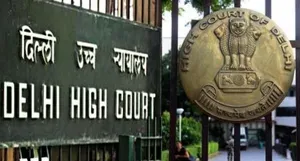
Delhi HC upholds Telegram ban ahead of NEET UG 2026 re-exam on June 21
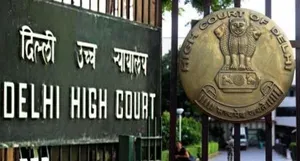
Synopsis
The Delhi High Court has backed the Centre's emergency Telegram ban — a sweeping, platform-wide suspension covering 1.46 lakh accounts — just days before the NEET UG 2026 re-exam for over 22 lakh students. The ruling sets a significant precedent for how India can invoke Section 69A of the IT Act against global platforms during high-stakes public examinations.
Key Takeaways
The Delhi High Court on 19 June 2025 upheld the Centre's temporary ban on Telegram services across India .
Justice Tejas Karia ruled the emergency block satisfied the test of proportionality under Section 69A of the IT Act, 2000 .
Telegram is suspended until 22 June ; its message-editing feature is disabled until 30 June .
The NTA identified channels allegedly selling NEET question papers with a combined reach of 1.46 lakh accounts .
The NEET (UG) 2026 re-examination is scheduled for 21 June for over 22 lakh candidates .
The original NEET (UG) 2026 exam was held on 3 May before allegations of question paper leaks emerged.
The Delhi High Court on Friday, 19 June 2025, upheld the Centre's decision to temporarily suspend Telegram's services across India ahead of the NEET (UG) 2026 re-examination, ruling that the government had strictly followed prescribed legal procedure while invoking emergency blocking powers under the Information Technology Act, 2000.
A single-judge Bench of Justice Tejas Karia rejected a petition filed by Telegram challenging the restrictions, holding that the orders satisfied the test of proportionality and were justified given the circumstances surrounding the nationwide medical entrance examination.
What the Court Ruled
'After considering all arguments, we found that given the emergency nature of impugned orders, respondents (authorities) strictly followed the procedure,' the Delhi High Court stated in its order rejecting the petition.
'We have also held that the test of proportionality is satisfied as requirements, namely legitimate objective, nexus of action with the measure adopted, necessity of the measure are met and least restrictive measures have been adopted,' Justice Karia added.
Scope of the Restrictions
Telegram had challenged the Centre's move to suspend its services across India until 22 June and to disable its message-editing feature until 30 June. The restrictions were imposed pursuant to directions issued by the Ministry of Electronics and Information Technology (MeitY) under Section 69A of the IT Act, 2000, following recommendations by the National Testing Agency (NTA).
Why the Government Acted
The Union government defended the move in an affidavit before the court, contending that Telegram's architecture and repeated misuse for examination-related fraud left authorities with 'no other option' but to invoke emergency blocking powers. The Centre stated the decision was taken only after 'exhausting alternatives', including repeated requests for targeted takedowns of unlawful content, which proved inadequate.
According to the government, the NTA had identified several Telegram channels allegedly involved in selling purported NEET question papers and examination-related scams. The channels, groups, and bots under scrutiny had a combined reach of nearly 1.46 lakh accounts, the Centre claimed.
The government also relied on reports from the Indian Cyber Crime Coordination Centre (I4C), arguing that Telegram's anonymity features, large subscriber channels, automated bots, forwarding mechanisms, and cloud-based architecture posed significant challenges for law enforcement. Content-specific takedowns were deemed ineffective because channels and bots could reportedly be recreated within minutes.
Background: NEET 2026 Re-Examination
The NEET (UG) 2026 re-examination is scheduled for 21 June and is set to be held for over 22 lakh candidates, following allegations of question paper leaks in the original examination conducted on 3 May. The temporary ban on Telegram was framed by the Centre as a protective measure to prevent further compromise of the re-examination process.
With the court now backing the government's position, the restrictions remain in force through the re-examination date. Whether Telegram pursues a higher court challenge remains to be seen.
Point of View
Not merely content-level takedowns. That is a meaningful expansion of the state's digital toolkit. The government's argument that bots and channels can be recreated 'within minutes' is credible, but it also exposes a deeper structural failure: years of inadequate coordination with Telegram on exam security. A temporary ban fixes a symptom; the absence of a standing enforcement protocol with major platforms ahead of high-stakes examinations is the disease. With over 22 lakh students sitting the re-exam, the immediate calculus may be defensible — but the precedent of blanket platform suspension will invite scrutiny long after the NEET cycle ends.
NationPress
19 Sept 2026
Frequently Asked Questions
Why did the Delhi High Court uphold the Telegram ban?
The Delhi High Court upheld the ban because it found that the Centre had strictly followed the legal procedure under Section 69A of the IT Act, 2000, and that the restrictions were proportionate given the threat of exam fraud ahead of the NEET UG 2026 re-examination. Justice Tejas Karia ruled that the legitimate objective, the nexus between the action and the measure, and the use of least restrictive means were all satisfied.
How long is Telegram banned in India?
Telegram's services are suspended across India until 22 June 2025, while its message-editing feature remains disabled until 30 June 2025. The restrictions were tied to the conduct of the NEET UG 2026 re-examination scheduled for 21 June.
What was Telegram's role in the NEET 2026 paper leak allegations?
According to the government, the NTA identified several Telegram channels allegedly involved in selling purported NEET question papers and examination-related scams, with a combined reach of nearly 1.46 lakh accounts. Telegram's anonymity features, automated bots, and forwarding mechanisms were cited as making targeted content removal ineffective.
What is Section 69A of the IT Act and how was it used here?
Section 69A of the Information Technology Act, 2000 empowers the government to issue directions for blocking public access to online content or services in the interest of national security, public order, or to prevent cognisable offences. MeitY invoked these emergency powers on the NTA's recommendation to suspend Telegram ahead of the NEET re-exam.
Who is affected by the NEET UG 2026 re-examination?
Over 22 lakh candidates are registered for the NEET UG 2026 re-examination on 21 June. The re-exam was ordered after allegations of question paper leaks surfaced following the original examination held on 3 May 2026.