Telegram blocked for NEET 2026: Centre tells Delhi HC all options were exhausted
Synopsis
The Centre's affidavit to the Delhi High Court reveals a detailed escalation trail: NTA flagged a 1.46-lakh-account fraud network on 21 May, Telegram admitted it couldn't proactively police its own anonymity features at a 3 June meeting, and the government concluded that channel-by-channel takedowns were futile against bots that respawn in minutes. The Telegram block is less about one platform and more about whether India's IT blocking framework is fit for purpose against encrypted, self-replicating networks.
Key Takeaways
MeitY told the Delhi High Court on 18 June that targeted takedowns were tried first but deemed 'woefully inadequate' before invoking emergency blocking powers.
The NTA flagged a coordinated fraud network with a combined reach of nearly 1.46 lakh Telegram accounts to MeitY on 21 May .
At a 3 June meeting, Telegram officials reportedly acknowledged difficulty in proactively identifying paper-leak channels and admitted misuse of its anonymity features.
A channel called 'NEET Mafia' with around 18,617 subscribers was cited as an example of the alleged fraud network.
Telegram's services are suspended until 22 June ; its message-editing feature is disabled until 30 June .
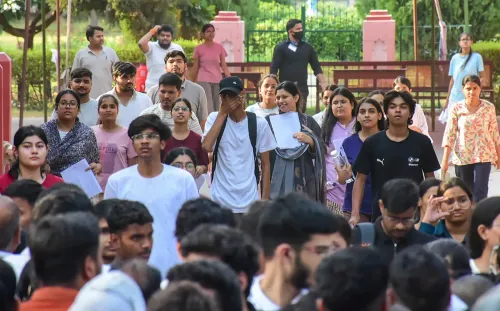
The NEET (UG) 2026 re-examination is scheduled for 21 June , following alleged paper leaks in the original exam held on 3 May .
The Centre has told the Delhi High Court that it had no viable alternative but to invoke emergency blocking powers under the Information Technology Act to temporarily suspend Telegram's services across India ahead of the NEET (UG) 2026 re-examination, scheduled for 21 June 2026. In a short affidavit filed in response to Telegram's writ petition challenging the suspension, the Ministry of Electronics and Information Technology (MeitY) maintained that less restrictive measures — including targeted takedowns of unlawful content — had already been attempted and found 'woefully inadequate'.
What the Government's Affidavit Said
The affidavit, filed by Mayank, Scientist-E with MeitY, stated: 'I state and submit that the impugned decision was taken after exhausting alternatives, which were less restrictive and included targeted takedown of unlawful content, but these would have been woefully inadequate.' The Centre argued that Telegram had become a primary conduit for the circulation of alleged NEET paper leaks, fake examination material, cyber fraud networks and other unlawful activity, posing a direct threat to public order and the integrity of the national examination system.
The government further contended that the interests of over 22 lakh candidates registered for the re-examination far outweighed Telegram's commercial interests. 'The perpetuated individualistic commercial prejudice/grievance of the petitioner is far outweighed by the interest of 22 lakh examinees, as also maintenance of public order and faith in the examination system,' the affidavit said.
How the Fraud Network Was Identified
According to the affidavit, MeitY received a complaint from the National Testing Agency (NTA) on 21 May detailing a coordinated fraud network operating on Telegram under banners such as 'Re-NEET 2026', 'Paper Leaked NEET' and similar names. The NTA claimed the identified channels, groups and bots had a combined reach of nearly 1.46 lakh accounts and were openly advertising purported access to examination papers in exchange for money.
The affidavit cited a specific channel titled 'NEET Mafia' with around 18,617 subscribers, which was allegedly being used to disseminate content relating to paper leaks, payment arrangements and advance booking schemes. 'Each subscriber may constitute a potential recipient, participant, facilitator, beneficiary or witness in relation to the unlawful activity being investigated,' the Centre argued.
The June 3 Meeting With Telegram
A meeting was held with Telegram officials on 3 June, during which, according to the affidavit, the platform acknowledged difficulties in proactively identifying channels involved in selling leaked papers and admitted that bad actors were misusing its 'anonymity' features. The government maintained that despite repeated concerns raised over several years, Telegram failed to take adequate proactive steps.
'It was further conveyed that the issue concerning dissemination of illegal content is now out of proportion and that the Government can take a strict measure against the platform, since Telegram has consistently failed to proactively take measures to control the misuse of the platform,' the affidavit quoted from the minutes of the 3 June meeting.
Why Channel-Specific Takedowns Were Deemed Insufficient
The Centre relied on reports prepared by the Indian Cyber Crime Coordination Centre (I4C), citing Telegram's technical architecture — including anonymity-enhancing tools, large-scale channels, automated bots, forwarding mechanisms and cloud-based infrastructure — as creating 'significant challenges for law enforcement agencies'. Crucially, the government argued that content-specific takedowns were ineffective because channels and bots could be recreated within minutes.
'Telegram's combination of large subscriber capacity, anonymity features, Cloud-based architecture and ease of recreation of channels creates a persistent enforcement challenge,' the affidavit said, adding that interim blocking under Section 69A of the IT Act was 'the only effective measure to break the cycle of instant respawning that Telegram itself documents'.
Telegram's Challenge and What Comes Next
Telegram has challenged the Centre's decision to suspend its services until 22 June and disable its message-editing feature until 30 June, contending the restrictions are disproportionate and adversely affect millions of users across India. The re-examination itself is being held following allegations of question paper leaks during the original NEET (UG) 2026 examination conducted on 3 May.
The Delhi High Court is expected to examine whether the emergency blocking powers were exercised proportionately, a question that could have significant implications for how India's IT framework applies to large global platforms. The outcome will be closely watched by the broader technology and civil liberties communities.
Point of View
The 3 June meeting, and Telegram's own admission of architectural limitations, MeitY is arguing necessity, not convenience. What the affidavit does not address is why these systemic concerns — raised 'over several years' by the government's own account — only triggered emergency action days before a high-stakes exam. The deeper question the Delhi High Court must weigh is whether Section 69A's emergency route, designed for national security crises, is being stretched to cover what is, at its core, an examination administration failure. If the court upholds the block, it sets a precedent that could see platform-wide suspensions deployed against any large-scale coordinated misuse — a significant expansion of the state's digital toolkit.
NationPress
18 Sept 2026
Frequently Asked Questions
Why did the Centre block Telegram ahead of NEET UG 2026?
The Centre blocked Telegram temporarily because it had become a key platform for alleged NEET paper leaks, fake examination material and cyber fraud networks targeting the re-examination scheduled for 21 June 2026. MeitY told the Delhi High Court that less restrictive measures, including targeted channel takedowns, had already been attempted and found insufficient.
What fraud network did the NTA report to MeitY?
The NTA filed a complaint with MeitY on 21 May detailing a coordinated fraud network operating on Telegram under names such as 'Re-NEET 2026' and 'Paper Leaked NEET', with a combined reach of nearly 1.46 lakh accounts openly advertising access to exam papers for money. One channel, 'NEET Mafia', alone had around 18,617 subscribers, according to the government's affidavit.
What did Telegram say at the June 3 meeting with the government?
According to the government's affidavit, Telegram officials at the 3 June meeting acknowledged difficulties in proactively identifying channels involved in selling leaked papers and admitted that bad actors were misusing the platform's anonymity features. The government says Telegram failed to take adequate proactive measures despite repeated concerns raised over several years.
How long is Telegram suspended in India?
Telegram's services in India are suspended until 22 June 2026, and its message-editing feature has been separately disabled until 30 June 2026. Telegram has challenged both restrictions before the Delhi High Court, calling them disproportionate.
What legal provision did the Centre use to block Telegram?
The Centre invoked Rule 9 of the Information Technology (Procedure and Safeguards for Blocking for Access of Information by Public) Rules, 2009, read with Section 69A of the IT Act, which allows for emergency blocking of online platforms. The government argued that the rapid respawning of mirror channels and bots made this the only effective measure available.