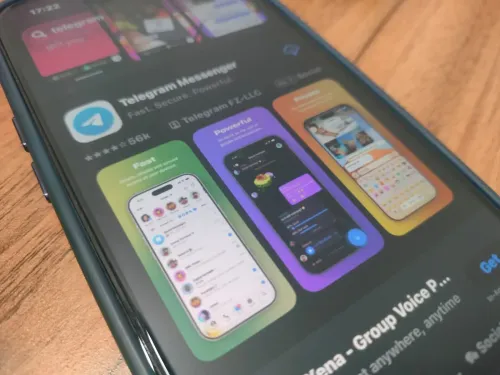
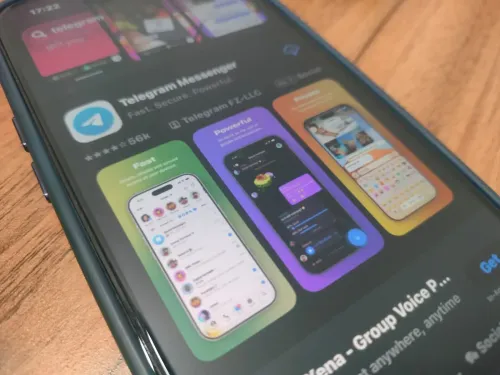
Telegram ban likely lifted in India after NEET re-exam; editing feature off till June 30
Synopsis
India's short, exam-linked Telegram block is set to end — but the message-editing feature stays off until 30 June. The Delhi High Court has already upheld the move, marking a rare instance of a platform being surgically restricted around a single national exam, with judicial backing for emergency IT Act powers.
Key Takeaways
Telegram's nationwide ban in India is expected to be lifted by 23 June 2026 , with the app likely restored on app stores the same day.
The message-editing feature on Telegram will remain disabled until 30 June 2026 .
MeitY imposed the block under Section 69A of the IT Act ahead of the NEET (UG) 2026 re-examination on 21 June 2026 .
The Delhi High Court , in a ruling by Justice Tejas Karia , upheld the block, dismissing a challenge by Telegram FZ LLC .
The NTA and Ministry of Home Affairs recommended the restrictions, citing organised cheating rackets using the platform to defraud NEET candidates.
The temporary nationwide block on Telegram is likely to be lifted as early as 23 June 2026, after the Centre imposed the restriction ahead of the NEET (UG) 2026 re-examination held on 21 June 2026. According to reports, the government is not planning to extend the ban beyond 22 June, and the app is expected to reappear on app stores from 23 June. However, the disabling of Telegram's message-editing feature will remain in force until 30 June 2026.
Why Telegram Was Blocked
The Ministry of Electronics and Information Technology (MeitY) blocked Telegram across India till 22 June as a precautionary step ahead of the high-stakes medical entrance re-examination. The National Testing Agency (NTA) cited the organised misuse of the platform by cheating rackets targeting NEET candidates as the primary trigger.
'Both measures have been taken in the interest of public order, in response to the organised use of the platform by cheating rackets to defraud candidates appearing for the NEET (UG) 2026 re-examination scheduled on 21 June 2026,' the NTA stated. The restrictions were invoked under Section 69A of the Information Technology Act, on recommendations from the NTA and the Ministry of Home Affairs.
Delhi High Court Upholds the Block
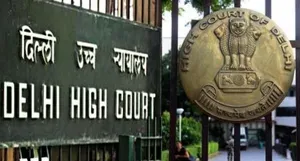
On Friday, the Delhi High Court upheld the Centre's decision, dismissing a petition filed by Telegram FZ LLC challenging the MeitY blocking order. A single-judge bench of Justice Tejas Karia ruled that the government had strictly followed the procedure prescribed under law while invoking emergency blocking powers, and that the restrictions satisfied the test of proportionality.
'Given the emergency nature of the Impugned Order, the reasons supplied in arriving at the decision were sufficient. As Respondent No. 1 (Union government) has strictly followed the procedural steps as required under Section 69A of the IT Act, the challenge to the Impugned Order on the ground non-communication of reasons cannot be sustained,' the court held. The bench also ruled that both the temporary suspension till 22 June and the disabling of the message-editing feature till 30 June were justified given the circumstances.
Government's Defence of Emergency Powers
The Union government defended the move by arguing that Telegram's architecture and its repeated misuse for examination-related fraud left authorities with no effective alternative but to invoke emergency blocking powers. This marks one of the rare instances where a major messaging platform was subjected to a time-bound, exam-linked suspension in India — a step that drew both judicial endorsement and civil liberties scrutiny.
Notably, the block was narrowly scoped: it was tied to a specific examination date and paired with a feature-level restriction rather than an indefinite platform ban. Critics, however, argued that even a short-term block on a widely used communication platform raises proportionality questions that extend beyond a single exam cycle.
What Happens Next
With the re-examination concluded, Telegram is expected to be fully accessible on app stores by 23 June 2026. The message-editing restriction, however, remains active until 30 June. No further extension of the ban has been announced by the government. The episode is likely to renew debate over the scope of Section 69A emergency powers and the accountability mechanisms that govern their use against global platforms.
Point of View
Exam-triggered platform controls. The Delhi High Court's endorsement of the emergency block — without requiring prior communication of reasons — sets a precedent that lowers the procedural bar for future invocations of Section 69A. The message-editing restriction, extending a week beyond the exam itself, also signals that the government views platform-level feature control as a legitimate tool, not just a last resort. Whether that logic holds when the stakes are lower — or the platform more mainstream — is the question civil liberties advocates will now press.
NationPress
21 Sept 2026
Frequently Asked Questions
When will Telegram be restored in India?
Telegram is expected to be restored on app stores in India from 23 June 2026 , as the government is not planning to extend the ban beyond 22 June . However, the message-editing feature will remain disabled until 30 June 2026 .
Why was Telegram blocked in India?
The Centre blocked Telegram ahead of the NEET (UG) 2026 re-examination on 21 June 2026 , citing organised misuse of the platform by cheating rackets to defraud exam candidates. The block was imposed under Section 69A of the Information Technology Act on recommendations from the NTA and Ministry of Home Affairs .
What did the Delhi High Court rule on the Telegram ban?
The Delhi High Court , through a single-judge bench of Justice Tejas Karia , upheld the Centre's decision to block Telegram, ruling that the government had followed due procedure under Section 69A of the IT Act and that the restrictions were proportionate. The court dismissed a petition filed by Telegram FZ LLC challenging the MeitY order.
Why is the message-editing feature still disabled after the ban is lifted?
The Centre's order separately disabled Telegram's message-editing feature until 30 June 2026 , a measure the Delhi High Court also upheld as justified. The government has not publicly detailed the specific rationale for extending this feature-level restriction beyond the exam date.
What is Section 69A of the IT Act?
Section 69A of the Information Technology Act empowers the Indian government to issue emergency directions to block public access to online content or platforms in the interest of national security, public order, or related grounds. It was the legal basis for both the Telegram suspension and the feature-level restriction.